NEW YORK — The air was thin, the nights were cold, the sun could easily burn the skin. But about 12,000 years ago, small groups of hunter-gatherers found a home very high up in the Peruvian Andes.
Now, their stone tools and other artifacts have revealed their presence at about 14,700 feet above sea level, about as high as the Matterhorn and much higher than Machu Picchu. They lived there nearly 1,000 years earlier than any other known human habitation anywhere above even 13,000 feet, researchers report.
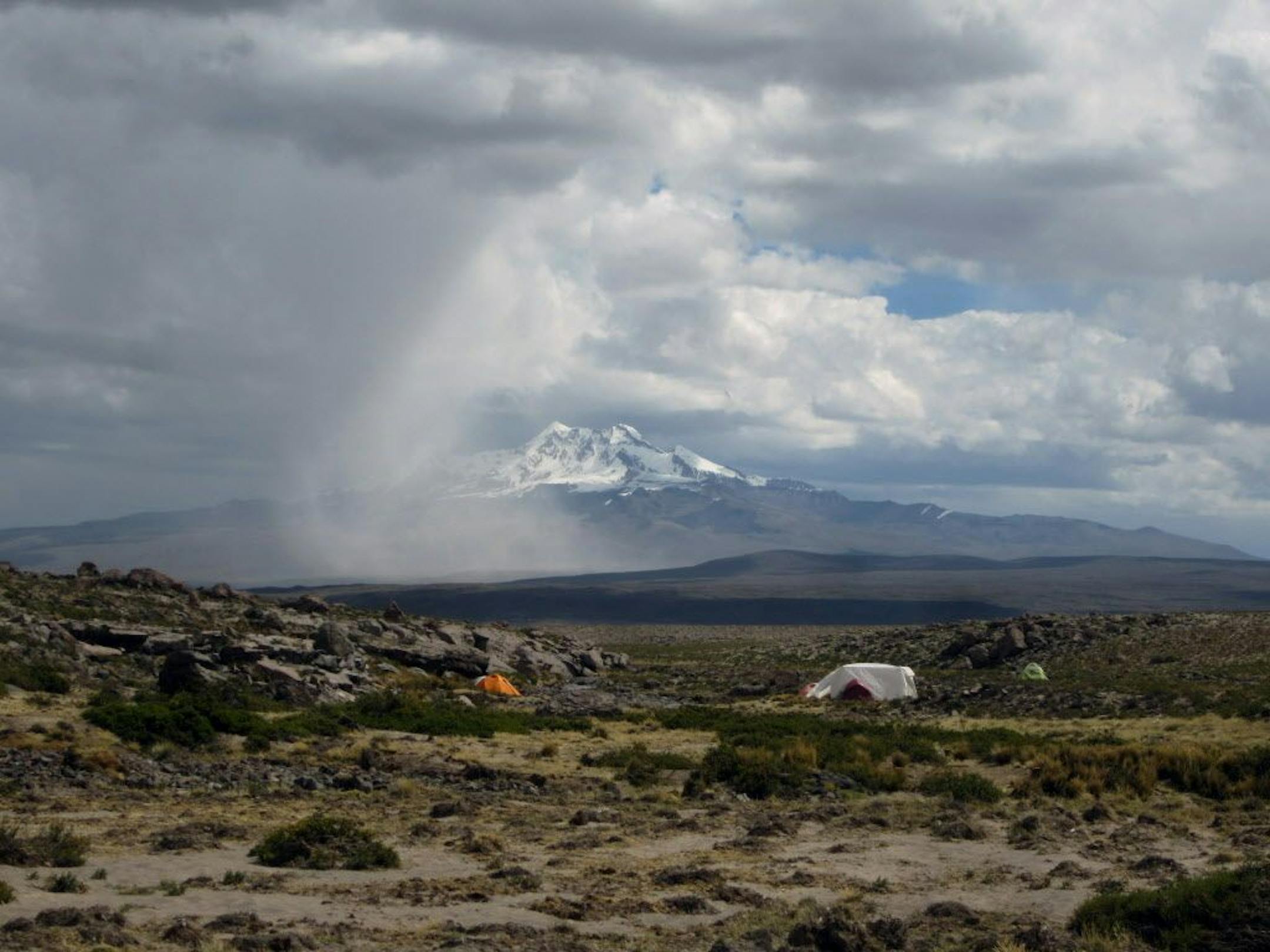
Among the bogs, wetlands and grasslands of the treeless plateau, the ancient people found plentiful deer and wild ancestors of llamas and alpacas to hunt for food and clothing between 12,000 and 12,500 years ago. There were rock shelters to live in, and deposits of obsidian for making stone tools. While the plants weren't edible, some contained combustible resin and made for "really nice warm fires," says researcher Kurt Rademaker.
"I can't say why people first went there," said Rademaker, an author of a report released Thursday by Science. "But once they did go there, there were plenty of reasons to stay."
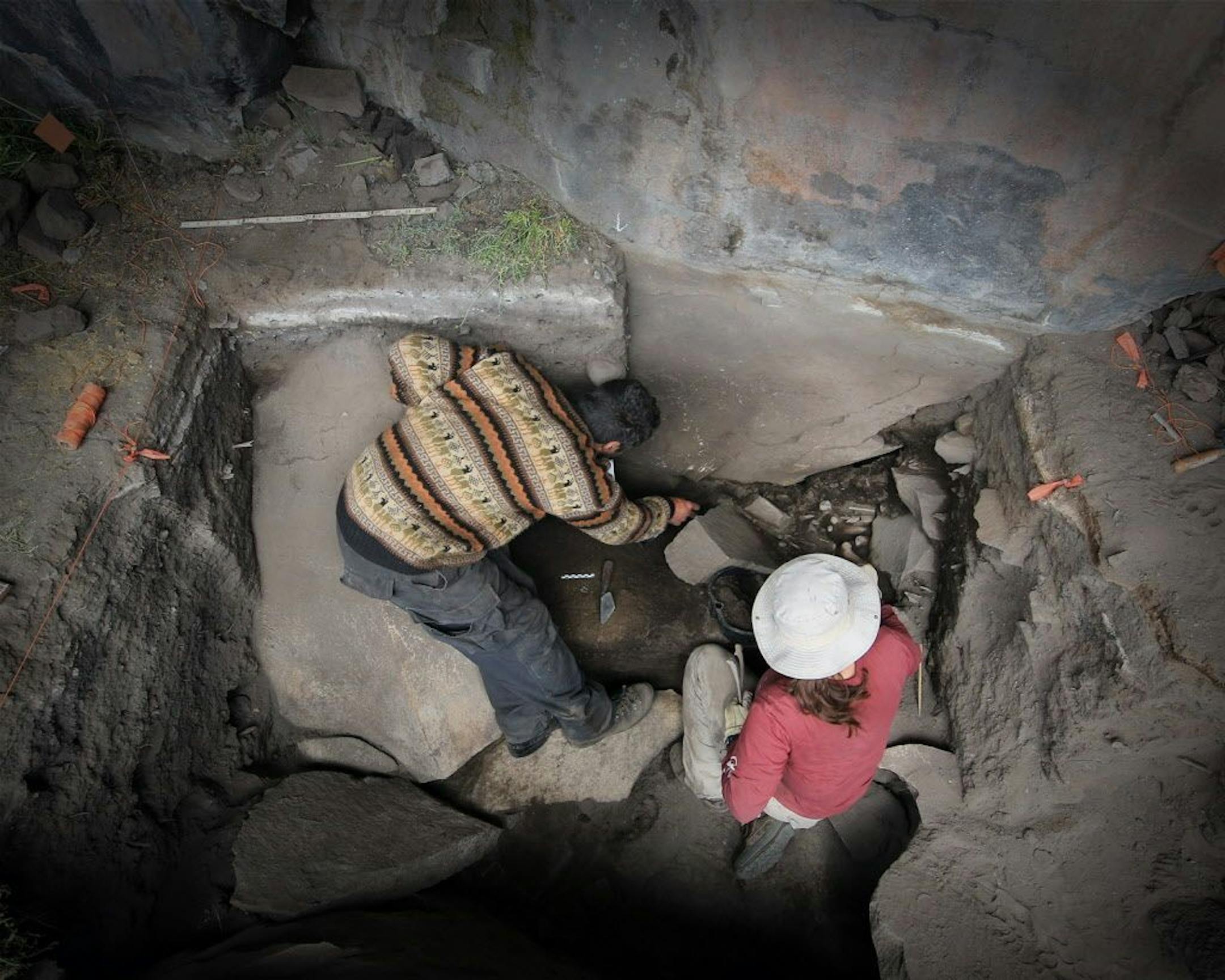
Rademaker is a researcher at the University of Tuebingen in Germany and a visiting assistant professor at the University of Maine in Orono. He led a research team that uncovered two sites of high-altitude Andes settlement in southern Peru, within about 100 miles of the Pacific coast and roughly west of Lake Titicaca.
Both sites included workshops for making stone tools. Hundreds of tools were found there, including scrapers that were evidently used to make clothing from hides. Sharpened points were probably used for spears. Bone and shell beads, used for adornment, were also recovered.
Rademaker said he doubts people lived there year-round, noting the rainy season from December to March.
"You're cold," he said. "You're being rained on and snowed on and sleeted on all day long. It makes for misery."