Jayln Isaham had heard stories like these before: American Indian children removed from their families, forced to live and work in boarding schools that tried to strip away their heritage. Jayln's great-grandmother was one of them.
"When she was forced into one of those schools, she said her Ojibwe name, and they duct-taped bags of marbles to her knees and made her clean the floor on her hands and knees," she said.
So the 14-year-old Isaham wasn't surprised to see hardships like these depicted in the "Then Now Wow" exhibit, which opened in November at the Minnesota History Center.
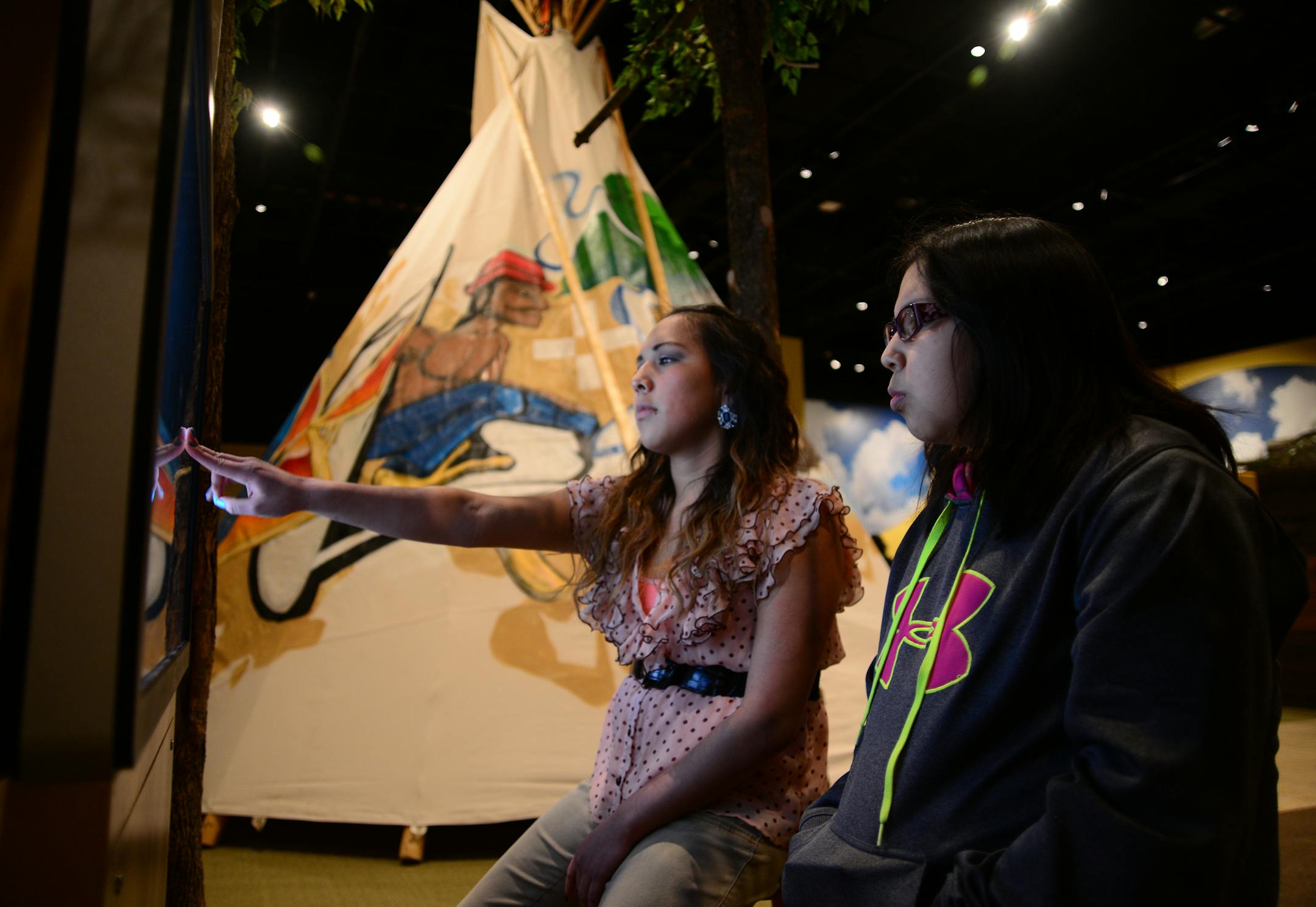
She was surprised to be asked to be part of the display, which contrasts the lives of Indian children in boarding schools from 1879 to 1950 with the lives of middle-school students on the Red Lake reservation today.
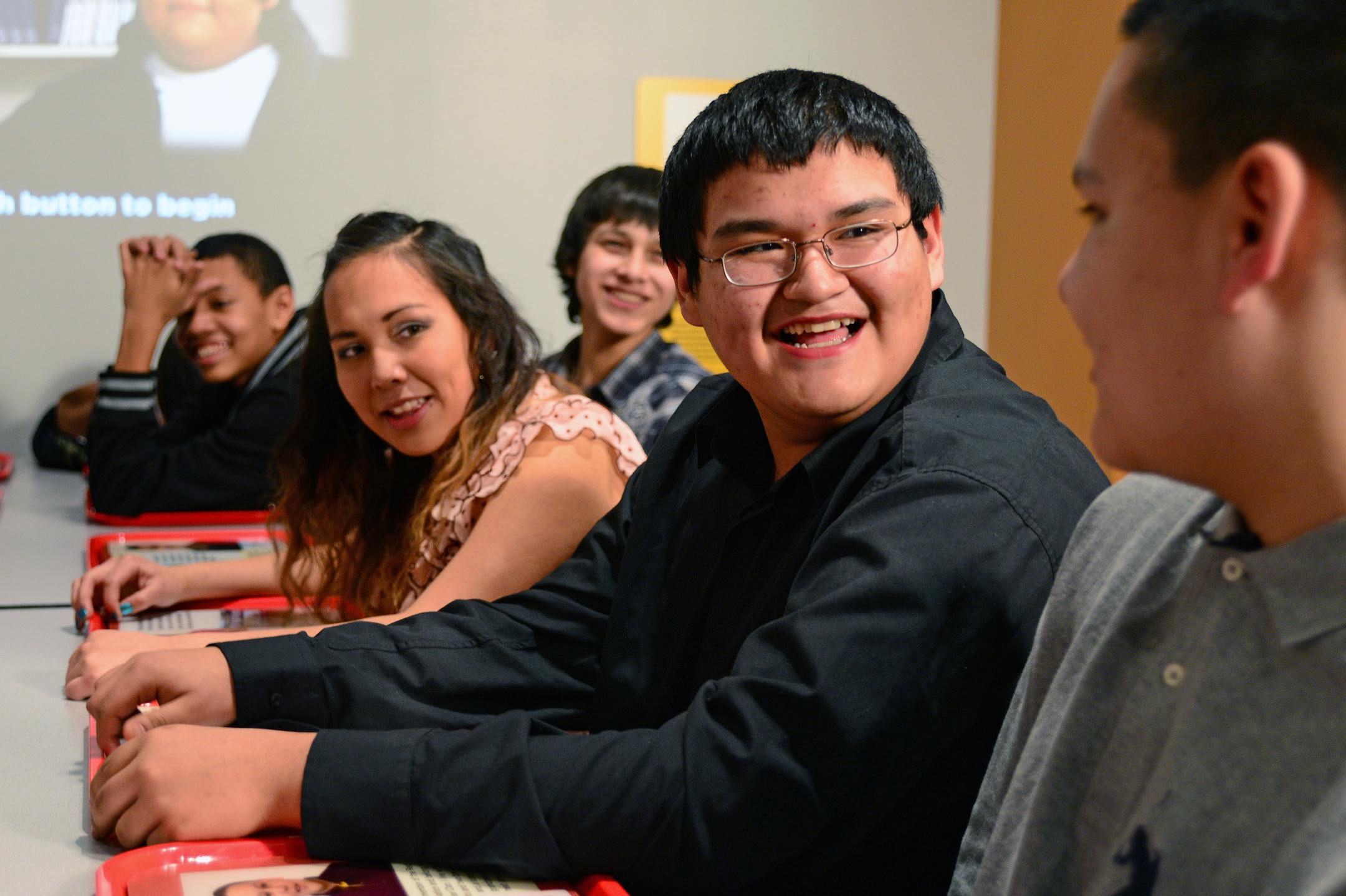
A total of 14 students, including Isaham, were selected by the school librarian and teacher at Red Lake Middle School, Gloria Collyard. Last year, curators from the museum interviewed the students, and photographers and videographers followed them around like paparazzi, documenting them on the way to school, going from class to class, talking with friends in an attempt to capture their everyday lives.
The museum then put together a simple but powerful display contrasting the two time periods. A single row of old-fashioned desks, faded black-and-white photos, letters and keepsakes depict life at a boarding school. A brightly colored contemporary lunch table represents the "now" section of the display. The lunch table is topped with 14 red cafeteria trays, each with a profile of one of the students.
"That side is so sad and dark," said Isaham, talking about the portion of the display on the Indian boarding schools. "Then you look at ours and it's like BAM!, colorful and happy."
Ellen Miller, the exhibit developer for the Historical Society, said the aim of the display is to help visitors relate to the students from Red Lake.