

REPUBLIC OF GEORGIA - I'm perched on the middle seat of a Lada taxicab, careening seatbeltless through the sunflower-tinted valleys of eastern Georgia. A roadside pedestal bearing an homage to the almighty tractor reminds passers-by that the Soviet Union was here, but most travelers on this route today come in search of a deeper past or a brighter future. This is wine country, and the harvest looks promising.
The Georgian winemaking tradition is among the oldest on Earth -- going back about 7,000 years. After Russia's 2006 embargo cut off the primary market for Georgian wine exports, wineries across the country began actively pursuing opportunities to sell their product farther afield.
A few friends and I have come to visit one of the only wineries in the country now using traditional Georgian methods to produce the beverage on a commercial scale. We've timed our trip to coincide with the rtveli, or grape harvest, to get a firsthand look at how the fruits of the vine are transformed into this nation's most treasured elixir.
As our taxi rounds a curve to begin its descent into the Alazani Valley, the ancient walled city of Sighnaghi comes into view with a lush, quieting beauty. Mist licks the town's cobbled streets and delicately wrought balconies, nestled among cypresses and careful rows of grapevines stretching far into the distance. On clear days, the jagged peaks of the high Caucasus rise to the north. Pheasant's Tears Winery welcomes guests here, in a sun-warmed stone courtyard just off steeply sloping Baratashvili Street. (Named, like an inordinate number of streets in this country of would-be romantics, for a poet.)
An artistic winery
The awe-inspiring setting is no coincidence: The winery opened in 2007 as the result of a collaboration between eighth-generation Georgian winemaker Gela Patalishvili and American artist John Wurdeman, who met one evening while the former was cultivating the vines and Wurdeman painting them.
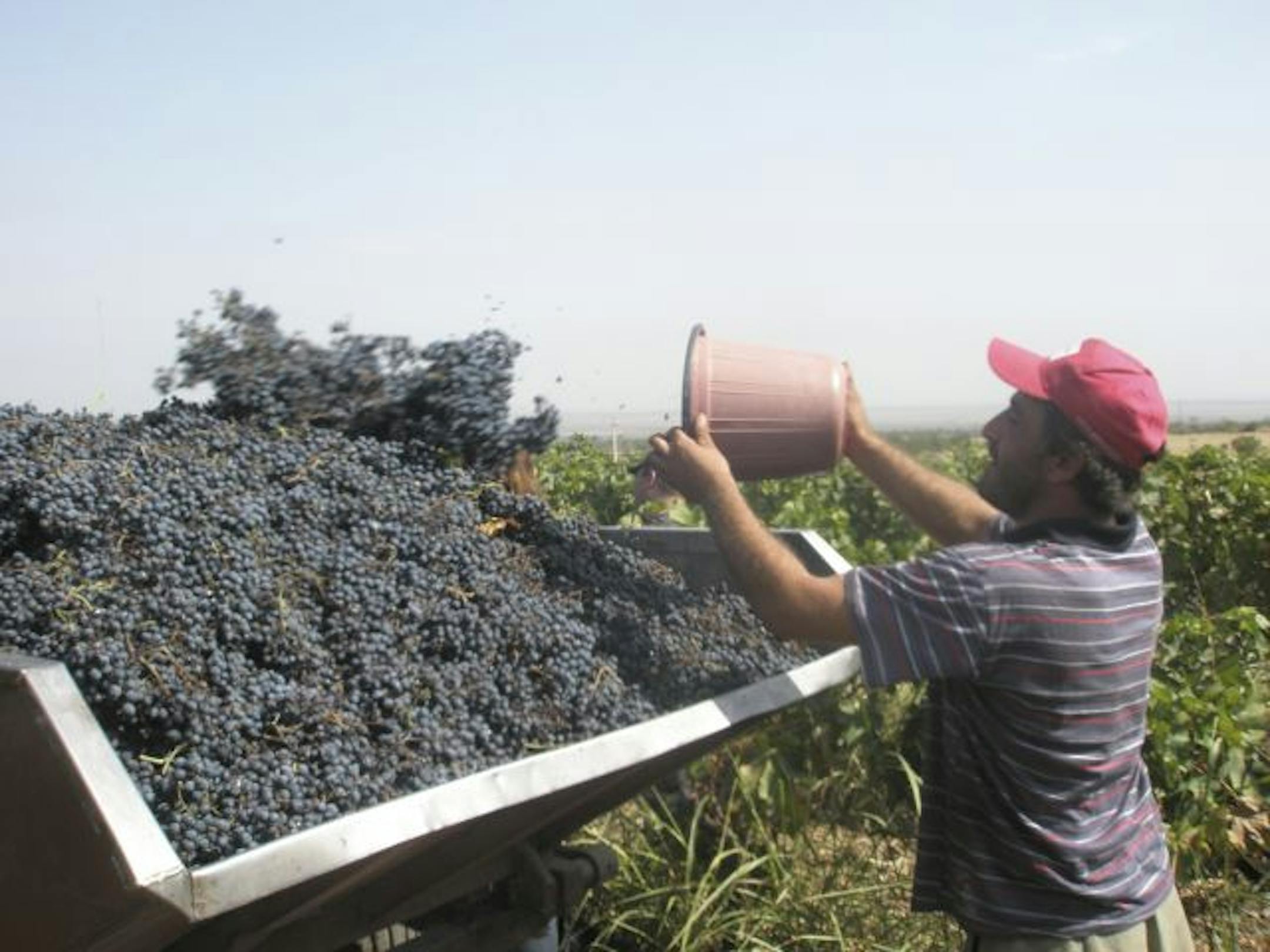
Though it's only 10 a.m. by the time we arrive in the fields, the sun is already beating down fiercely. Rows of head-high vines hang heavy with midnight purple fruit. Pheasant's Tears cultivates its saperavi grapes using organic methods. (The winery is on track to receive international organic certification this year.) Saperavi is Georgia's most widely grown wine grape and it enjoys the most popularity in Western markets of any native Georgian variety. The juice of these fruits also runs purple -- not clear, like most grapes -- and produces a wine so dark the Georgians call it "black wine."
Partly because of an exceptionally hot summer, the harvest has come early this year, and a group of hired locals has been working since dawn to bring in the grapes. Equipped with folding knives, we join a merry group of ample women tossing bunches of the marble-sized berries into buckets and then onto a trailer that will take them up the hill for destemming.


