

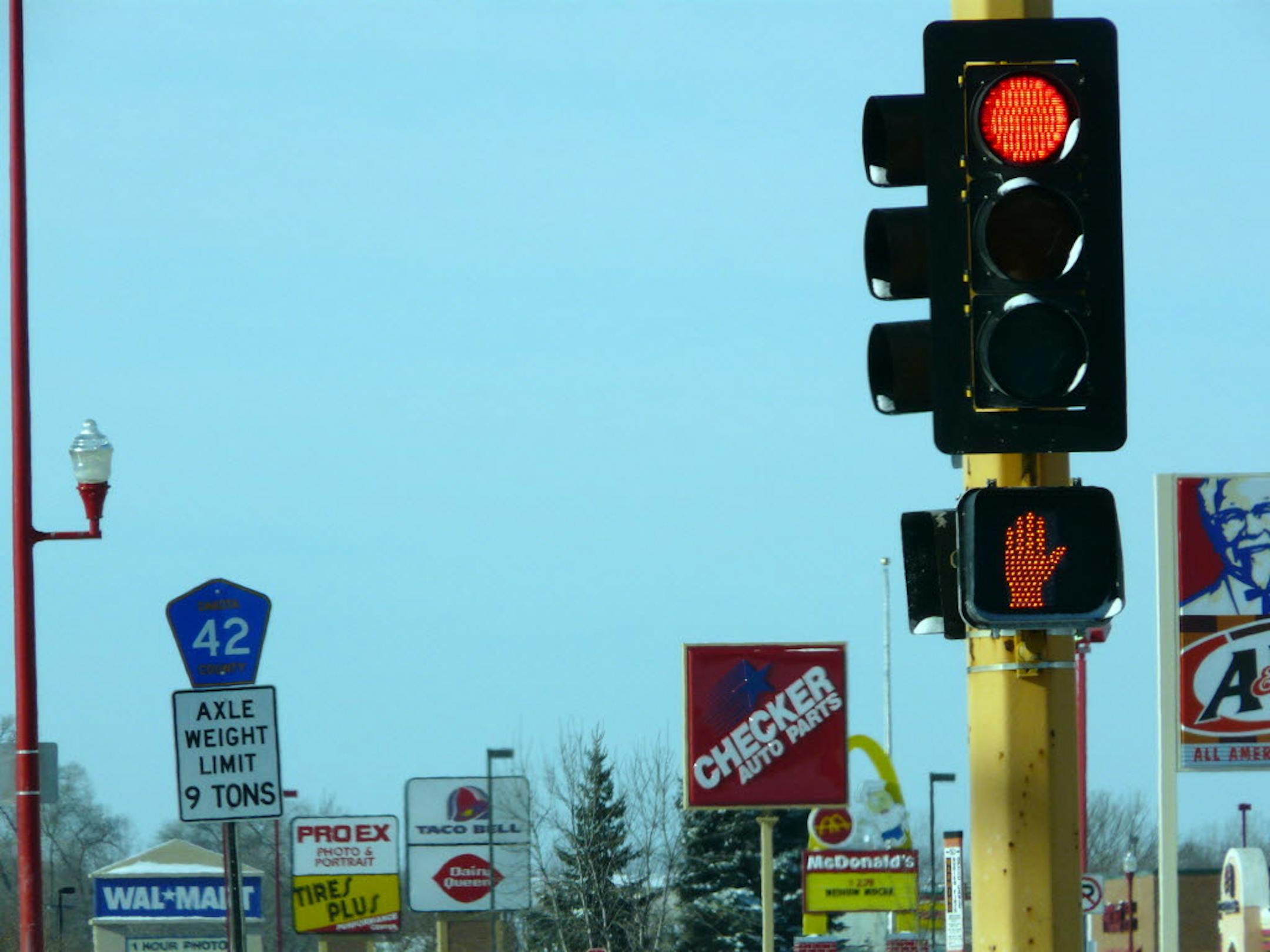
This month the city of Minneapolis begins the second phase of its traffic-light retiming project.
The cynics among you may think this means they've decided to stop inconveniencing people on north-south streets and plan to shift the pain east-west.
Others may wonder if there's any logic to the timing at all. Of course! It's a carefully calibrated system designed to coordinate the ceaseless streams of traffic into a choreographed ballet, with a purpose: to teach everyone that patience is a virtue. We lack the Olympian perspective and cannot discern the wisdom in these decisions.
For example, there's an intersection in my neighborhood next to a playground, community center, swimming pool, school and a heavily trafficked bike path. People bunch up on the corner, stab the WALK button (which is connected to a machine in the traffic planner's office that pops out a mini-doughnut, that's all it does) and when the light finally turns green, the bikers and joggers and parents with strollers gush off the curb and join like two armies.
Perhaps one car can turn left through this mob, and if you're the driver who clears it, you turn down the radio in case there's the screeching sound of a bike caught in your undercarriage.
The light should be twice as long, but:
A) They'd have to retime the light two blocks back, which exists solely to facilitate the passage of school buses for a 10-minute interval at 4 p.m. but runs 24/7, causing people to sit behind a red at 3 a.m. for no reason, thinking, "adherence to the dictates of traffic signals is one of those unspoken acts that contributes to overall social cohesion." And then they figure it's broken and run it. Let someone else cohere to society. I'm not sitting here all night.
B) People who complained that the red light was too short when they were waiting on the north-south street would complain that the red light was too long when they were waiting on the east-west street. That's the rule: Any light you cannot make is too short, and any light that makes you wait is too long.


