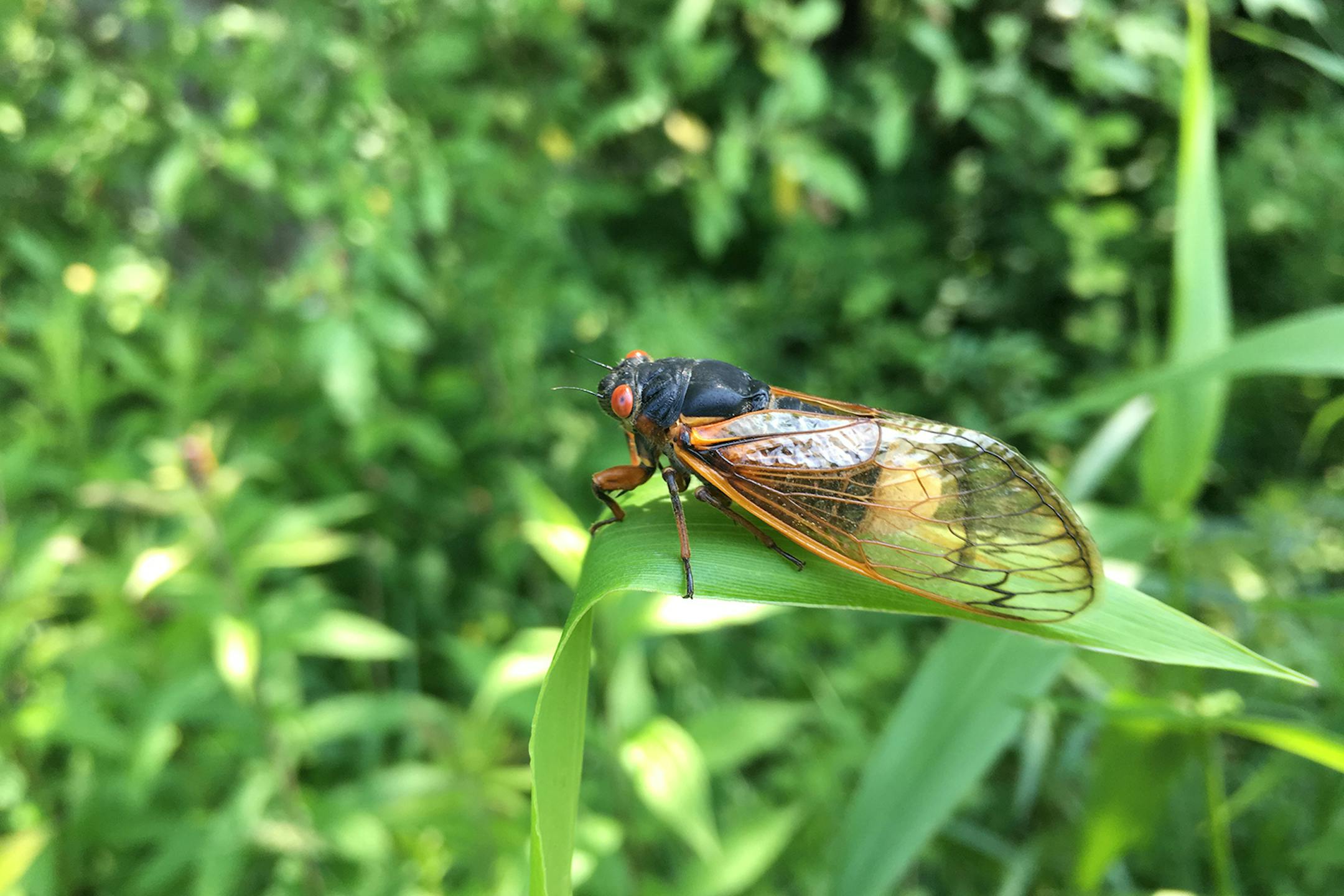
We love cicadas, right? I do. You always hear the final cicada, but at the time you don't know it's the last one. If you're alert, you note the first time you hear the signature drone, and think: Well, that's it, summer's over.
No, of course not. They emerge in July, and there's lots of summer left. But there's more summer left before the cicadas emerge, and we all know how swiftly August erodes to the nub of Labor Day. When we imagine "August" in February, we picture a big fat dog of a month, lazing in the sun. The real thing is a bird that flies out the window when we crack the sill on the first of the month.
Or, instead of a bird, a cicada, moving as clumsily as that last transition. Cicadas have wings. That's how they make that distinctive sound, that droning buzz that sounds vaguely annoyed and disgusted: "Oh yeeeaaaahhhhh, riiiight!" Or, if they are Millennial Cicadas: WhatevvvvvvvvverrrrrRRRRR."
A few weeks ago the internet was abuzz (sorry, but not really) with a new peril: A fungus was turning cicadas into brainless slaves. The Zombie Cicadas, let's call them ZCs for short, are infected with a fungus that eats away their reproductive organs, because nature is horrible. The fungus also contains some hallucinogenic chemicals that keep the cicadas awake and makes them fly around, flinging spores everywhere. The technical term for this is "the first year at college."
It gets better: The ZCs mimic the sound of female cicadas, so non-zombie bugs think, "Hey, she sounds interesting," and head over only to discover it's a dude cicada. But it's too late: The spores are deployed, and now the guy who just wanted to meet someone and maybe have a nice time, see a show, he's up at 3 a.m., dumping spores.
Should you be worried about fungally afflicted cicadas? As a member of the media, I say, "Yes, absolutely." But as your friend and faithful correspondent I say ... "Nah." This only affects periodic cicadas, the ones that crawl out of the earth every 17 years. In Minnesota we have annual cicadas. The males make the mating sound, not the females.