
Likely fate for new Woodbury gang: Sing, sing

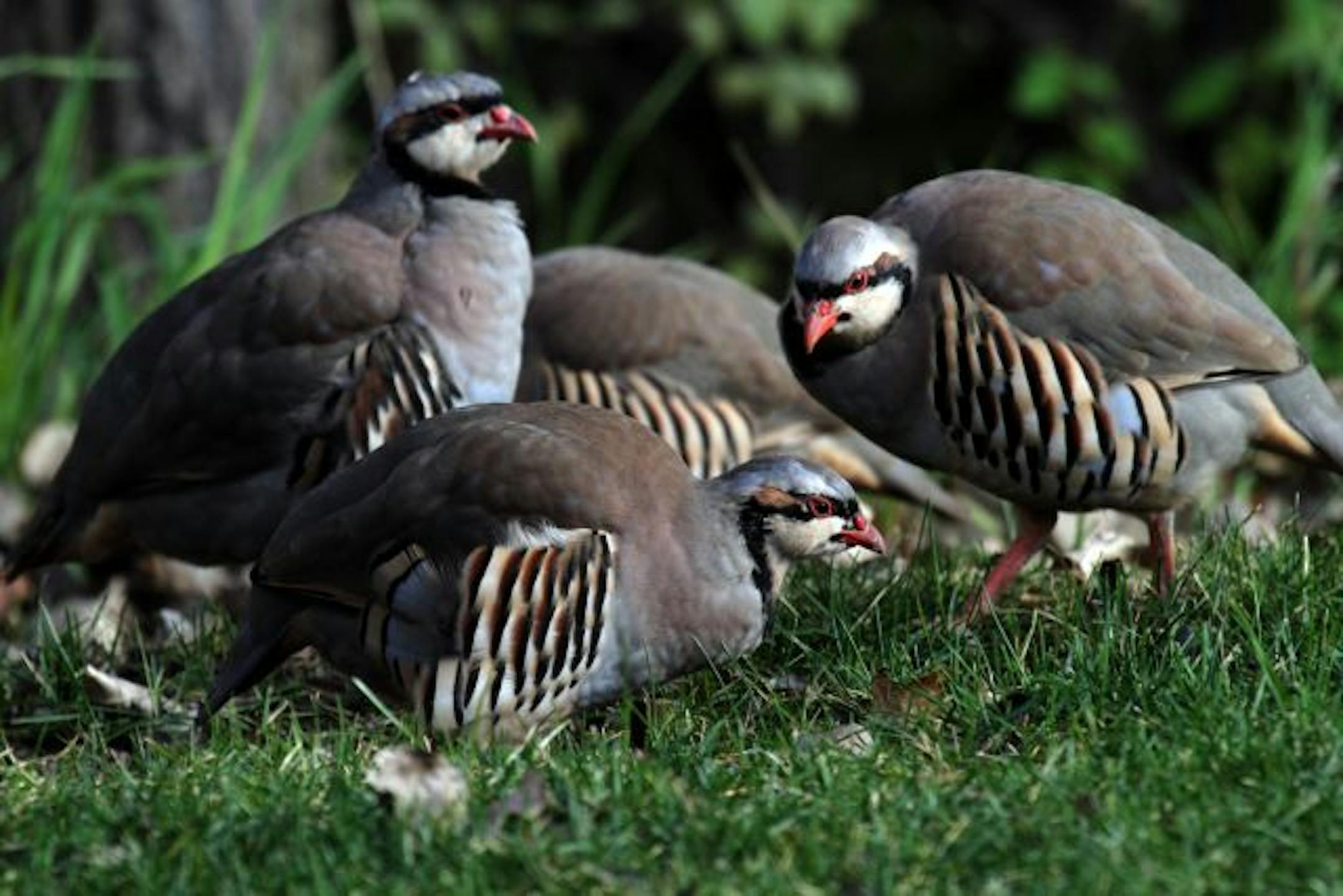
Chukars, not usually seen in the Minnesota wild, have taken roost.

October 21, 2010 at 12:16PM
Chukars have been accidentally introduced in the wild in Woodbury. They were either released or escaped a game farm.
Chukars have been accidentally introduced in the wild in Woodbury. They were either released or escaped a game farm. (Star Tribune/The Minnesota Star Tribune)

There's a new gang, perhaps a dozen or two strong, keeping a secretive presence on Woodbury's back streets -- or at least, what passes for back streets in Woodbury.

Adding to the intrigue, they are likely on the lam. They don't have a sign, although they do have distinctive colors. And a notable call: chuck-chuck-chukar-chukar, from which they get their name.

Chukars, a species of partridge and cousin to pheasants, are neither rare nor endangered, but they are seldom seen in the wild in Minnesota. But a group (technically, a covey) of them has been spotted for the past couple of years near a wooded marsh in western Woodbury.

Of all places, they've made a habit of gathering near the office of Audubon Minnesota, a group devoted to protecting birds of all kinds.

"They're about 50 feet from my window," Ron Windingstad said recently. He's a retired U.S. Fish and Wildlife Service biologist who coordinates Audubon bird conservation projects.

The chukars began showing up last year, Windingstad said, though the numbers seem to be down a bit this year. They are not native to the United States, but were introduced here from their native Pakistan.

They have thrived in their range that includes western Idaho and eastern Washington, northern California and Utah, Windingstad said, but are only found on game farms in Minnesota. He suspects the Woodbury covey is made up of game farm escapees.

Unlike buckthorn or zebra mussels, he added, the non-native species is not a threat to the ecological balance.

Minnesota's habitat just isn't suitable for chukars, said Gary Schulte of Wild Wings of Oneka, a hunting and shooting club near Hugo. The club offers chukars, bobwhite quail and pheasants for hunting. (He's certain the Woodbury chukars are too far afield to have come from Wild Wings). Chukars prefer high altitudes and semi-dry conditions, he said.

"They're considered feral birds in Minnesota," Schulte said. "They're excellent eating, but they don't survive in the wild here -- it's just the wrong habitat."

True, chukars have had a checkered history in Minnesota. There was an effort to introduce them into the state in the 1930s and 1940s, just as the pheasant had been introduced from China. Large numbers were released, but the population never gained viability. So there won't be any Chukars Forever chapters forming any time soon.

Still, the chukar is the national bird of Pakistan, and just last year was featured on a postage stamp. It's almost enough to make you stand up and say chuck-chuck-chukar-chukar.

Jim Anderson • 651-735-0999

about the writer

about the writer

Jim Anderson

Multiplatform editor

See Moreicon

More from No Section

See More
FILE -- A rent deposit slot at an apartment complex in Tucker, Ga., on July 21, 2020. As an eviction crisis has seemed increasingly likely this summer, everyone in the housing market has made the same plea to Washington: Send money — lots of it — that would keep renters in their homes and landlords afloat. (Melissa Golden/The New York Times) ORG XMIT: XNYT58
Melissa Golden/The New York Times

It’s too soon to tell how much the immigration crackdown is to blame.