

 2:11
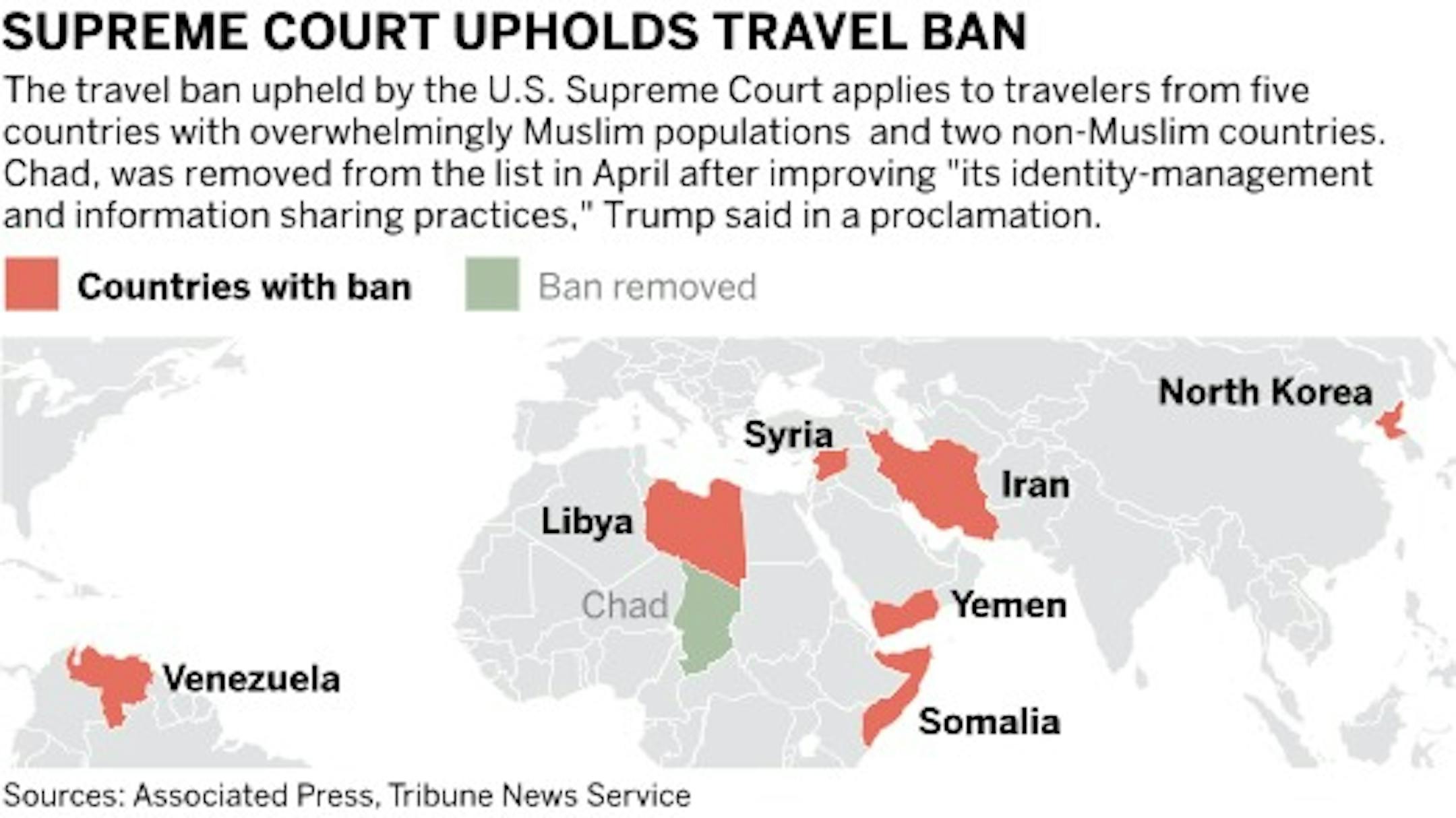
2:11Hours after the U.S. Supreme Court upheld President Donald Trump's travel ban on Tuesday, Muslim community leaders, immigration attorneys and advocates from around the Twin Cities decried the decision, saying they fear it will prompt broader immigration restrictions and amplify discrimination against Minnesota's growing Muslim community.
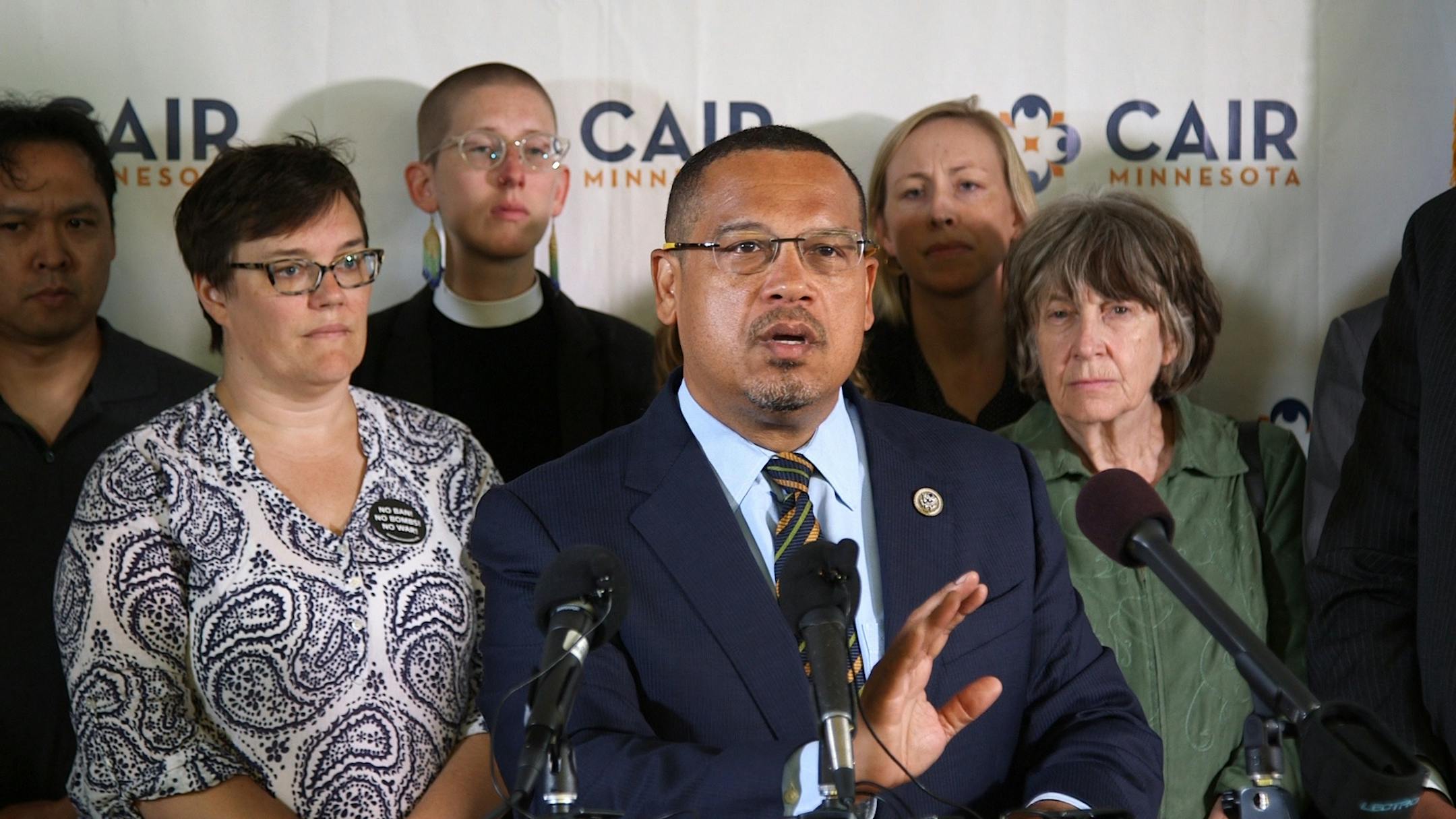
In a news conference at the Council on American-Islamic Relations' Minneapolis office, a parade of speakers blasted the 5-4 ruling upholding the restriction on travel from several mostly Muslim countries, comparing it to historic Supreme Court rulings that upheld legalized racial discrimination, the denial of citizenship based on race, and the internment of Japanese-Americans. They vowed to turn out in force to elect like-minded candidates in the November midterm election.
"Previously, America had a race-based immigration system, and this decision formally [brings] discrimination back into our system," said Jaylani Hussein, executive director of the Minnesota chapter of the Council on American-Islamic Relations, adding that "America is going through a reckoning right now as we battle with racism and bigotry fully in the open."
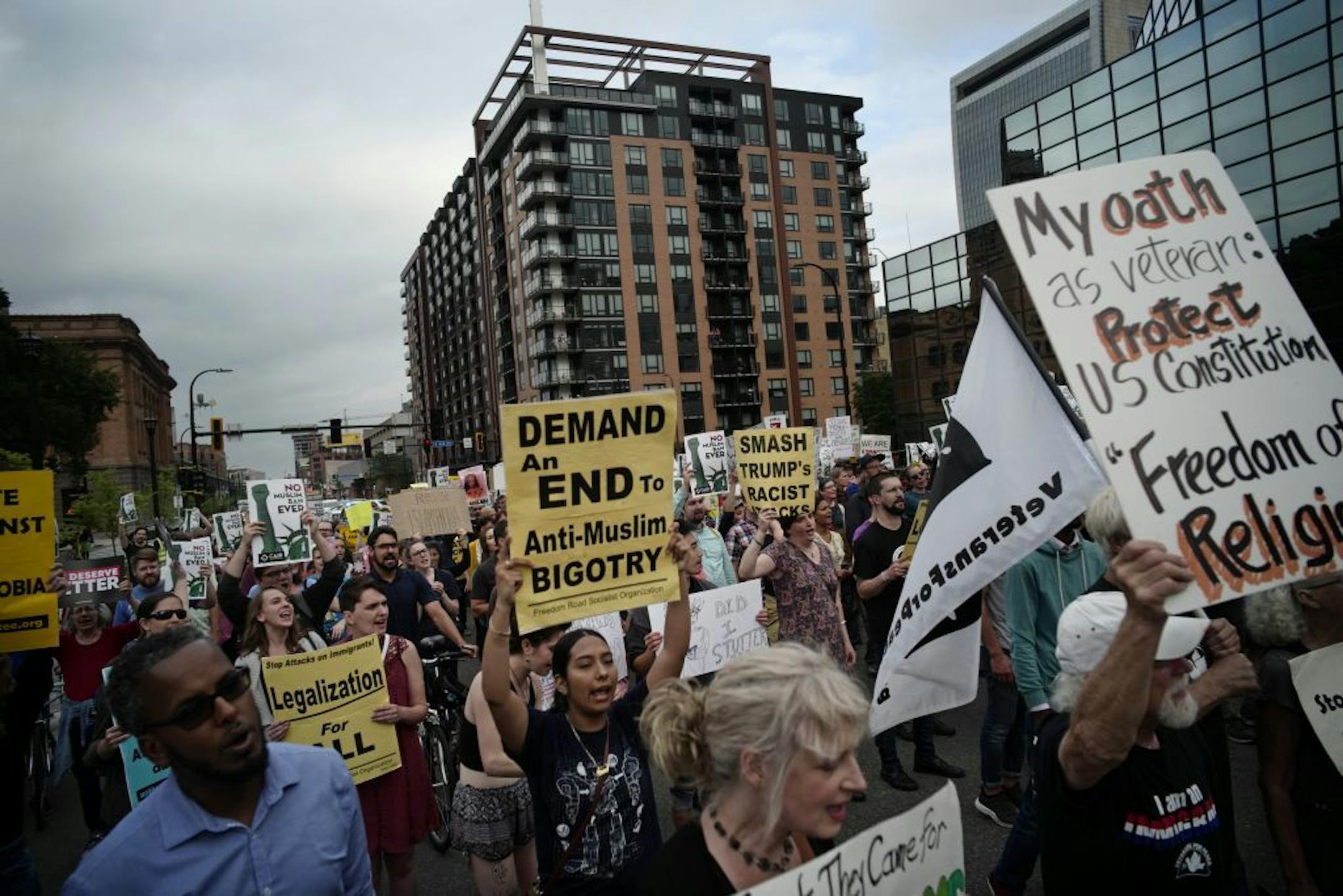
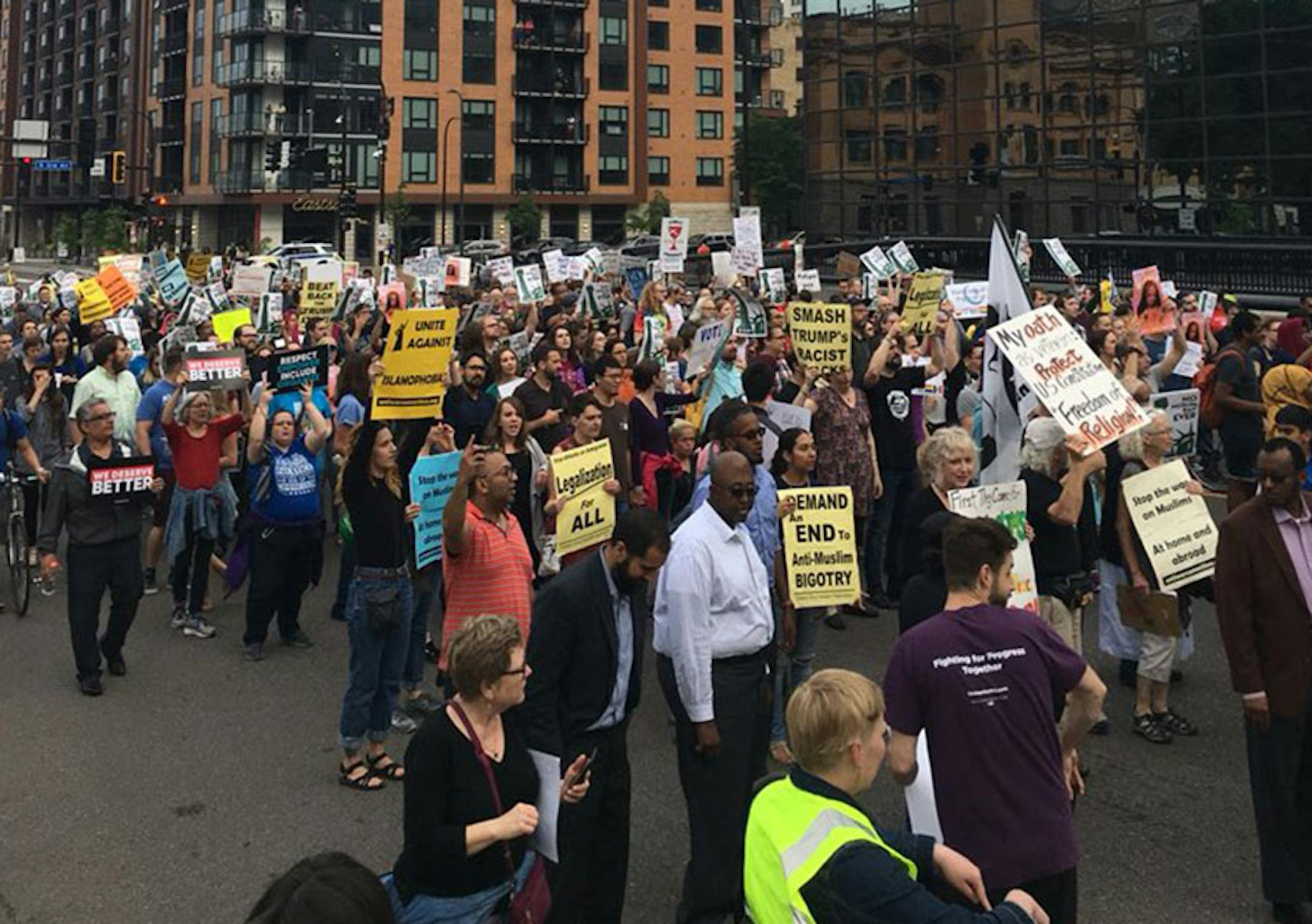
Tuesday night, Hussein and several hundred people gathered outside the U.S. Courthouse and later marched around downtown Minneapolis to protest the decision.
"This fight isn't over," he said during the protest.
But others who have championed Trump's immigration proposals as important strategies to combat terrorism applauded the decision.
State Sen. Karin Housley of St. Marys Point, the Republican-endorsed candidate for the U.S. Senate seat held by Tina Smith, said in a statement that the ruling was a "victory for the rule of law and the Constitution." She also noted that the ruling highlighted the importance of the upcoming election, because the Senate will likely weigh in on nominations to the high court in the near future.
"At this critical juncture in our nation's history, adherence to our Constitution has never been more important; our freedoms, our safety and our security as a nation depends on it," she said.
![Jaylani Hussein, executive director of CAIR Minnesota, opened the press conference following the Supreme Court decision to uphold President Trump's travel ban. ] ALEX KORMANN • alex.kormann@startribune.com Two dozen people from different groups in Minnesota came together for a press conference hosted by CAIR on Tuesday following the Supreme Court decision to uphold President Trump's travel ban. Speakers included attorneys, professors of law from the University of Minnesota, Congressmen an](https://arc.stimg.co/startribunemedia/IUW5IHVCLBGI6OPL3MIR2QXPUA.jpg?&w=1080)
![About 500 protesters who started at the Federal Courthouse took to the streets to show their displeasure at the Supreme Court's decision to uphold President Trump's travel ban.].A rally hosted by CAIR-MN and MPower Change in reaction to the Supreme Clourt ruling upholding the muslim travel ban.Richard Tsong-Taatariiïrtsong-taatarii@startribune.com](https://arc.stimg.co/startribunemedia/5JUGE42L73ONUQYSXG4PQBFHVA.jpg?&w=1080)


