

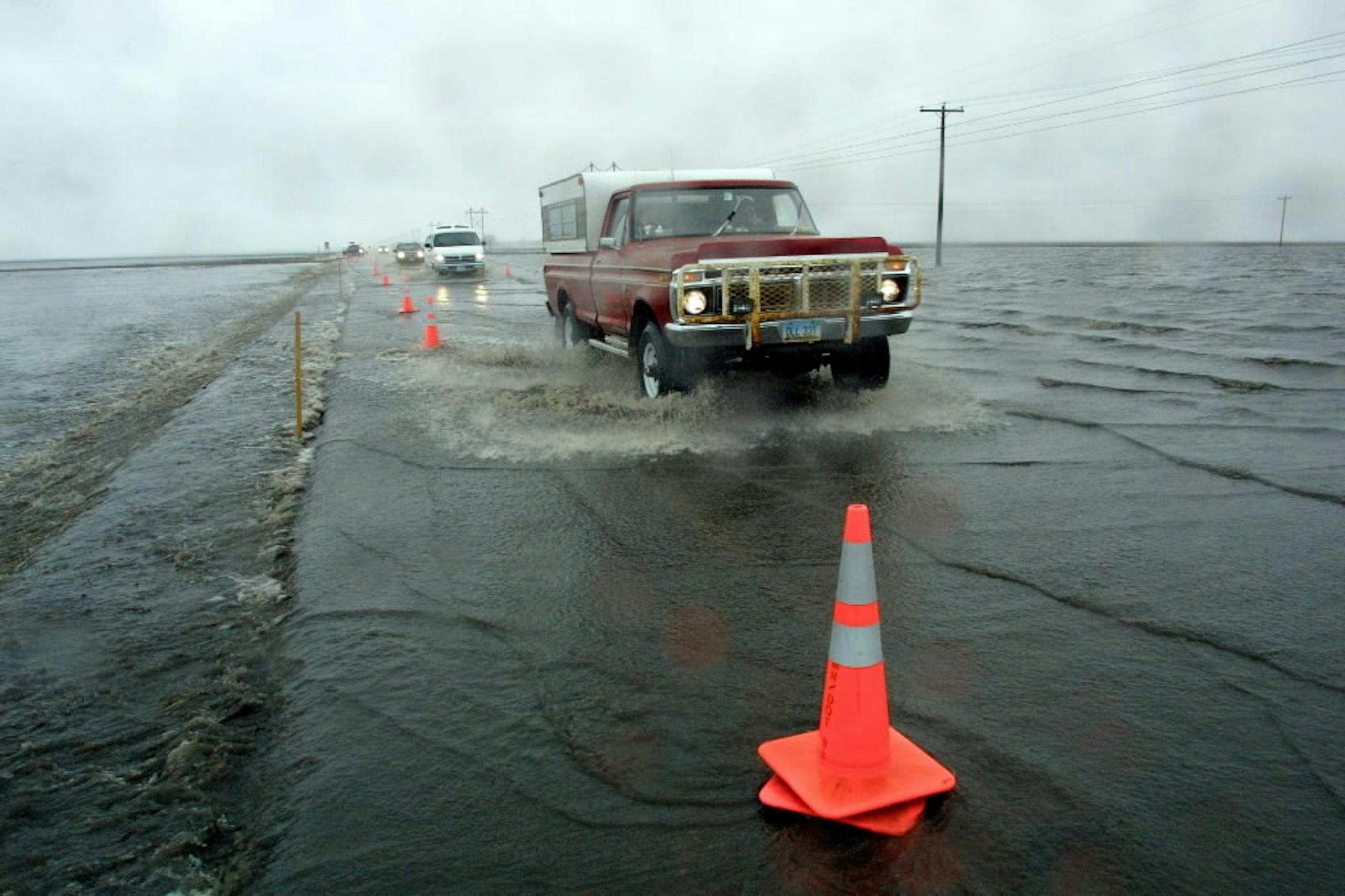
We all know that snow and ice can make roads treacherous. But do we also all know that rain can be even more dangerous?
A report from the Federal Highway Administration makes that point. It found that nearly half of all weather-related crashes happen when it is raining. About one-fourth of weather-related crashes occur on snowy, slushy or icy pavement. Overall, nearly 25 percent of crashes reported nationwide are weather-related.
"Most drivers perceive snow as more dangerous than rain," said the report, which based its findings on crash data from the National Highway Traffic Safety Administration from 1995 to 2008. But a greater stopping distance is required on wet pavement. "Many drivers do not realize that pavement friction is significantly reduced under [wet] conditions, leading to greater stopping distances."
"People don't think about that and think they can stop on a dime," said Jim Wilson, who teaches driver improvement classes for adults 55 and older through the Minnesota Highway Safety and Research Center at St. Cloud State University.
Wilson said drivers should always leave a minimum of 3 to 4 seconds of stopping distance between them and a vehicle in front of them on dry pavement. On wet pavement a motorist traveling at 60 miles per hour might need an extra 20 feet or more to stop and avoid a collision. "You want to add a second or two. You need that space. There is no way around it."
The report said more than 707,000 crashes happen each year in rainy weather, leading to 330,200 injuries and 3,300 deaths. Another 1.2 million crashes with 507,000 injuries and 5,500 deaths occur on wet pavement. That compares with 583,000 crashes on pavement affected by snow, ice or sleet, the report said. Those numbers could be lower because not every state has prolonged wintry weather.
Still, the report surmised that people don't postpone trips in rain like they do for snow — traffic volumes remain high during rain. Most weather-related crashes occurred during rain or on wet pavement, it suggested, because drivers have less traction but don't slow down.
Wilson said being visible can help reduce the risk of a crash in rainy or wet conditions. That means turning on headlights, not only to see but to be seen.


