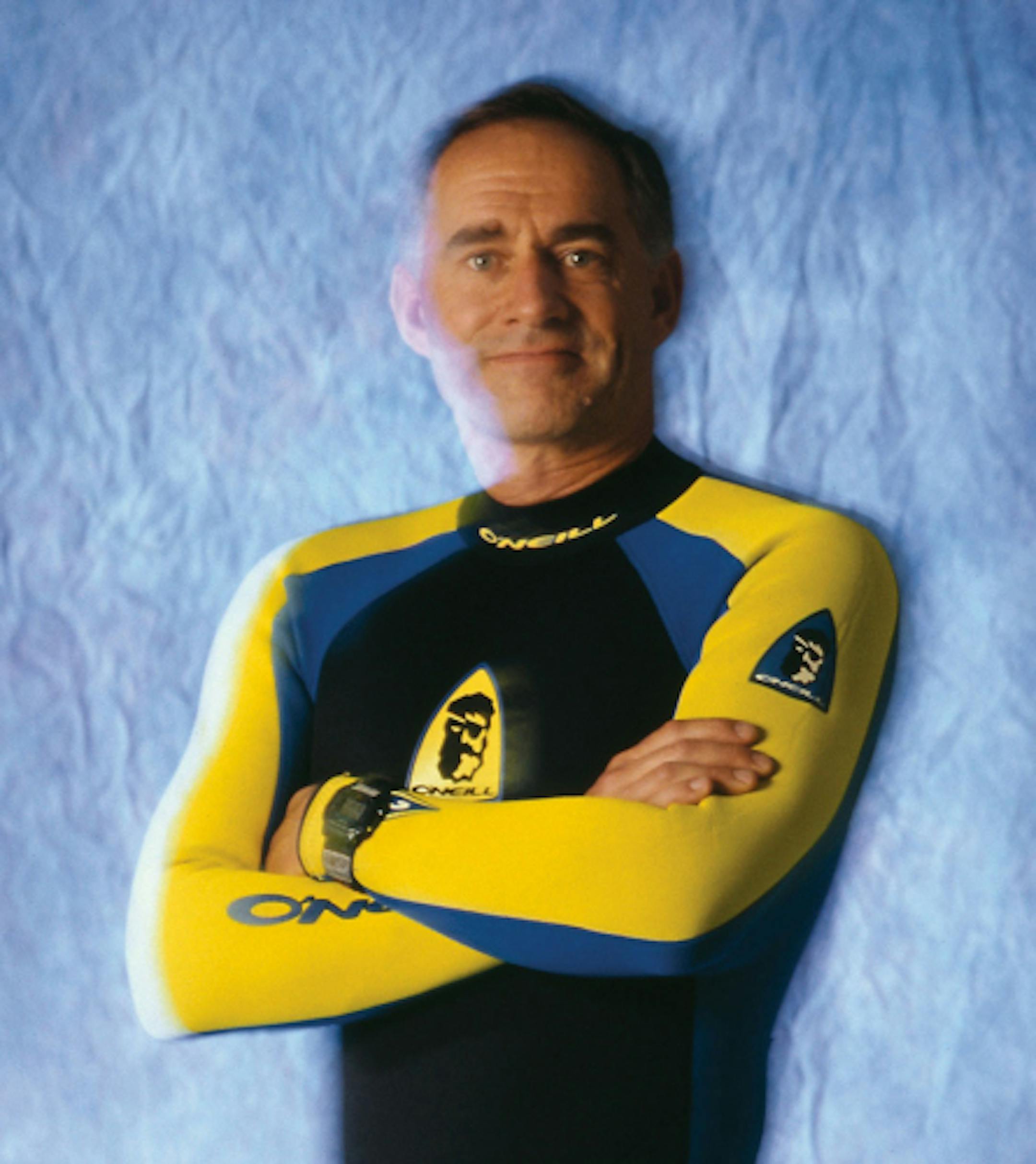
You can learn a lot by strapping a camera onto a penguin. Or a shark. Or a lion. Or any of the other wild animals that Greg Marshall has studied using audio-video technology.
Marshall, 49, is the brains behind Crittercam, an invention he has been using for 20 years in research he's done as a National Geographic Society marine biologist.
"Almost every Crittercam deployment is something exciting, unusual and new," he said from his office in Washington, D.C. "We truly do not know what these animals are doing out there; they live in a world we have no access to. So this is the first opportunity we have to observe them on their time scales and their world."
Marshall will share his Crittercam adventures with an audience when he returns Thursday to his native Minneapolis to be the first speaker in the four-part, once-a-month series called "National Geographic Live!" at the State Theatre.
You've seen Marshall's Crittercam in action as part of the Oscar-winning 2005 film "March of the Penguins" or any of many National Geographic TV specials he's worked on, including two Emmy winners.
For "March of the Penguins," Marshall's penguin-powered underwater footage -- done under the auspices of a separate research project with the Scripps Institute of Oceanography -- was augmented with topside footage shot by the film's French makers. A documentary on the film's DVD offers a behind-the-scenes look at his work.
Marshall was a grad student in 1985 when he came up with the idea for Crittercam. In Belize, he was filming a shark underwater when he noticed a remora, a suckerfish, attached to its larger host. If he could make a camera small enough and streamline it, he thought, the device could be attached to the silent predator like a remora, providing a fish's-eye view of "how that shark's life unfolds through that alien space known as the ocean."
"As I was scuba-diving on that particular day, this idea occurred to me, and I've been trying to make it happen ever since," Marshall said.
The first Crittercam, which he tried out on a "very accommodating" captive sea turtle, weighed about 8 pounds. One thing he learned from that experiment, which has continued to be true, is that the animal did not seem to change its behavior.