

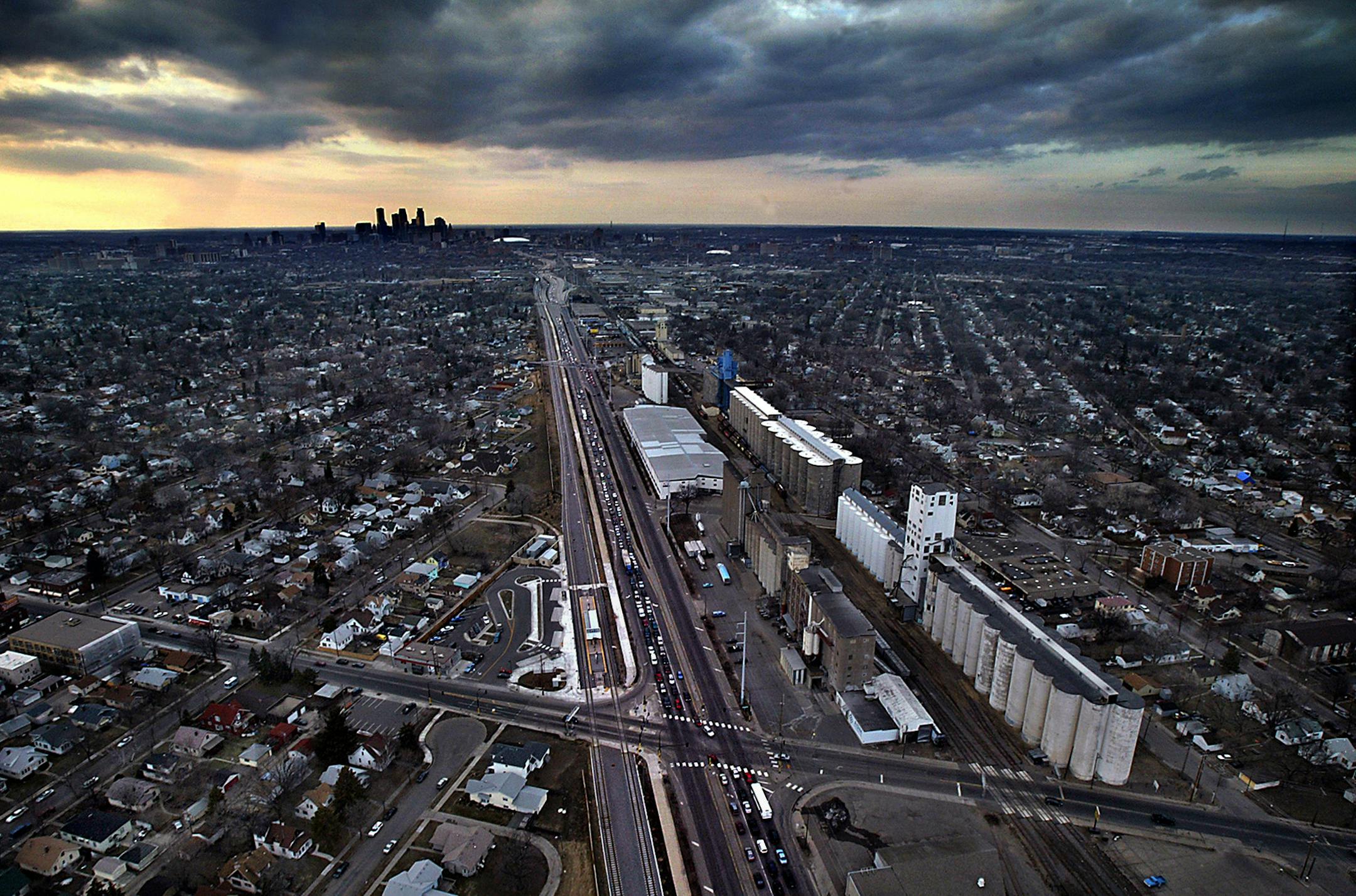
In early 2004, I wrote an article for Mpls.St.Paul magazine, the purpose of which was to introduce its readers, most of whom did not use public transit, to the new Hiawatha Line, then set to open in a few weeks. My thesis (the article is archived at http://bit.ly/APlattLRT) was an unusual one in the decadeslong battles over transit modes and efficient use of public dollars.
Back then, idealistic liberals wanted more buses, as the biggest transit bang for the buck. They were focused on mobility and access. Conservatives wanted no part of light-rail transit's long-term subsidy commitment. They were opposed to building infrastructure that couldn't easily be disassembled if their anti-transit values came into the majority.
I chose not to engage either perspective. Instead I suggested that LRT would probably fail at eliminating congestion but would be wildly successful in attracting riders, because it was an amenity urbanites valued.
I pointed to successful LRT starts all over the United States. I noted that, had we not built the Hiawatha (now Blue) Line, we'd be on track to becoming the only top 25 U.S. market outside San Antonio without rail transit.
I explained that no matter how many more buses we added, a substantial subset of potential riders would not get out of their cars and use them. In North America, the bus is a stigmatized form of mobility, by and large reserved for those who have no other options.
Back in 2004, the traditional orthodoxy about rail transit was that it was a congestion-buster. I suggested that not only did the Twin Cities not suffer particularly bad congestion, but the only way to put a dent in it would be a dedicated system of lines that offered broad connectivity in speed and comfort. (Early problems with traffic-light timing on Hiawatha Avenue meant that the LRT line actually created congestion!)
Yet the Blue Line, and now the Green Line to St. Paul, quickly blew through ridership projections. Stations were lengthened to accommodate three-car trains, and riders frequently stand without seats during rush hours.
As we approach the one-year anniversary of the Green Line, with Southwest LRT mired in ever-deepening controversy and ever-spiraling costs, and with nascent Bottineau LRT already generating threats of environmental lawsuits, it seems a good moment to review what we've learned — what's worked and what hasn't in our ambivalent affair with rail.


