
Lidia Bastianich savors the flavors of her culinary journey

Everybody's favorite nonna shares memorable moments of her life on and off the PBS screen.

Tribune News Service
January 18, 2024 at 2:00PM
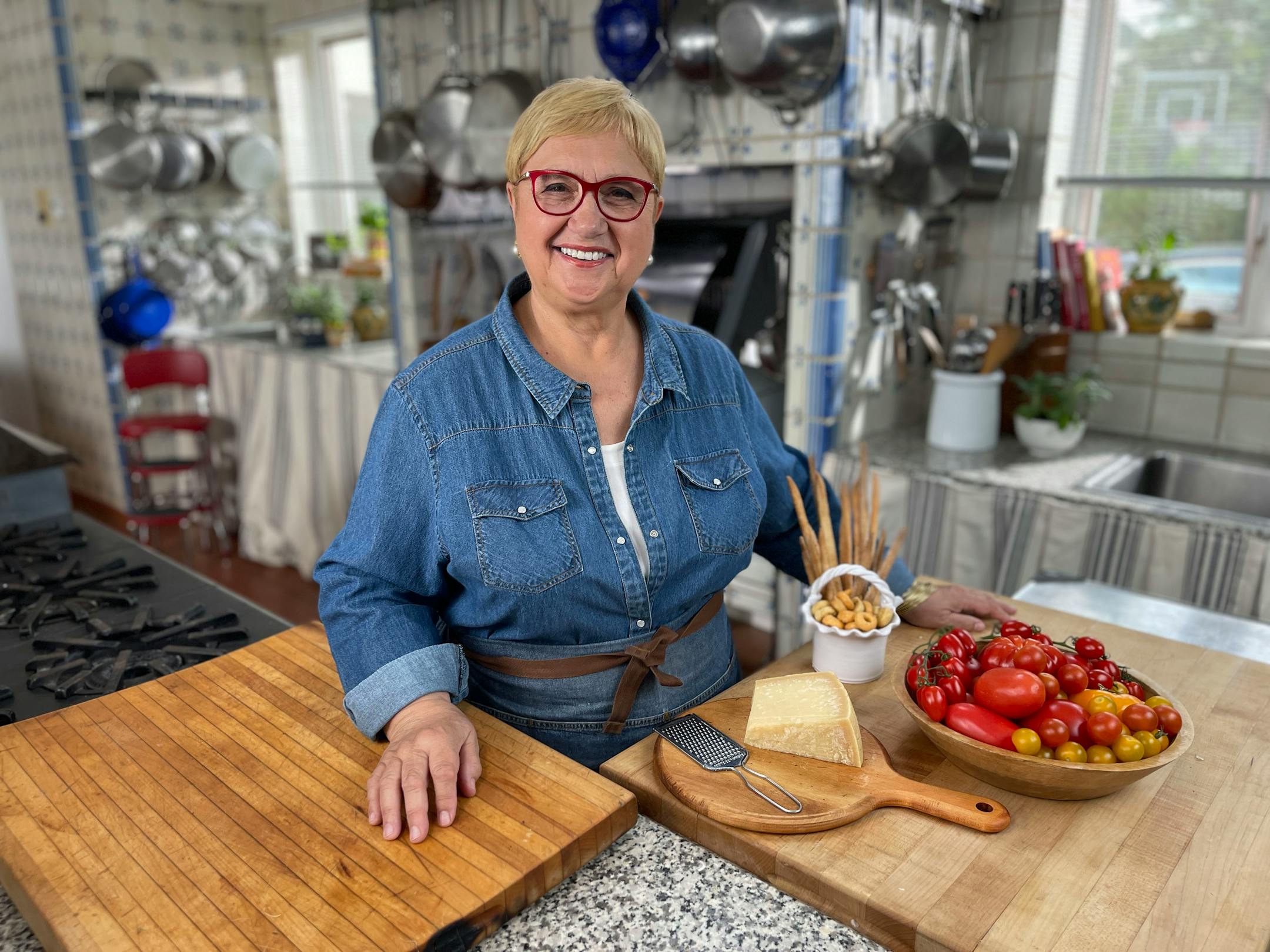
Author and restaurateur Lidia Bastianich presides over her kitchen on one of her culinary shows, “Lidia’s Kitchen.” A special about her, “25 Years With Lidia: a Culinary Jubilee,” is available on PBS.org or the PBS App. (PBS, TNS/The Minnesota Star Tribune)

Transforming from a refugee to a celebrated chef might seem like a massive leap, but it happened to Lidia Bastianich, who became the matron of the "mangiare" when she began hosting her own cooking show on public television.

Now celebrating with a PBS special "25 Years With Lidia: a Culinary Jubilee," which can be seen on PBS.org and the PBS App, Bastianich admits it wasn't always so easy.

Born in a part of Croatia that was once Italian, Bastianich and her family fled to Trieste, Italy, as communism began to spread. She was 10 years old when they escaped, but it was her grandmother's farm in the old country where she first fell in love with food.

"My grandmother's farm had everything — ducks, chickens, pigs. We didn't have much, but we always had food that we nurtured from the land. I remember gathering clover for the rabbits," she recalled.

It was a far cry from her stay in Trieste, which she remembers as "standing in line with my little plate waiting for food."

The family spent two years in the refugee camp before they were allowed to immigrate to the United States. But Bastianich was never far from food. When she was 14, she began working in a bakery and later in a pizzeria.

She married Felice Bastianich and later the two of them opened their first restaurant with Lidia as the hostess. It was only then did she begin to spread the word about her Italian culinary skills. For 10 years she worked as a sous chef.

In the early 1970s, the Italian cuisine was more Italian American, she recalled, when the early immigrants adapted the cuisine because they had to make do without the products they used in the old country. And they came up with another version of the cuisine that was delicious.

She returned to Italy every summer to research the craft of Italian cooking. "And this is how I gained my hands-on," she said with a smile.

Bastianich and her husband eventually owned two restaurants but sold those to open a bigger venture, Felidia, in New York City, where she wanted to serve traditional regional foods like polenta and risotto. They were not common on other menus at that time.

"I wanted them to know what we cook at home as Italians," she said. "I was going to become the chef, and we were going to do the regional food of Italy."

But the Bastianiches almost didn't make it financially, and had to end up borrowing money from her parents. It turned out that the building that housed the restaurant was so decrepit that it required a new foundation.

"They wouldn't allow us to go on unless we did that, and that almost broke our dream. We ran out of money. And I think we went $750,000 over budget which, of course, we didn't have. The bank was not so keen on making a loan, so we opened the front of the restaurant — just the minimum. Two years later we were able to pay off the loans and open the rest of the restaurant, and that contributed to the success about three years later," she said.

Bastianich went on to win a closet full of awards, pen more than a dozen books and appear in multi-incarnations on culinary shows like "Lidia's Family Table," "Lidia's Kitchen," "Lidia's Italy."

Unlike some renowned chefs, Bastianich does not require a passport to follow her recipes. "After 25 years on PBS and 50 years in restaurants this is my message," she said.

about the writer

about the writer

Luaine Lee