

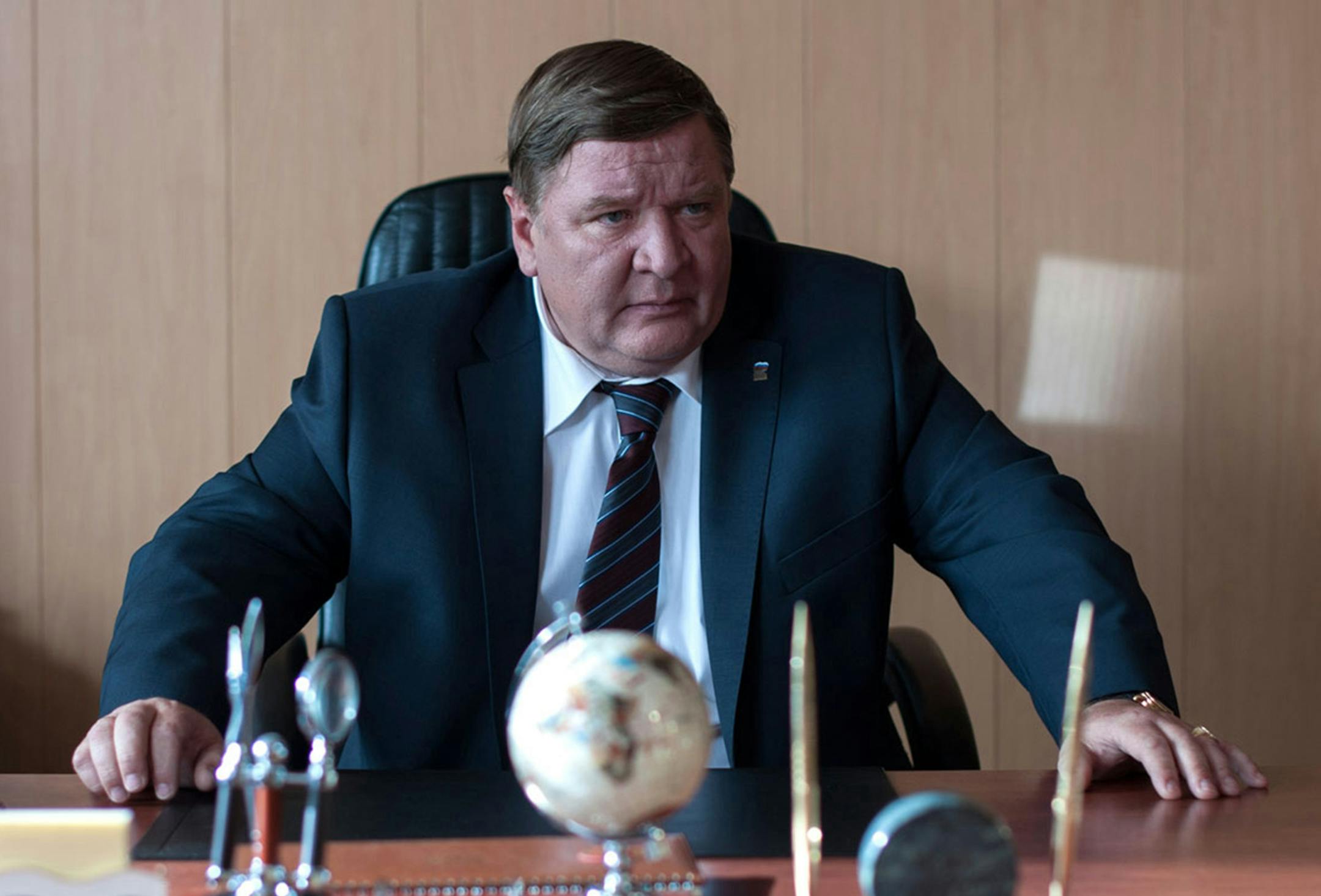
"Leviathan," the Golden-Globe-winning and Oscar-nominated Russian film about a man swallowed up not by a sea beast, but by a corrupt Russian system, opened locally Friday at the Edina Cinema.
The film is fictional. Russian corruption, however, is real. Last year's Transparency International Corruption Perceptions Index ranked Russia 136th out of 174 countries for public-sector corruption — tied with Iran, Nigeria, Lebanon, Kyrgyzstan and Cameroon.
"Leviathan's" Job-like protagonist, Kolya, is a flawed but fundamentally decent auto mechanic who gets into a fix when a venal mayor covets his spit of land in northern Russia. The mayor, who toils under a glowering portrait of Russian President Vladimir Putin, isn't the only cynical figure. An Orthodox priest, Kolya's best friend and even his wife embody social decay, symbolized by the film's image of a beached whale's skeleton. Beautifully shot, the sublime "Leviathan" shows a stark arctic beauty and a rugged people. But the system is even more rugged, and Kolya's Kafkaesque nightmare evokes British philosopher Thomas Hobbes' harsh conclusions about life and societal structures in his seminal book, "Leviathan."
This corrosive corruption matters in "Leviathan" — and in Russia, buffeted by falling oil prices, a rising ruble, European Union and U.S. sanctions, and a projected GDP contraction of 3 percent to 5 percent this year.
Nasty and brutish indeed, to borrow from Hobbes' famous phrase. And relief is not imminent. The price of oil, a global commodity, is not in Russia's control. And since Russian aggression in Ukraine continues, so too will sanctions.
However deserved, the sanctions may only be emboldening Putin, said Dmitri Trenin, director of the Moscow Center at the Carnegie Endowment for International Peace. Reacting to the sanctions can "make people feel more Russian," Trenin said from Moscow. The unity mood "can only date back to the days of the Cold War, or even a modern-day version of the Great Patriotic War of 1941-1945," the term that some Russians give to World War II.
Russia has responded with a goal of "import substitution," said Trenin. But exports are a key component of any nation's wealth creation. And Russia, adept at extraction industries, has struggled to insert exports into the global economy except for armaments, nuclear technology for civilian energy use and a few other goods.
This isn't due to Russians' shortcomings. Any society that spawned Tolstoy, Dostoevsky and Solzhenitsyn (who each explored the themes of "Leviathan"), as well as Sputnik and Sergey Brin, is an extraordinarily creative one. But that hasn't translated into a diversified economy.


