

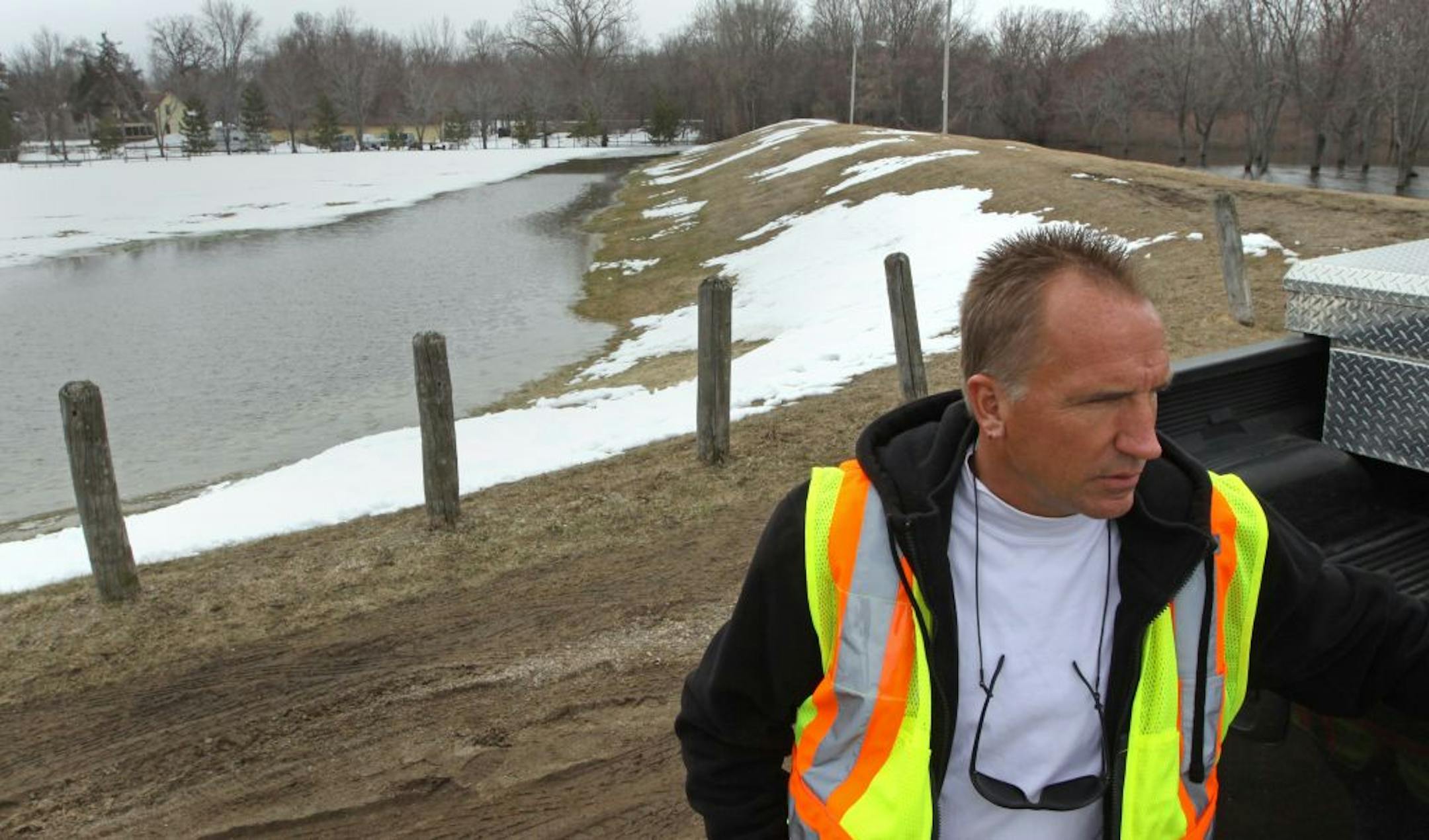
Faced with epic floods in the late 1960s, dozens of communities across Minnesota hurriedly shaped dirt, clay, sand, gravel or whatever else was available into temporary walls to hold off the floodwaters.
In most cases, those levees were supposed to be removed once the water receded.
But more than 40 years later, "emergency" levees remain the primary line of defense against floods, protecting hundreds of homes and businesses in numerous towns and cities. In an era of rising water and falling budgets, officials are viewing them with both thankfulness and nervousness.
"We're lucky they did it," said Dale Graunke, mayor and lifelong resident of Delano, which late last month held off the fourth-highest crest on the South Fork of the Crow River. "But we don't know the material. And if that levee breaks, 47 homes would be inundated. It's all over the place."
For nearly a week in March, a park on the back side of the levee in Delano, in exurban Wright County, became a small pond, filled with water that had seeped through or under the levee.
Across the metro area in Newport, south of St. Paul, an aging levee is riddled with tree roots and animal burrows, and been declared too unstable to be raised with sandbags. Volunteers were trained to inspect the aging berm for leaks along the Mississippi River.
"It creates problems when you're trying to fight a flood," said city manager Brian Anderson.
The generations-old levees aren't all suspect. The city of Carver built one in response to a 1969 flood that has withstood more than four decades of Minnesota River floods without significant problems. It has been temporarily raised with clay several times in recent years, said public works director Paul Schultz.


