
Letter of the Day (May 5): Pesticides and honeybees

In my experience, consumers can't get a straight answer on neonicotinoids.

May 2, 2014 at 11:44PM
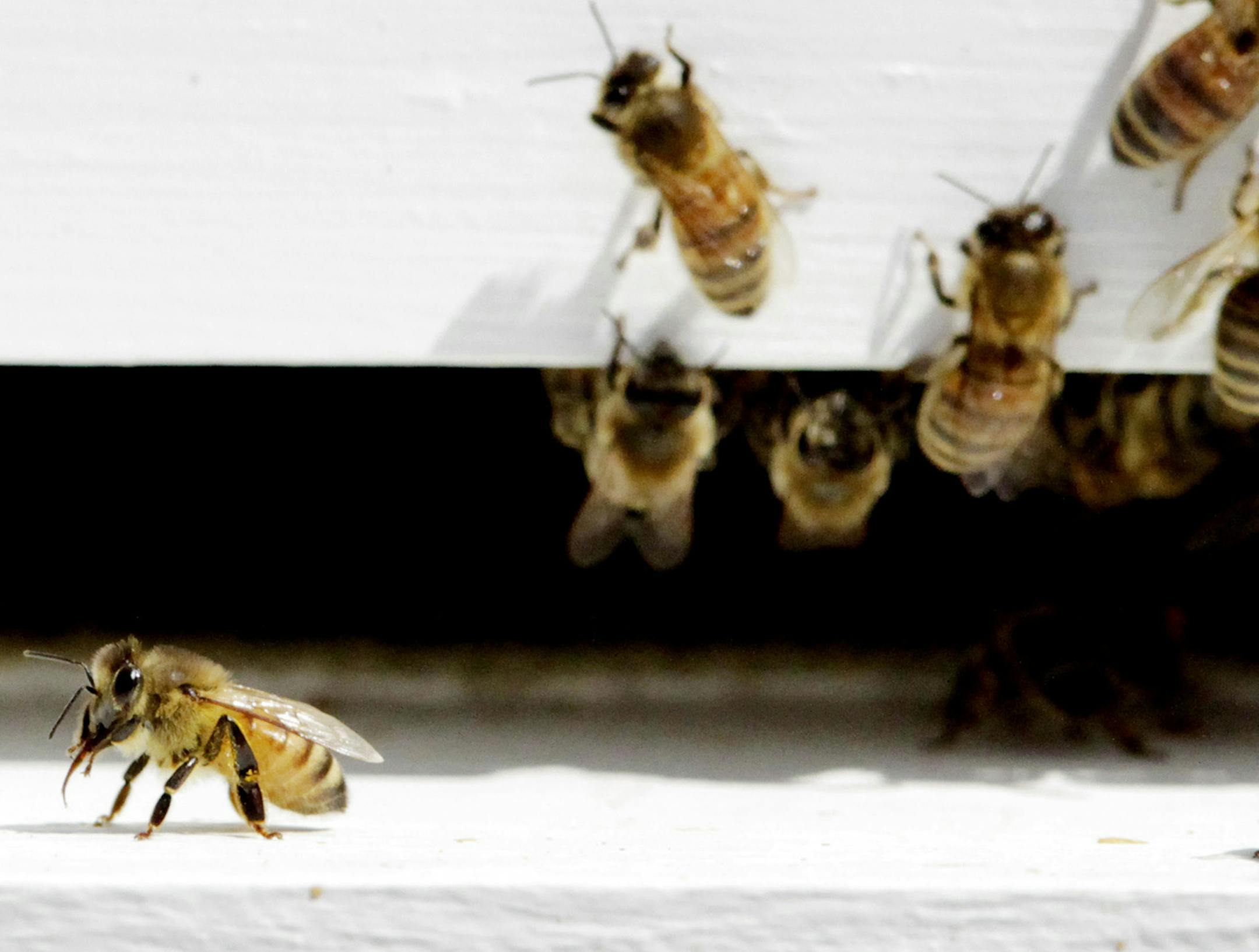
Bees come and go from a bee hive in West Bath, Maine on Monday, April 30, 2012. A state bee expert says conditions are perfect for another honeybee die-off, after a mild winter and unseasonably warm early spring have created conditions reminiscent of 2010, when an explosion in the mite populations killed off many colonies. (AP Photo/Pat Wellenbach) ORG XMIT: MEPW104 ORG XMIT: MIN1401201720220426 ORG XMIT: MIN1404081904231821
Bees come and go from a bee hive in West Bath, Maine on Monday, April 30, 2012. A state bee expert says conditions are perfect for another honeybee die-off, after a mild winter and unseasonably warm early spring have created conditions reminiscent of 2010, when an explosion in the mite populations killed off many colonies. (AP Photo/Pat Wellenbach) ORG XMIT: MEPW104 ORG XMIT: MIN1401201720220426 ORG XMIT: MIN1404081904231821 (The Minnesota Star Tribune)

There has been a lot of conversation recently about big-box stores selling plants that have been treated with neonicotinoids, systemic pesticides implicated in honeybee die-offs. I went to one such store this week and was given the name of the live goods buyer in the seasonal hardware department, the individual responsible for procuring plants for many stores in the chain. I specifically asked the buyer whether the plants were treated with neonicotinoids and received this noncommittal response: "Our growers follow all the recommended methods and controls for producing the healthiest plants possible. All federal, state and local guidelines are taken into account in the growers' operations. All plants are labeled in accordance with federal guidelines as to where they are produced and by which grower."

It is time for the Minnesota Legislature to step up and pass pending bills (HF 2908 and SF 2727) requiring plant labels to identify neonicotinoid usage, and for the growers and buyers to give meaningful responses to consumers, not this rope-a-dope nonsense that I received.

Susan Barrett, South St. Paul
about the writer

about the writer

More from No Section

See More
FILE -- A rent deposit slot at an apartment complex in Tucker, Ga., on July 21, 2020. As an eviction crisis has seemed increasingly likely this summer, everyone in the housing market has made the same plea to Washington: Send money — lots of it — that would keep renters in their homes and landlords afloat. (Melissa Golden/The New York Times) ORG XMIT: XNYT58
Melissa Golden/The New York Times

It’s too soon to tell how much the immigration crackdown is to blame.