

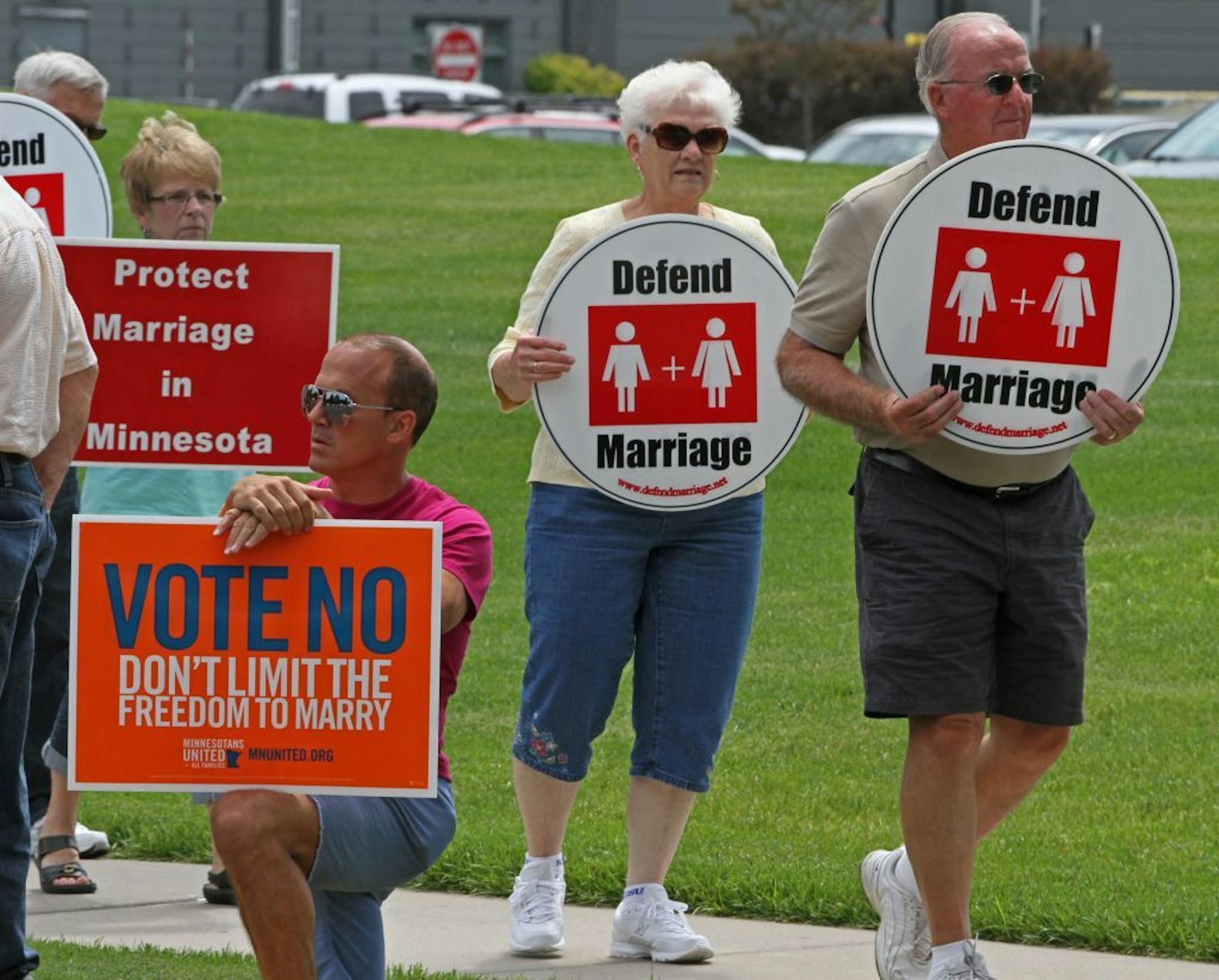
When deciding "yes" or "no" on a constitutional amendment, a voter's role changes from a selector of officeholders -- presidents, senators, legislators, sheriffs -- to "constitution maker." The voter then is not choosing between candidates for a two- or four- or six-year term, but adopting a policy for the state that is likely to last for generations. Constitution making is serious business.I have long been an admirer of the Minnesota Constitution. It does well what a constitution should do and does hardly anything that a constitution should not do.
In the early 1970s, to protect my admired constitution from those who thought a few obsolete and awkward provisions indicated substantive defects, I undertook a stylistic rewrite of the document. I then won overwhelming approval of my draft from a Constitutional Study Commission, from both houses of the Legislature, and then, in 1974, from Minnesota voters.
So now the Minnesota Constitution is not only substantively sound, but is free of embarrassing trivia such as describing our northern border as "the British Possessions" rather than "Canada." And we took out 4,000 words that had served their purpose and become meaningless.
So now the state Constitution is not just substantively sound; it is also up to date and grammatically sound. It is a great document in all respects.
How did this come about? The answer is simple. For more than 150 years, Minnesotans -- legislators and voters -- have treated the document with respect -- and with care. We have never used it as a vehicle for ordinary lawmaking, that is, as a vehicle for overriding or substituting for legislative decisions.
We have treated it for what it is -- the charter for our state government. The question I now ask is whether either of the amendments to be voted on this November have a place in this great document.
• • •
A good constitution, like Minnesota's, does three things. First, it sets up the structure of government. That is, it creates the legislative, executive and judicial branches and establishes a few basic rules relating to those branches and to local government units. Second, it protects our most fundamental rights. Third, it guards against having the Legislature and governor succumb to the worst temptations of financial irresponsibility, power-grabbing and favor-granting that history -- experience -- has exposed.


