

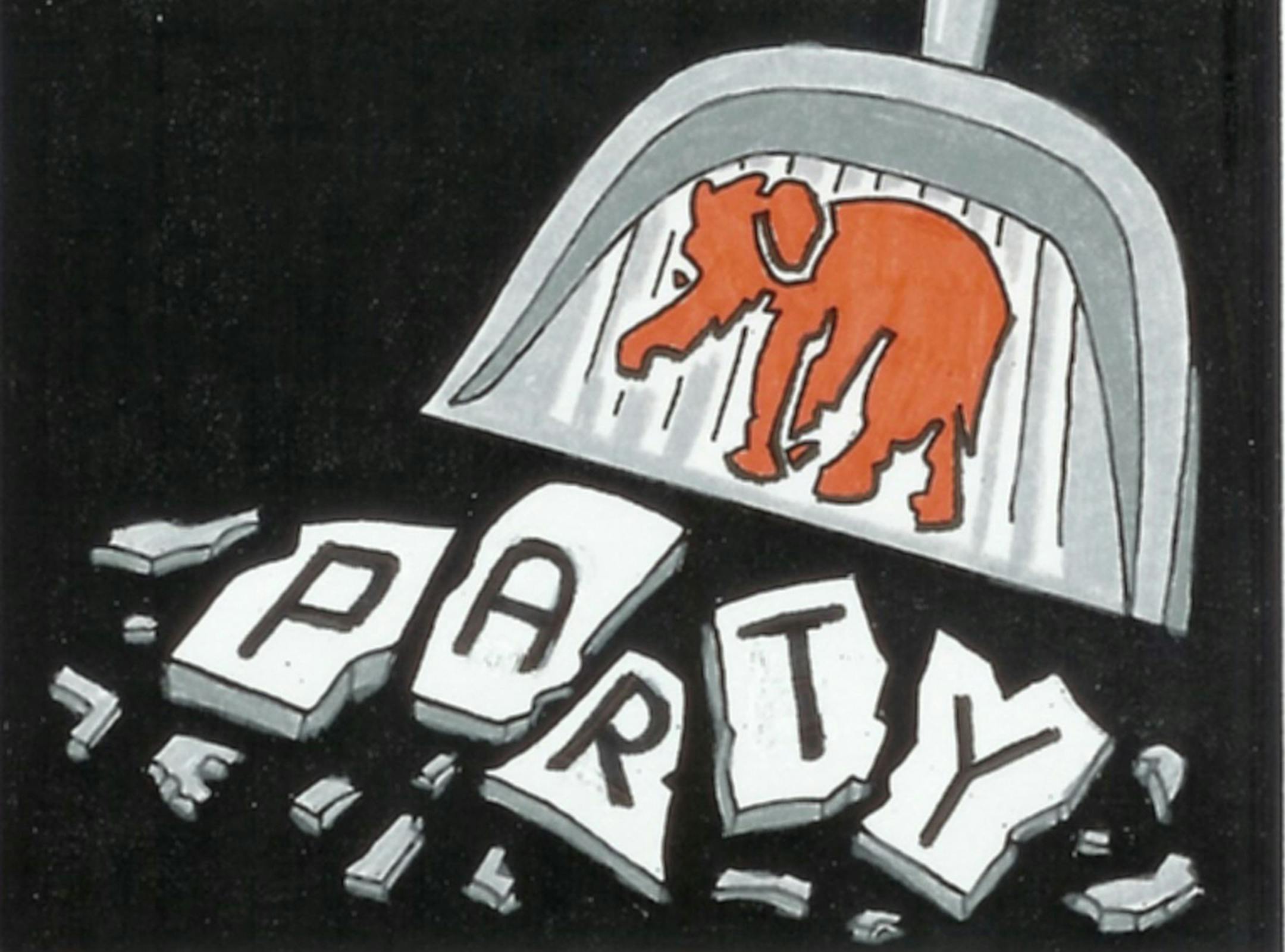
The Republican Party of Minnesota seems to have adopted its own policy of "don't ask, don't tell" when it comes to investigating its multimillion-dollar financial mismanagement scandal.
A number of weeks ago, the party's finance chairman, Bill Guidera, challenged me, stating: "If you want a forensic audit of the RPM financial books, why don't you pay for it?"
Minnesota voters would agree that we need a two-party system to maintain the checks and balances necessary for good governance. When one political party dominates state politics, it often spells economic turmoil.
What's perplexing is the lack of interest at the state party offices in conducting a forensic audit. You would think that members of the party would be demanding accountability from those who held fiduciary responsibility over their finances. The party is reported to have amassed a debt of more than $2.3 million.
Party leaders said they investigated the problems and, on May 7, issued a report saying they could find no illegality. The 20-page report from the party's Budget, Financial Controls and Oversight Committee went to great lengths to point out that although calls were made for a forensic audit, no audit of any kind was completed. Rather, there was a review of 11 specific party transactions.
However, on July 13, the Minnesota Campaign Finance and Public Disclosure Board leveled fines exceeding $33,000 and acknowledged a possible criminal violation. Even the most partisan Republican should find this troubling and demand a forensic audit.
The Republican Party of Minnesota must prove to the state's voters that it is not engaged in a cover-up. Remember, it's not the act of wrongdoing but the cover-up that always brings you down. The party's executive board has instead taken the "don't ask, don't tell" position, insisting the party is broke and can't afford a forensic audit.
The Campaign Finance Board ruling raises troubling questions: Why is the party really refusing to conduct an audit? Will an audit uncover more alleged civil or criminal wrongdoing? Will it implicate more GOP leaders, including officeholders past and present? Would it expose additional Federal Election Commission violations? Will it expose graft, political payoffs or outright corruption? Will more GOP lobbyists or major donors be implicated?


