Donald Trump is now the presidential candidate of the Republican Party, with a significant chance to be the next president of the United States. He promises that, if he is elected, America will stop "losing" and become "great" once again. In his hands, one supposes, the world will be our oyster.
But Trump is short on specifics as to what strategy and tactics will make us great. Does he know? Can he learn? From whom?
As Trump himself noted in his recent foreign-policy speech, we Americans actually won both World War II and the Cold War, and by winning those struggles we became great on the world stage. We feel we have become "small" through losing in Vietnam, Iraq and Afghanistan.
Trump proposes to "Make America Great Again" by pulling us out of NATO and renting out our military forces to those who will pay to hire them. He similarly proposes to make us "great" essentially by pulling us out of the world economy with high tariffs and trade wars.
All this will only raise the cost of goods for all Americans and make us "small" in the long view of world history.
And Trump is not alone. Bernie Sanders is with him in opposing free trade and, echoing the 1962 Port Huron Statement from the activist movement Students for a Democratic Society, in attacking Hillary Clinton for her support of American "Big Powerism."
Perhaps it would pay to ask: Why and how did we defeat fascism in World War II and communism in the Cold War? What did we do to avoid "losing" in those historic conflicts?
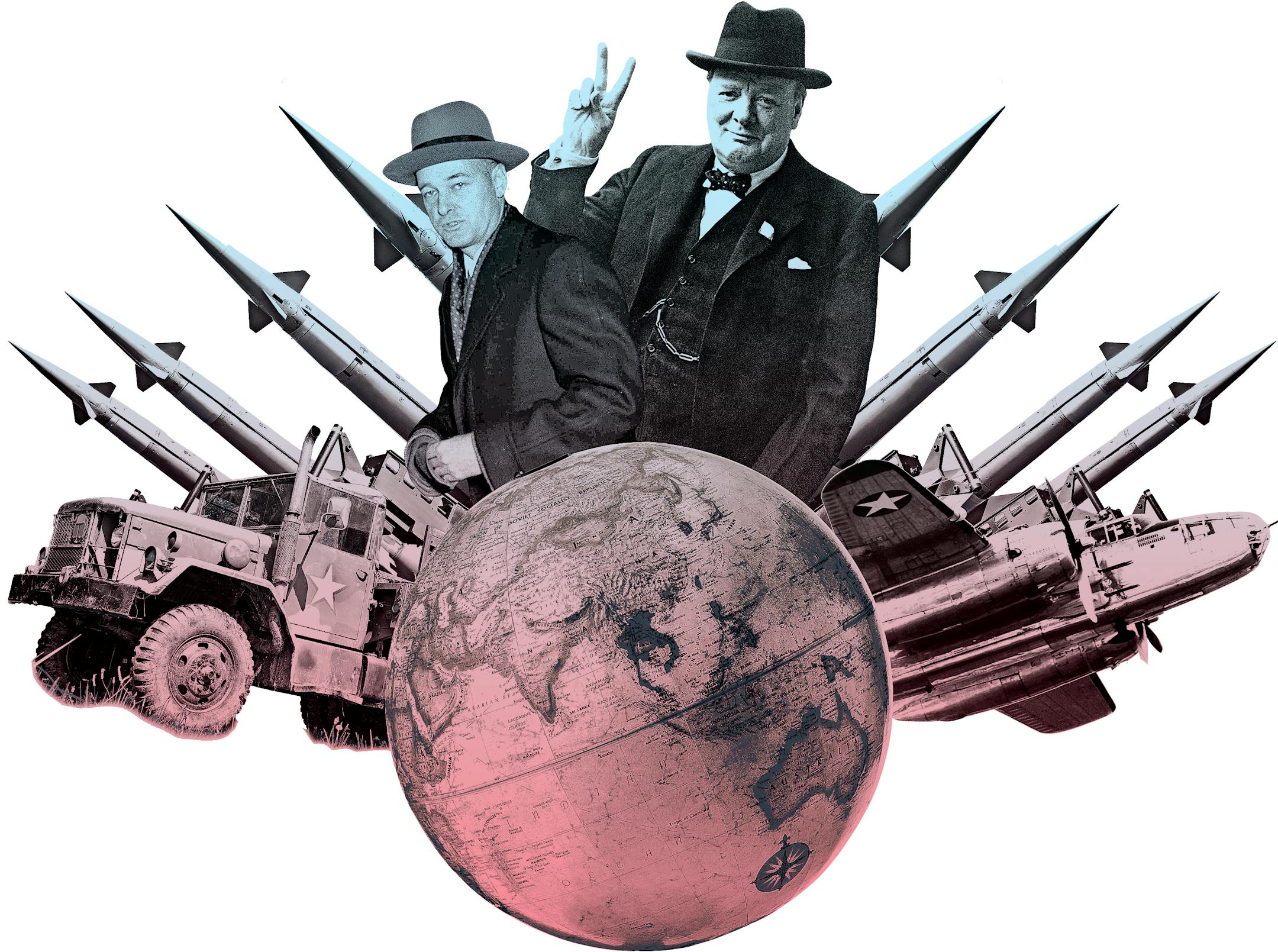
Just over 70 years ago, in March 1946, British Prime Minister Winston Churchill opened the first round of what was soon to become the "Cold War" between communism and capitalism with his "Iron Curtain" speech at Westminster College in Fulton, Mo.