

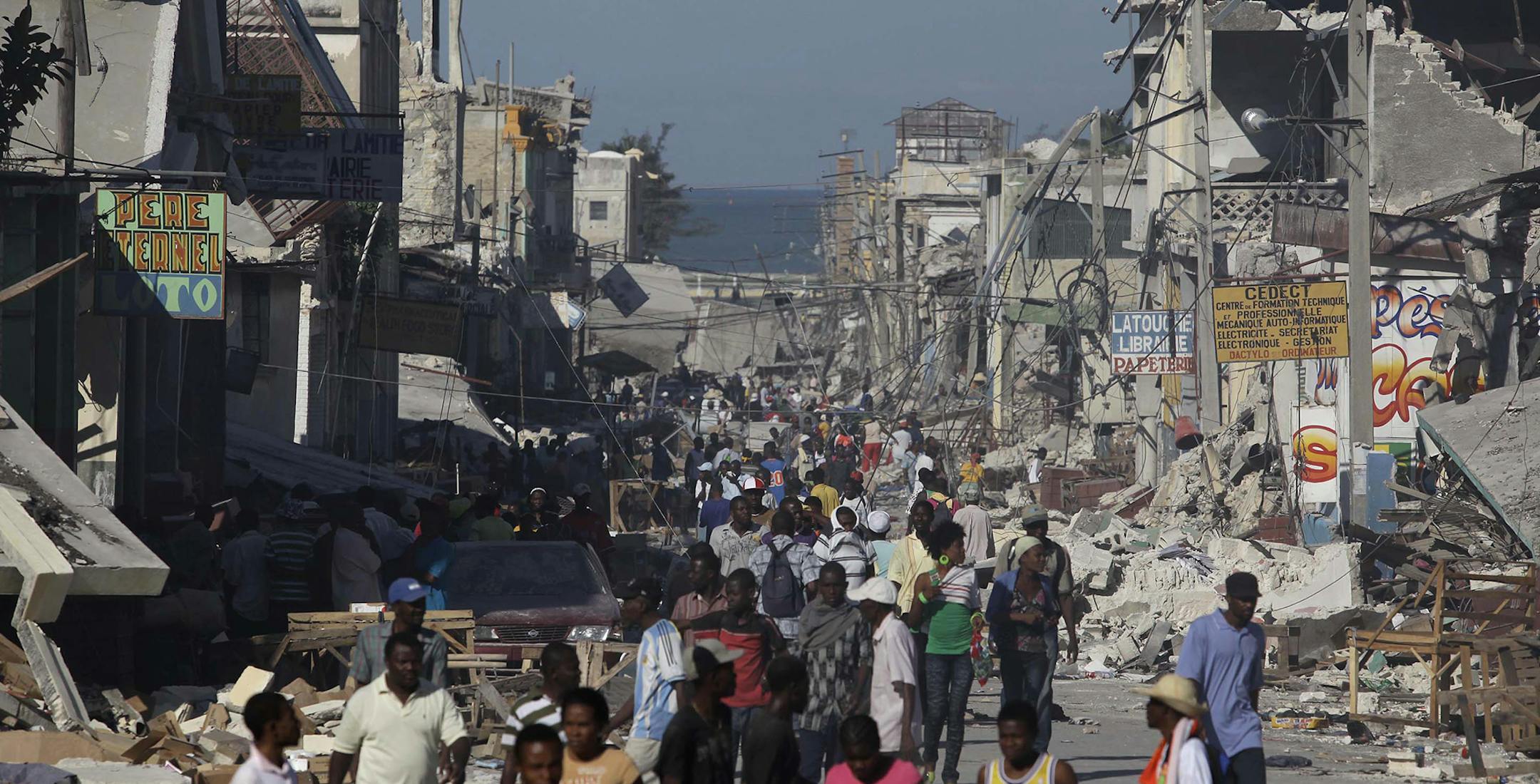
Today is the five-year anniversary of when the world literally and metaphorically broke. At 4:53 p.m. on Jan. 12, 2010, a fault line beneath the western part of Hispaniola slipped. The 7.0 earthquake that followed obliterated Haiti's capital, Port-au-Prince, with an estimated death toll of more than 250,000 souls.
The world broke in the metaphorical sense because as a global community, we failed to avoid a preventable disaster. Modern science has yet to discover how to stop earthquakes, but we are capable of preventing massive loss of life by supporting at-risk infrastructure.
Baseball fans will remember that in 1989, mere hours before Game 3 of the World Series, the Loma Prieta earthquake rattled the San Francisco Bay area with a 6.9 magnitude (similar to Haiti's, though its epicenter was in a less-densely populated area.) While a tragedy, only 63 people lost their lives.
A key difference between San Francisco and Haiti was that the latter didn't have viable infrastructure to withstand such an earthquake. Throw crippling poverty into the mix, and the ingredients for disaster were perfectly in place.
Today's story of Ebola is eerily similar. The lessons learned from Haiti apply to the Ebola epidemic, and we see this in the patient outcomes.
Among Americans treated for Ebola on U.S. soil, the survival rate is 100 percent. Eight Americans have been treated in U.S. hospitals and all have survived. Unfortunately, this doesn't include Dr. Martin Salia, a Sierra Leone doctor, and Thomas Eric Duncan, a Liberian national, both of whom were treated in the United States and died from the disease. Including them, the survival rate for Ebola in the United States rests at 80 percent.
A different story is found with a recent World Health Organization report that highlights 20,712 Ebola cases with 8,220 deaths in the three most-affected West African countries. The report also shows a 71 percent fatality rate among cases with a "definitive outcome" — in Guinea, Sierra Leone, and Liberia — which is a world away from Ebola outcomes in the United States.
These statistics are unsurprising. In the case of Liberia, the country had only 50 doctors for a population of 4.4 million.


