

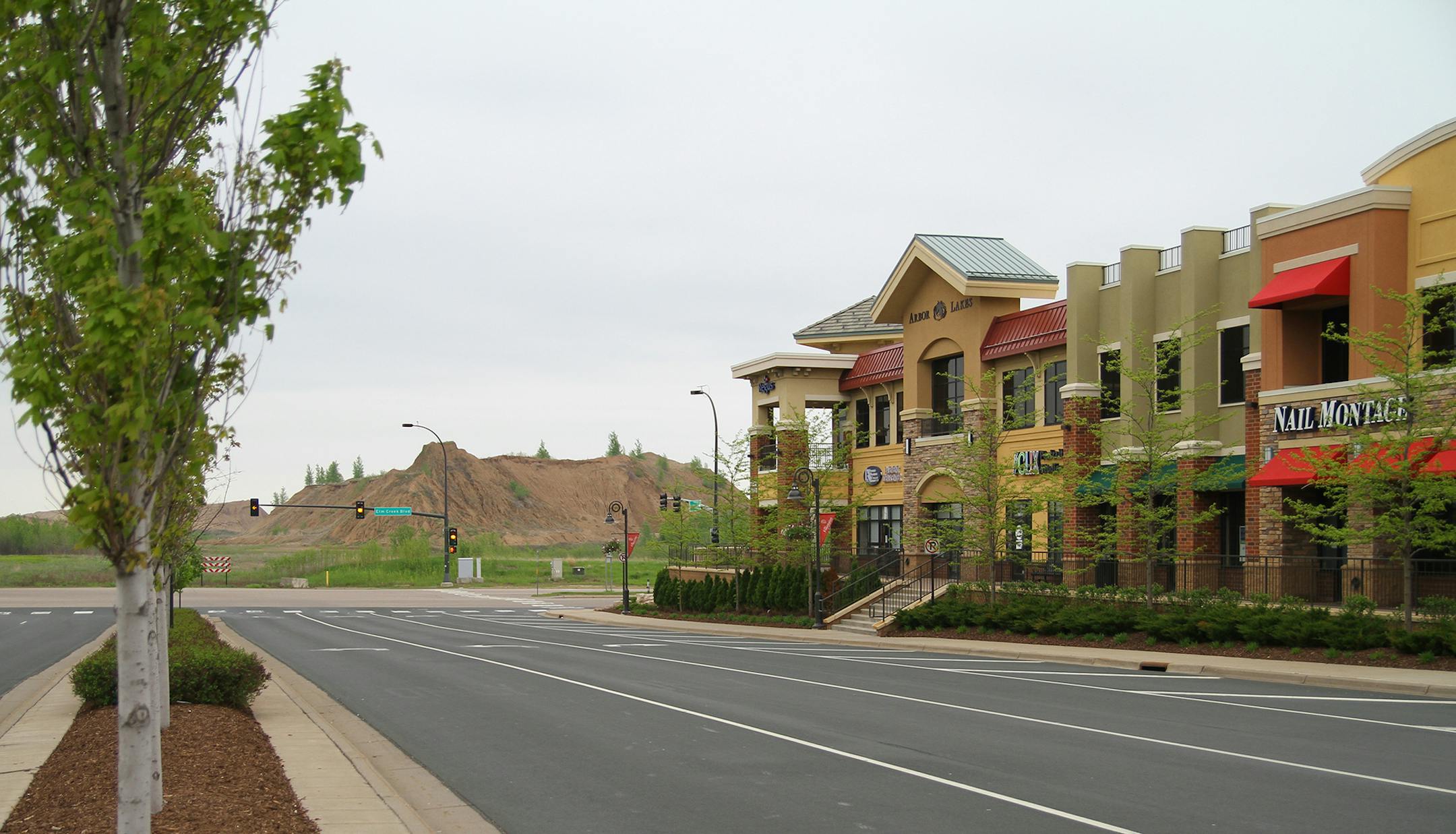
Plans to someday redevelop the vast gravel mines and pits in Maple Grove will have to hold off another year.
The city wanted to use extra taxes eventually generated from new corporate offices and industrial warehouses to pay for roads and other infrastructure in what is now one of the Twin Cities' largest gravel-mining areas. But to do so, the city needed the Legislature's approval of their plan, something that the city failed to get by the time the session ended for the year last week.
"Maple Grove and the state of Minnesota have lost a year of laying out a great opportunity for business development and job creation," City Administrator Al Madsen said. "It's unfortunate."
A similar request from Apple Valley to redevelop a 455-acre gravel site was approved, leaving out Maple Grove's and a similar request from Savage. Legislators said that the affluent northwestern suburb already redeveloped hundreds of acres of gravel pits into the Arbor Lakes shopping area without access to extra tax money.
Across the metro, more cities are finding themselves with similar redevelopment opportunities as gravel supplies dwindle, allowing them to turn the land into shopping centers or homes. Edina and Rochester have redeveloped gravel-mining land and in 2008, Burnsville got approval to use tax-increment financing (TIF) to restore gravel mining land and add infrastructure.
In Maple Grove, about 1,100 acres of gravel mining land from Hwy. 169 to Interstate 494 owned by C.S. McCrossan and the Tiller Corp. are used to build roads across the Twin Cities. As that gravel starts to get exhausted, the city is planning on redevelopment of about 600 acres into offices and warehouses.
But to do so would cost $100 million in future streets, sewers and infrastructure. The city wanted to help pay for that by making it a TIF district, using extra taxes generated over the years from the new development.
"We can't afford — and neither can the landowners — the hundreds of millions of dollars of improvements," Madsen said.


