Gov. Tim Walz marked the final stretch of end-of-session budget talks Monday by lamenting how far apart legislative leaders remained and how little time is left to strike an accord.
Leaders have yet to agree on big-picture budget numbers, a step they had hoped to achieve last week. That makes the chances of an on-time finish before the May 17 adjournment deadline increasingly slim. And Gov. Tim Walz on Monday said that budget negotiations have yet to encompass any policy proposals and instead remain fixed on "dollar amounts."
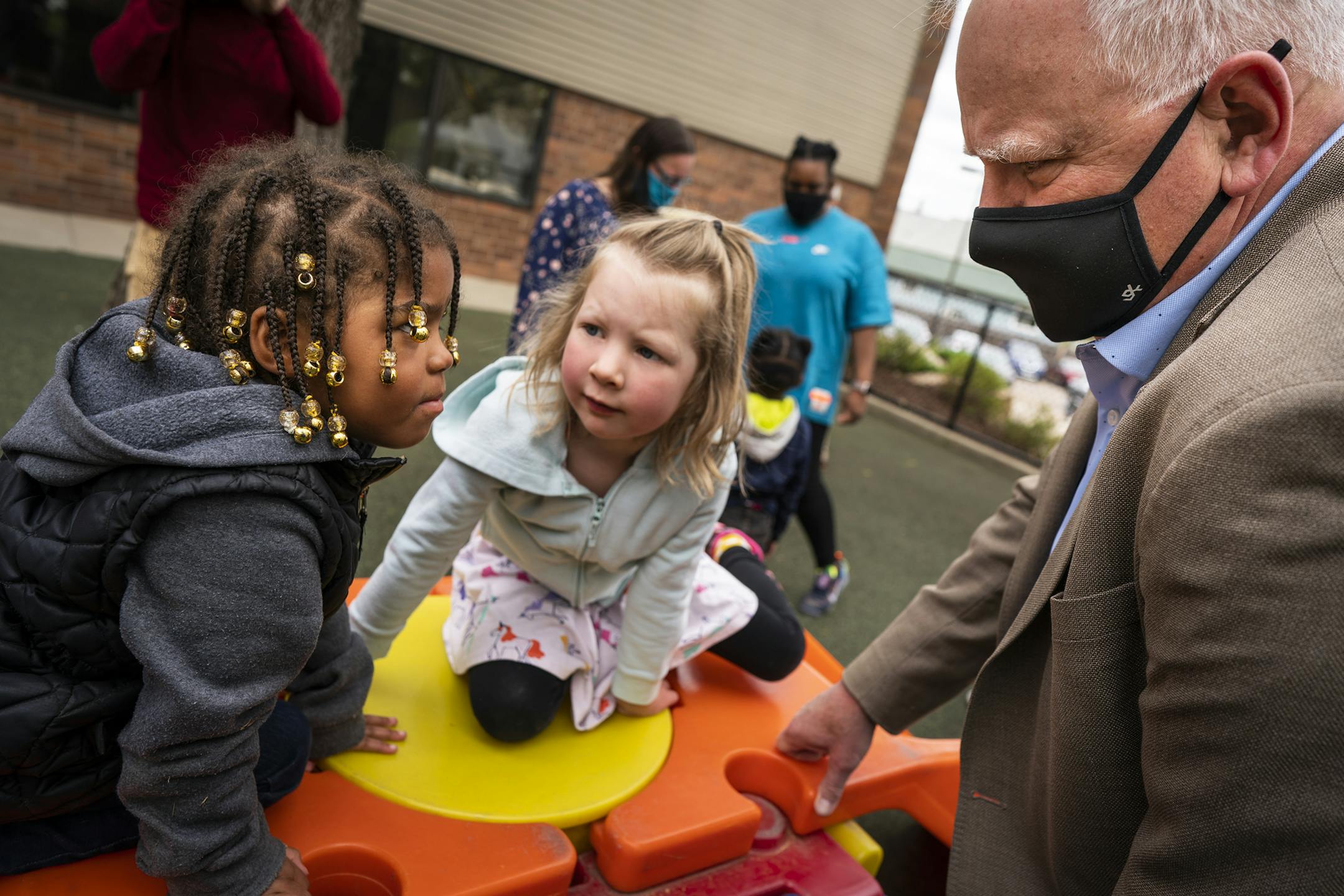
"It's incredibly frustrating to me ... that we wait until the last minute. But that's a bit of the nature of it, and it's still going," said Walz at a news conference in St. Paul, where he urged lawmakers to increase Child Care Assistance Program reimbursement rates. It was the latest in a series of press events Walz has held to push for his spending and policy priorities.
New federal guidance Monday on how to spend pandemic relief money did little to hasten slow-going budget talks. Minnesota leaders found out the state government is getting more than $2.8 billion from the American Rescue Plan, about $200 million more than initially anticipated.
Disagreements over how to use the federal dollars, and who is involved in that decisionmaking, are part of the final negotiations of the state's next two-year budget. But instead of coming together over the news of greater-than-expected federal aid, leaders of the DFL-majority House and Republican-led Senate focused on their own political priorities Monday.
Republican lawmakers quickly pressed for action on tax breaks after President Joe Biden's administration announced state and local governments could start getting the dollars within days.
Senate Majority Leader Paul Gazelka, R-East Gull Lake, said the state should give tax breaks to businesses that got forgivable Paycheck Protection Program (PPP) loans, and to individuals who received the federal $600 weekly supplemental unemployment benefits. He also reiterated his opposition to any tax increases, saying with an additional $200 million coming, "there are zero reasons, absolutely none, to ask for more money from Minnesotans."
House DFL leaders meanwhile demanded lawmakers pass the police accountability reforms that have emerged as a top Democratic policy priority this session and opposed budget cuts they said would lead to teacher layoffs.