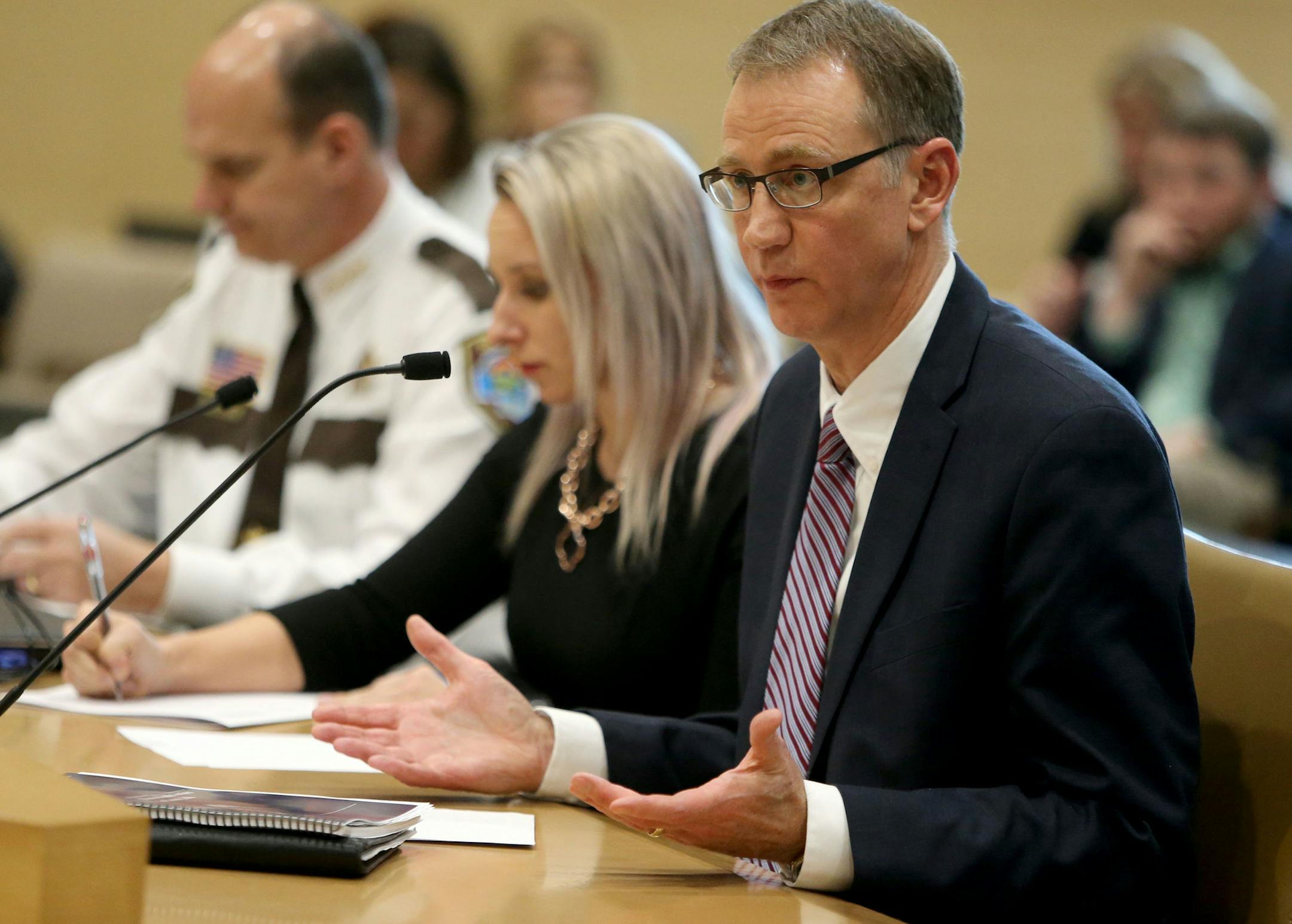
djoles@startribune.com Legislative Auditor Jim Nobles released](https://arc.stimg.co/startribunemedia/3AV2IBPV2AX3GVB73QFBGITW3Y.jpg?&w=1080)
Hundreds of Minnesotans with mental illnesses are being confined in county jails — in some cases, illegally — because of a severe shortage of psychiatric services and long-standing gaps in state law.
In a scathing report issued Thursday, the Minnesota Legislative Auditor found that nearly two-thirds of those deemed too incompetent to stand trial because of mental illness are jailed while courts decide whether to commit them, in direct violation of state law.
While in county jails, mental health care is woefully inadequate and often falls short of professional standards, the auditor found. Jails across the state are often failing to perform mandatory checks of inmates' well-being, which has put them at greater risk of self-harm and suicide. Since 2000, there have been more than 50 suicides and 770 suicide attempts in Minnesota jails — some preventable, the auditor found.
While the report focused on mental health services in jails, the auditor also highlighted deep flaws throughout the state's system of treating people with serious mental illnesses. These include a statewide shortage of psychiatric beds, limited access to outpatient mental health services, and laws that prevent the timely admission of jail inmates to state-operated psychiatric facilities.
"The Legislature, [the state] and the counties should continue to work toward a comprehensive mental health system," said Joel Alter, evaluation coordinator for the state legislative auditor, at a Senate hearing Thursday. "We are not there yet. And arguably, we are a long ways away from being there."
The findings were disclosed at a Senate health and human services committee hearing on Thursday, where several lawmakers called for broad-based reforms and expressed frustration with the state's piecemeal efforts to relieve chronic shortages in the delivery of mental health services.
In an interview Thursday, Gov. Mark Dayton said his office will make a series of recommendations to the Legislature that would address the patient-flow bottlenecks in Minnesota's mental health system. He said the recommendations would be "expensive," but added that, "It's money we absolutely have to spend."
"I use the word 'crisis,' " Dayton said. "I think we have a crisis in our whole mental health system, starting with those in jails. … We don't have facilities available to move people to a therapeutic environment."