

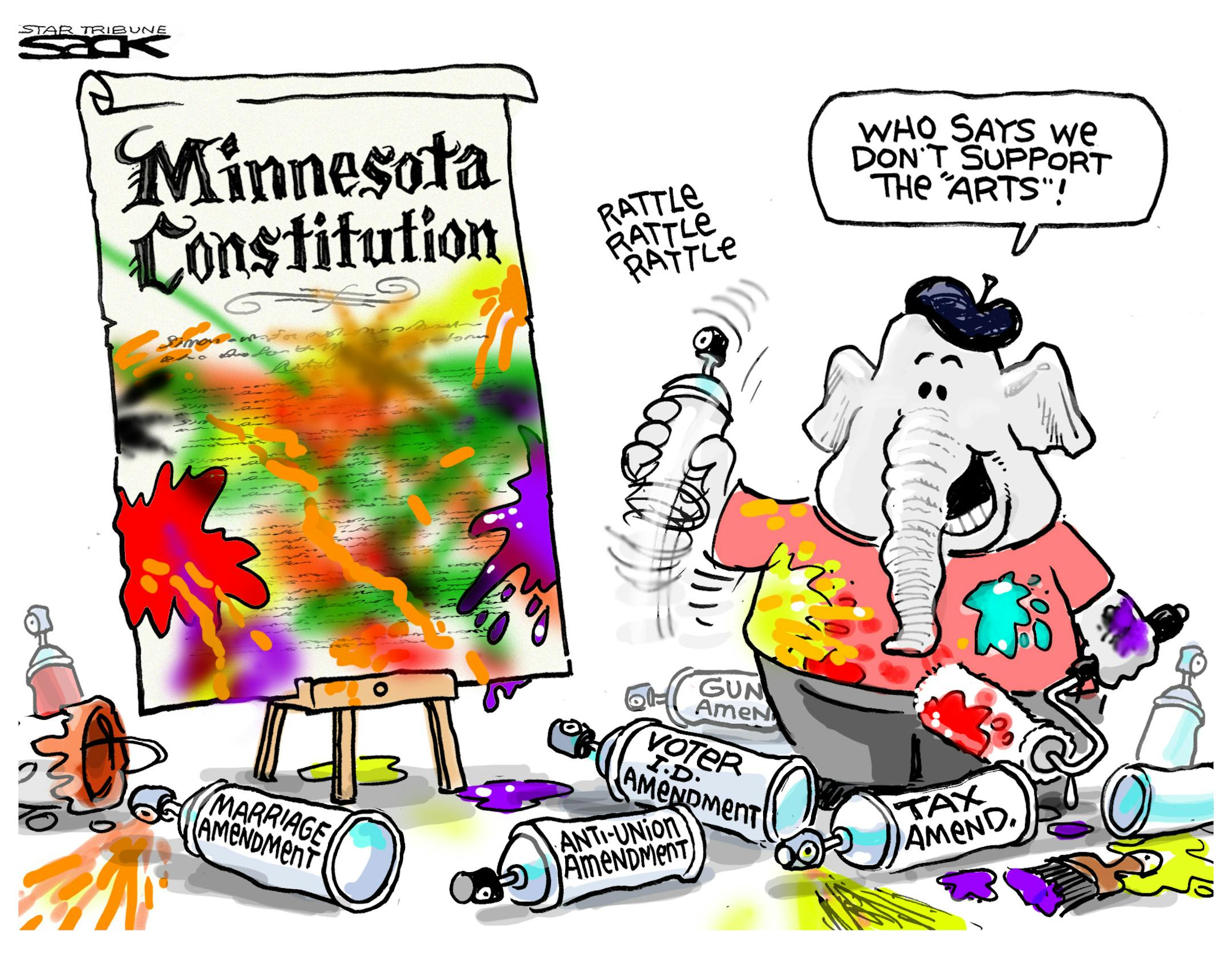
With one constitutional amendment already on the 2012 ballot and some two dozen more on the desks of legislators, it's time to consider the risks of legislators abandoning their role and making voters lawmakers.
To be sure, constitutions -- state or federal -- are living documents, subject to amendment in an evolving world. But legislators need to be selective, referring to voters only issues that can't be resolved through the lawmaking powers the Constitution already provides them.
Constitutions are statements of the principles of government; they should not become a list of laws.
Abolishing the office of lieutenant governor or lengthening terms of elected officials would require a constitutional amendment. Requiring people to present photo IDs in order to vote, however, could be accomplished by ordinary legislation.
The backers of the voter ID amendment in Minnesota recognize this, saying that the constitutional amendment option would be pursued if Gov. Mark Dayton vetoed a bill to require photo IDs.
Most constitutional amendments being proposed in Minnesota for 2012 are substitutes for legislative action.
Submitting policy issues to the voters in a general election has seductive appeal. It is a way for the Legislature to bypass a governor's veto by a simple majority of its members.
But in choosing to deploy this tactic, the Legislature is allowing its power to be usurped. Called "direct legislation," the process moves a state down a road filled with deep potholes, as experience in other states has demonstrated.


