

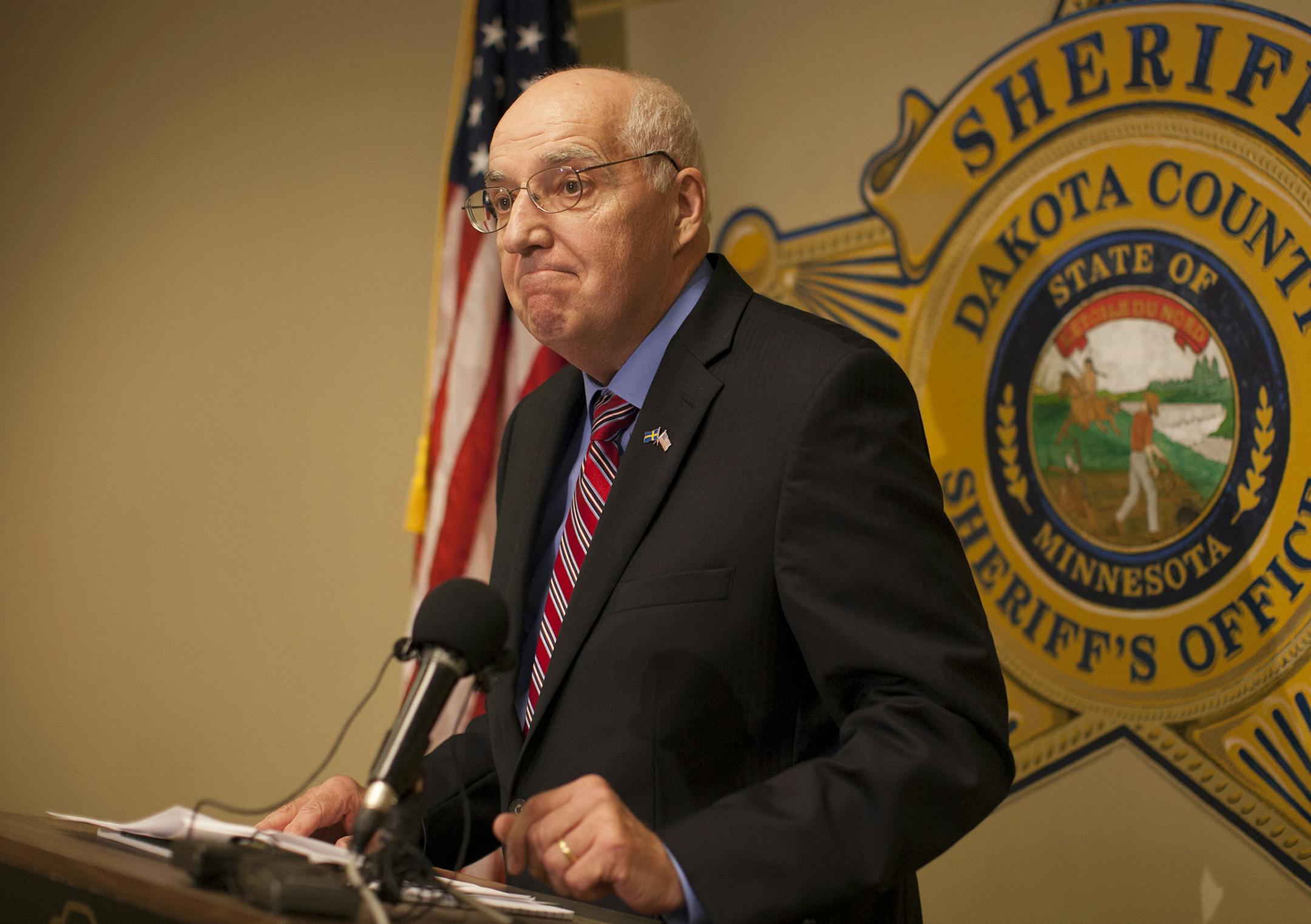
A legal battle is brewing over Dakota County's return to collecting DNA samples from people who have been charged with certain violent crimes but not yet convicted.
The Sheriff's Office resumed the practice, previously ruled unconstitutional by the Minnesota Court of Appeals, in August on the advice of County Attorney James Backstrom. He said a 2013 U.S. Supreme Court ruling that upheld pre-conviction DNA collection "effectively overturned" the state ruling.
But almost immediately, the Minnesota Board of Public Defenders mounted a challenge. Attorneys began asking judges to block the DNA collection in individual cases, claiming it's an unreasonable search and seizure. The effort has so far prevented DNA collection from at least eight of the 24 people booked since August who met the criteria to submit a sample, said Dakota County Sheriff Tim Leslie. Several other cases have motions pending.
In response, Backstrom filed a petition with the Minnesota Court of Appeals this week, asking the state to stop the judges from interceding. District judges do not have standing to intervene in a process unrelated to the case's criminal charges or evidence, he said, and prosecutors can't appeal the procedural motions.
"We welcome a legal challenge in this process," Backstrom said. "We have no problem going up and arguing why the statute is constitutional, but we need a forum to do that and we do not have that right now."
Public defenders leading the opposition argue that the DNA collection violates their clients' constitutional rights. The U.S. Supreme Court dealt with a Maryland case, and the defenders say the 2006 Minnesota Court of Appeals ruling should apply here. That 2006 opinion says the privacy of a person not yet convicted is "not outweighed by the state's interest in collecting a specimen for DNA analysis."
'Let's figure this out'
State Public Defender Bill Ward said Backstrom and Leslie decided "that they are going to take the law into their own hands."
"They're trying to build a database with someone only arrested on suspicion," Ward said. "They're just taking [the DNA] because they can."


