

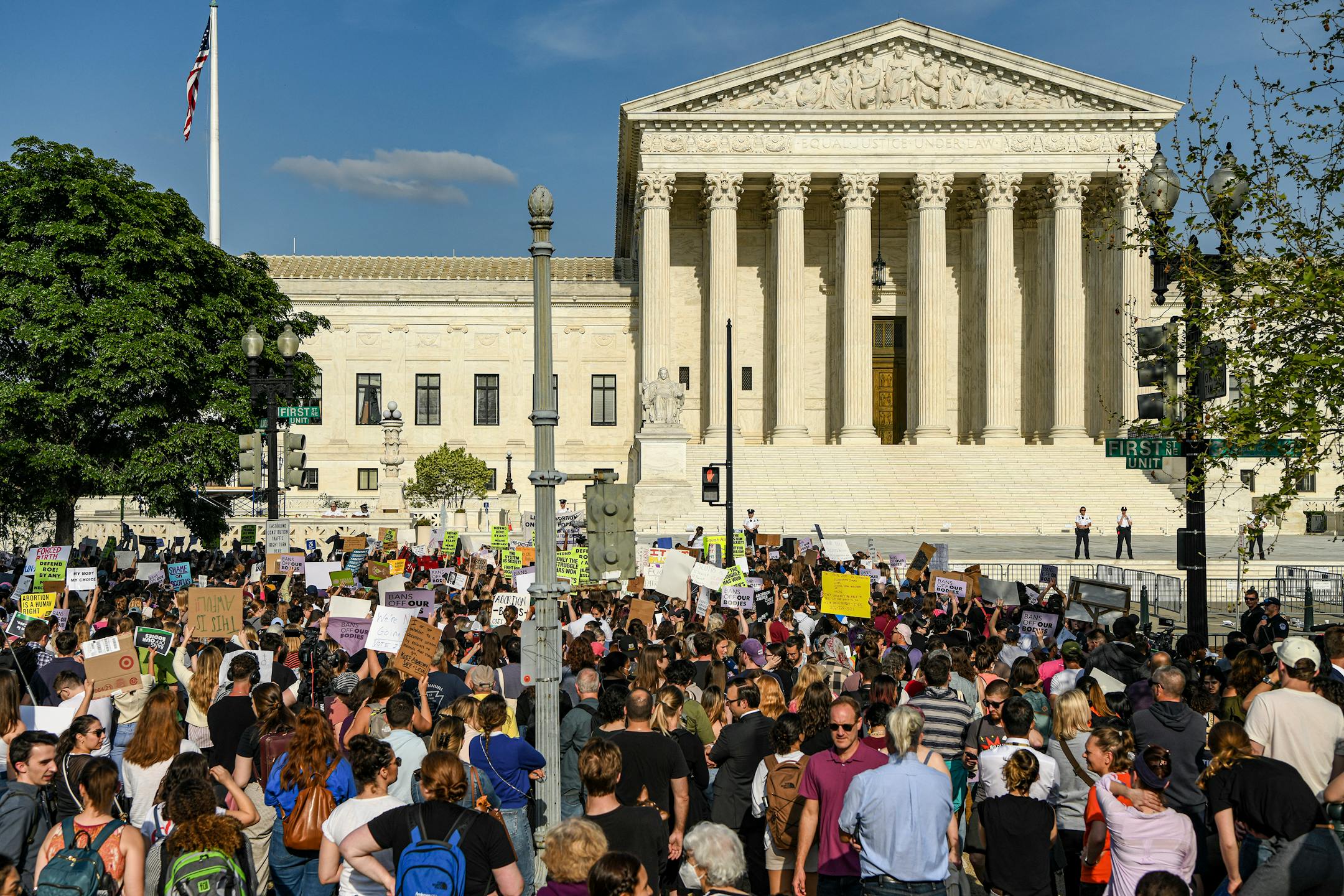
The number of legal abortions in the United States decreased just over 6% in the six months after the Supreme Court ended the right to abortion in June, according to a report released Tuesday, the most comprehensive and up-to-date count of abortions nationwide.
The overall decline exceeds what was estimated by some researchers before the Supreme Court ruling. New restrictions and the obstacles they create — including travel logistics and expenses, long wait times at some clinics and confusion or fear about laws — seem to have prevented even more women than expected from obtaining legal abortions.
For many women seeking an abortion, "the barriers that were in place were not surmountable," said Alison Norris, an Ohio State professor of epidemiology and one of the authors of the report. Although many clinics expanded capacity, she said, "it's insufficient to manage the losses."
The data goes through Dec. 31, by which point 13 states had banned abortion with almost no exceptions and another, Georgia, had banned it after six weeks of pregnancy. Legal abortions in the states with total bans fell to nearly zero — an average decrease of around 7,300 abortions a month compared with April and May. They increased by an average of 2,100 a month in states where abortion remained legal, suggesting that some women traveled across state lines. The increase offset only a third of the decrease in the states with bans.
Abortion access is continuing to change. In the coming days, Florida — which allows abortion through the 15th week of pregnancy and has become a destination for women seeking abortions in the South — is expected to ban it after six weeks. And one of the pills in the two-pill regimen for medication abortion, a method that now represents the majority of legal abortions in America, may be curtailed if a federal court ruling in Texas issued Friday is upheld.
The new data overestimates the total reduction in abortions, because it does not include people who obtained abortions outside the U.S. health system, such as by ordering pills online from other countries. Previous estimates suggest that more than 6,500 women are requesting pills this way each month. That is more than the total decline in legal abortions, although it is uncertain how many of those requests result in abortions.
The report is from WeCount, a research effort of the Society of Family Planning, which supports abortion rights. It collected abortion counts from 83% of U.S. clinics, hospitals and telehealth providers. For the places that did not provide data, the group estimated the changes based on historical data and the trends for nearby clinics.
Abortions also fell substantially in states with restrictions that fell shy of complete bans. For example, in Georgia, which outlaws abortions after six weeks of pregnancy, the number of abortions decreased 40%. (The earliest date most women can find out they're pregnant is at four weeks.)

