

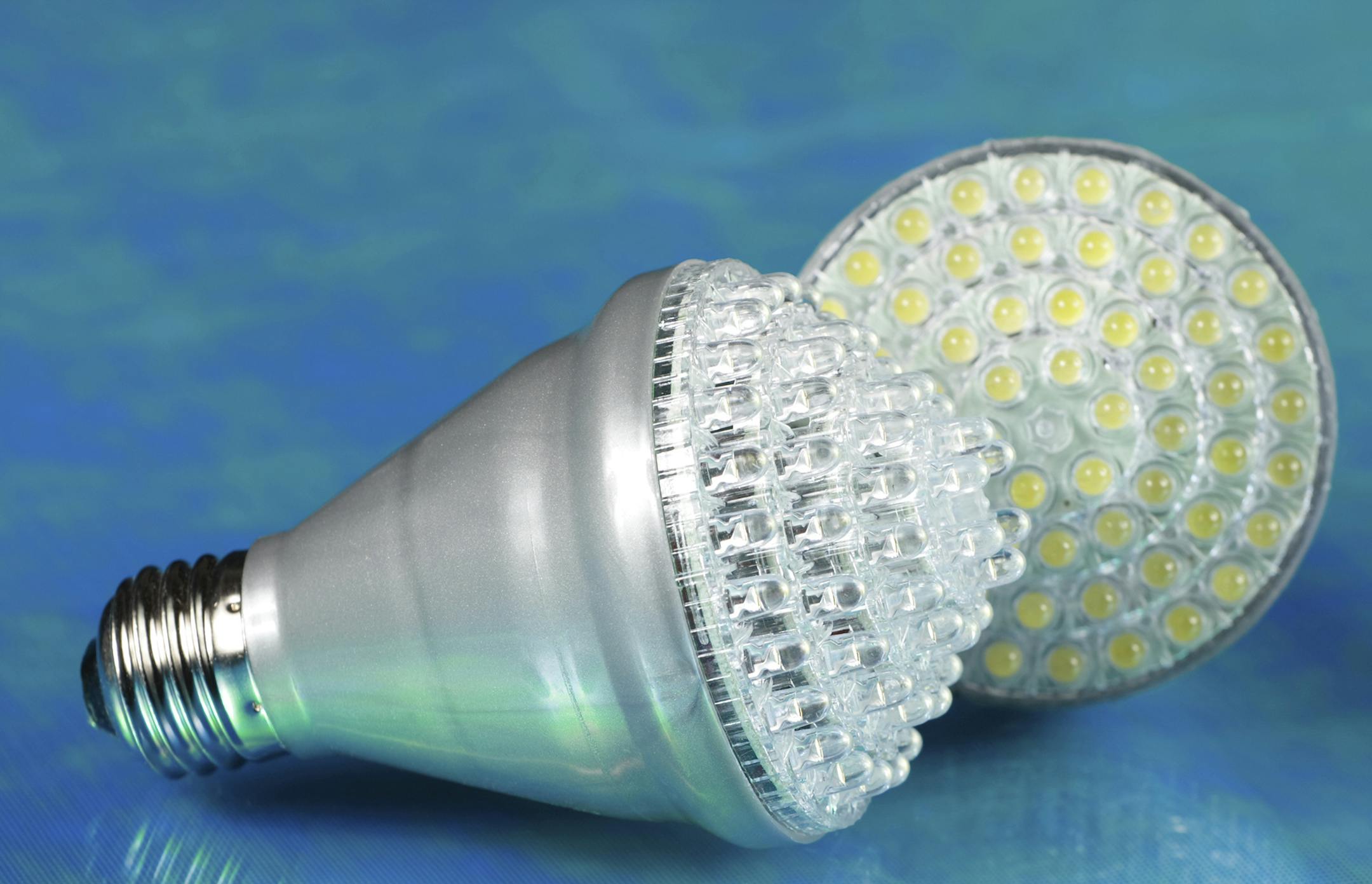
On Tuesday, the Royal Swedish Academy of Sciences awarded the 2014 Nobel Prize in Physics to three researchers whose work contributed to the development of a radically more efficient form of lighting known as light-emitting diodes, or LEDs.
In announcing the award, the academy said, "Replacing light bulbs and fluorescent tubes with LEDs will lead to a drastic reduction of electricity requirements for lighting." The president of the Institute of Physics noted: "With 20 percent of the world's electricity used for lighting, it's been calculated that optimal use of LED lighting could reduce this to 4 percent."
The winners, Shuji Nakamura, an American, and Isamu Akasaki and Hiroshi Amano, both from Japan, justly deserve their Nobel, and should be commended for creating a technology that produces the same amount of light with less energy.
But it would be a mistake to assume that LEDs will significantly reduce overall energy consumption.
LEDs are but the latest breakthrough in lighting efficiency. Consider the series of accelerated lighting revolutions ushered in by the Industrial Revolution. In the early and mid-1800s, for instance, "town gas" made from coal was developed and used to illuminate streetlights. Whale oil became the preferred indoor lighting fuel for upper-income Americans until it was replaced by more efficient kerosene lamps. And finally, in the late 19th century, the electric light bulb emerged.
Along the way, demand would rise for each of these new technologies and then increase as new ways were found to use them. This led to more overall energy consumption.
From outer space, you can see the results of this long progression of illumination. More and more of the planet is dotted with clusters of lights.
There is no reason to think that the trend lines for demand for LED lighting will be any different, especially as incomes rise and the desire for this cheaper technology takes hold in huge, emerging economies like China, India and Nigeria, where the sheer volume of the demand will be likely to trump the efficiency gains.


