

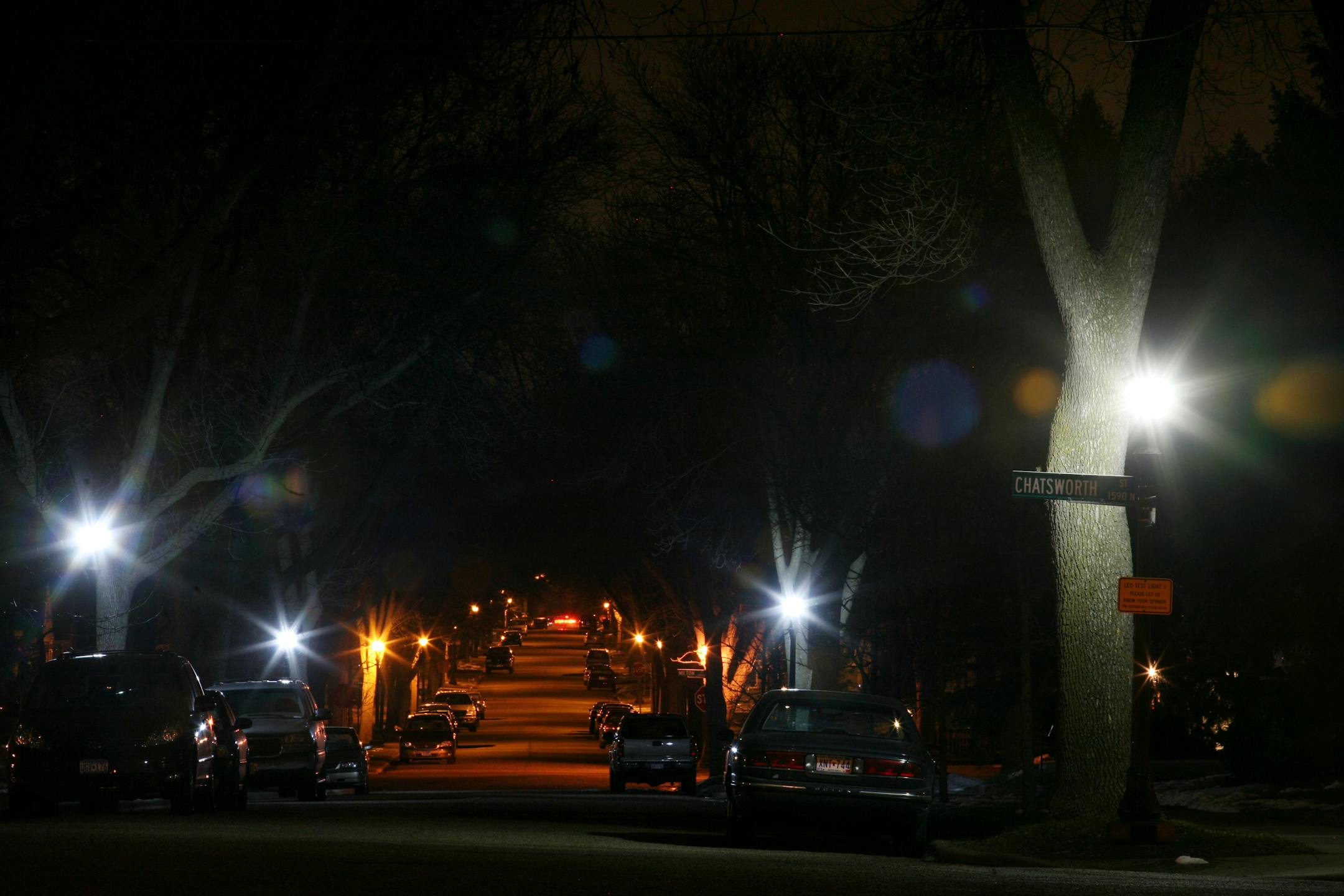
St. Paul is trying to take on a whole new light.
Drive down Iowa Avenue in the Como neighborhood these nights, and one block shines brighter than the others. That's because the city is testing light-emitting diode, or LED, lamps in the streetlights. They're whiter, brighter and, city officials hope, cheaper to maintain.
As St. Paul fashions itself an eco-friendly image, it's following the lead of Anchorage, Alaska, Ann Arbor, Mich., and Austin, Texas, in testing LED technology to save money and use less energy when lighting city streets. It's a relatively new exploration that's catching on around the continent, and only a few other smaller cities in Minnesota have dabbled in LED streetlights.
LED technology has been around for decades and is commonly used in video screens, signs and traffic signals. It has been tested for more general and demanding uses -- such as in streetlights -- in the past several years.
"We're doing it for the environment, to help be cost-effective, and we also want to be a leader in green manufacturing and green technology," said Anne Hunt, St. Paul's environmental policy director. Each year, St. Paul spends about $8.5 million on electricity and natural gas and $3 million on fuel for city activities, she said.
The city is going through a cash crunch, so any savings are helpful.
The use of LEDs in traffic signals and walk signs -- begun in 2003 -- has saved St. Paul $85,000 in labor costs and about $180,000 in electricity, Hunt said.
Considering the city has 37,000 streetlights and spends $3.16 million to operate and maintain them, a reduction in energy use and longer wait time between replacements could help the budget, said city traffic engineer Paul St. Martin.


