I'm not even halfway up an ephemeral ice wall in Banff National Park before I find myself, quite literally, on a slippery slope.
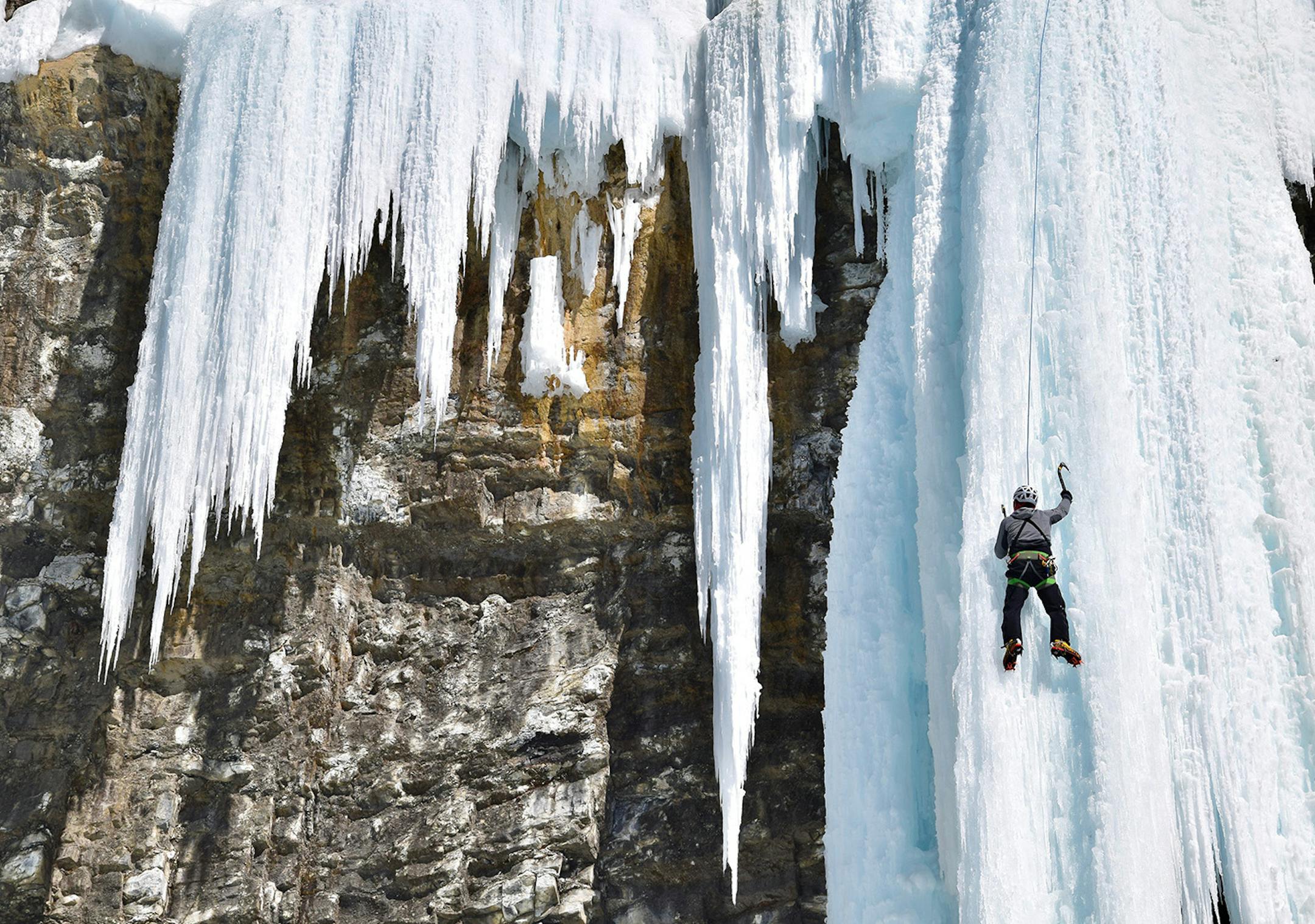
To my right is a sinewy gorge known as Johnston Canyon and the snow-covered hiking path from which I came. To my left are stunning pillars of frozen river water that blanket a craggy 100-foot cliff. I, of course, am precariously affixed to said cliff, and I'm clinging for dear life.
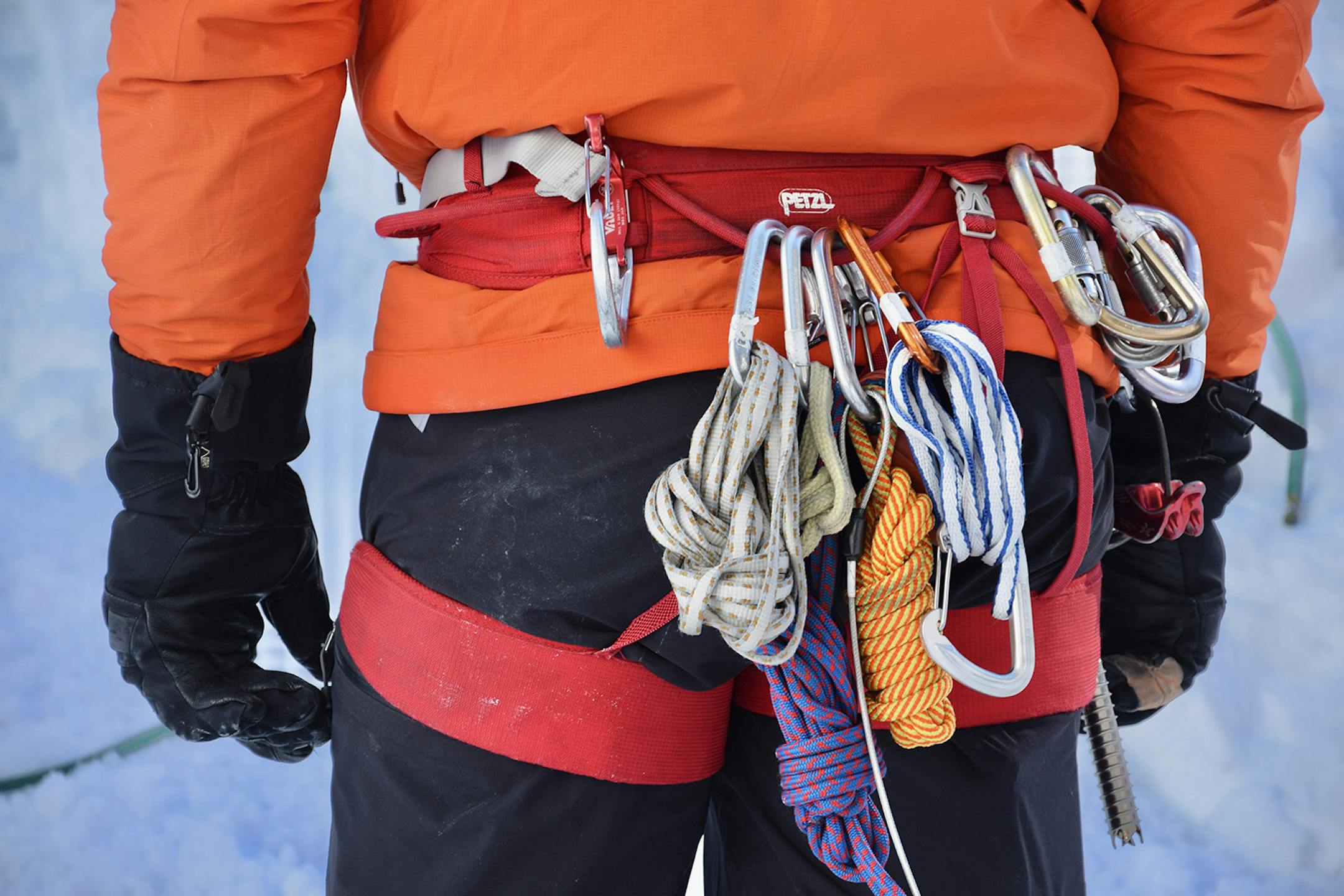
I've come to this unspoiled spot to take a stab at ice climbing, but I'm beginning to feel like some reject from the Marvel Universe with my hands and feet sporting spiky weapons that I'm not quite sure how to use.
"Kick your crampon into the ice like you're angry," my teacher, Larry Shiu, screams from down below.
I do as I'm told, and frozen water crystals tumble into the riverbed. My newly firm attachment means I'm now closer to the radiatorlike wall, but I refuse to let the finger-tingling temperature get to me. I need to focus on the task at hand: hook my ice ax into a higher perch and continue my vertical march upward.
Shiu tells me to think of the ax like a fly-fishing rod.
"Flick your wrist," he shouts as I sink the tool into the blue-gray ice, allowing me the leverage I need to push onward and upward. I quickly gain confidence and race to the top where, harnessing the power of my newly weaponized extremities, I pause to take in the full panorama.
Good news and bad
My journey into — and up — this stunning canyon began a few days back with a flight to Calgary, Alberta, an oil-rich city of 1.2 million. As my plane landed, all I could see was a dense cloud of white, as if a marshmallow puff of snow had been smushed up against the once-golden prairie. It took a 75-mile drive west to find the Canada of lore, where toothy Rocky Mountain peaks poke out over evergreen forests and fairy-tale turquoise lakes.