

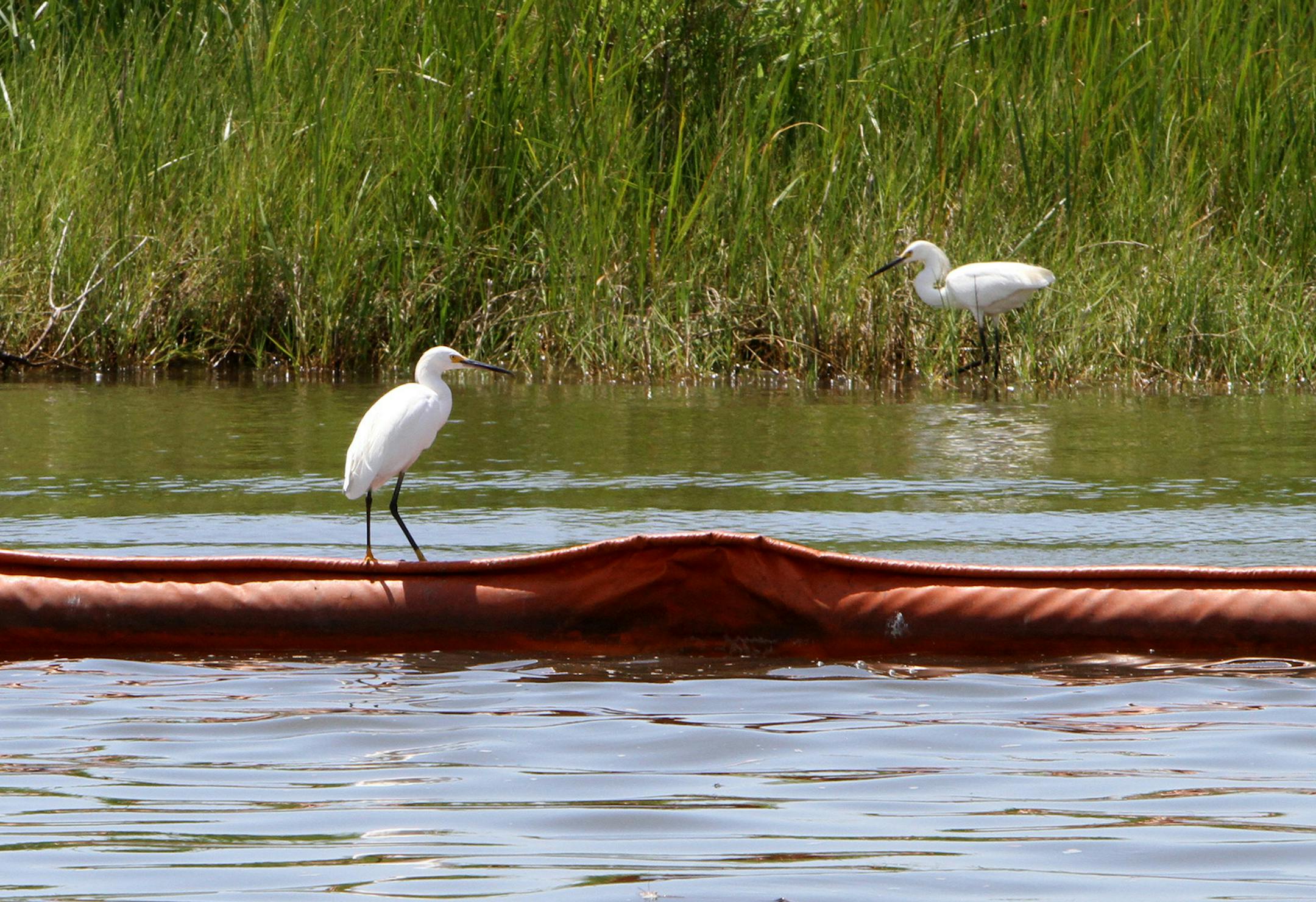
It's known as "Boom School." It's a catchy name, but one that belies the serious purpose of the hands-on training course run each summer on the Mississippi or St. Croix Rivers by Wakota CAER, an innovative private industry cooperative with a public-minded mission: protecting the southeast metro Mississippi River if there's an oil spill.
Booms are the temporary, floating barriers often used to contain crude or fuels in waterways. Those who attend the course learn where this southeast metro group has stashed emergency equipment nearby as well as how to deploy it rapidly and efficiently. Tricky currents, heavy boat traffic and a challenging climate make this difficult, but doing so is an increasingly vital skill, given Minnesota's new status as a global oil transportation conduit.
Boom School is only one of Wakota CAER members' many oil spill preparedness activities, but it strongly illustrates why this industry cooperative is so valuable. And more important, how the group and others like it could be a resource as the state struggles to ensure that emergency preparedness keeps pace with the volume of oil coursing through the region.
Recent fiery train derailments in Casselton, N.D., and Lac-Mégantic, Quebec, have understandably put a spotlight on the risks inherent in transporting crude, which is mainly carried through Minnesota by pipeline and rail. In a recent derailment in Lynchburg, Va., several tank cars plunged into the St. James River.
As federal officials push for stronger tank cars but stop short of requiring them, Minnesota lawmakers are poised to take positive steps to prevent disasters and improve preparedness here. Reforms including bolstering railroad inspectors, strengthening training for first responders and scrutinizing crossings for needed improvements.
Deep within the legislation are vague references to groups such as Wakota CAER, and legislators clearly understand their value. But they did little beyond offering mild written encouragement to speed the spread of this innovative private approach, which takes a cue from mutual-aid arrangements often used by firefighters in neighboring communities.
Equipment purchases, planning and training may be handled cooperatively, for example. Members may band together to provide assistance to one another if an incident happens. Ongoing meetings also give members a chance to build relationships — vital to ensuring incident response goes smoothly.
"At least I know that when I need help on the big ones, that I will be talking to people whose names I know, whose hands I shook before. I'm not just getting to know people when there's a crisis,'' said Bill Lazarz, Wakota CAER's chair.


