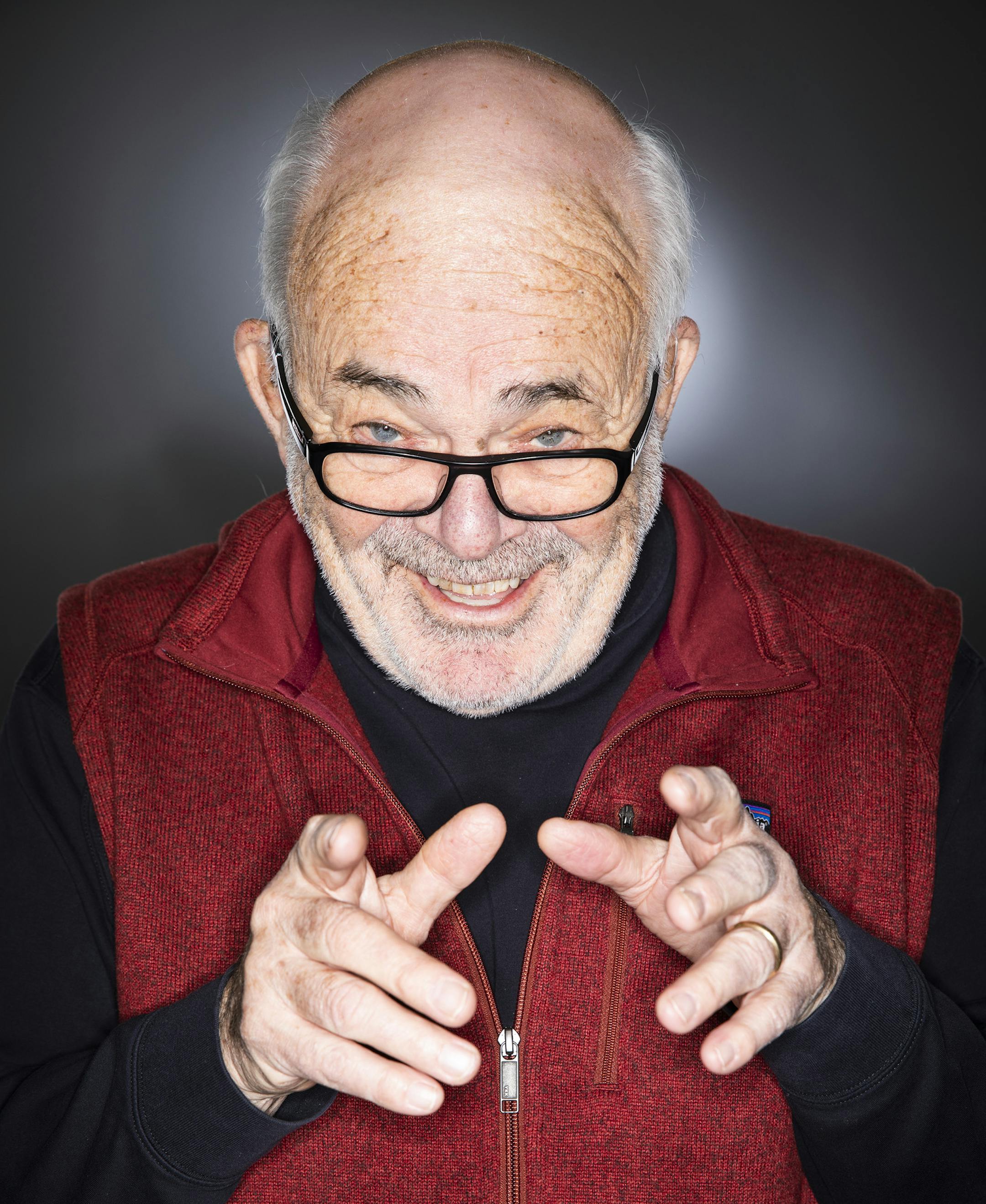
Wy Spano grew up sometimes accompanying his father, an Italian-American doctor in northeast Minneapolis, on house calls. If the elder Spano's patients couldn't pay, the good doctor graciously accepted dressed chickens or spaghetti sauce. Spano's mother regularly volunteered in church. The boy learned early in life that leadership, in his family anyway, was a quiet pursuit to make life better for those less fortunate. Spano has studied, spoken and written about leadership throughout his professional life, retiring in 2017 as head of the Masters in Advocacy and Political Leadership (MAPL) program at Metropolitan State University. With the election over, I asked him to reflect on what leadership looks like now.
Q: Let's pretend you're standing at the head of a classroom filled with people recently elected to serve the public good, from Congress down to the neighborhood level. What words of wisdom would you offer?
A: Especially in this era, the most important thing for a newly elected person to remember is that it's not about you. The current environment is way too centered on the individual. Remember that the work you've embarked on is to try to sort out what's best for everyone.
Q: What do great leaders have in common?
A: Vision. You've got to have some sense that, if things go the way you think they should, things will be better for all of us. And you have to have some mild sense of how to get there. You need conviction, determination. Your gut feeling must be that this really matters and I'm going to do it. Also, great leaders inspire the rest of us to do the job together. They don't issue orders as much as they send out invitations.
Q: In an interview in 2016 with Minnesota Public Radio, you talked about why you only ran for office once. You said you preferred being on the sidelines thinking about things for a while. But don't we want leaders who think about things for a while?
A: I always thought of that slowness as one of my failings; I couldn't play major league ball because I couldn't react as soon as the ball was hit. But policy isn't baseball. We're reacting too fast, without thinking. I have said for a long time that the most difficult job our students have is being a leader of any kind in the digital age. A major hunk of that comes from the lack of critical thinking. I'll bet that's the part of my teaching the kids got most tired of. I'd respond to something they said with, "I'm not sure about that. Let's think about that. You're going to have to prove that to me." They find it irritating to have to do that. Happily, current teachers at MAPL still do that, but they're probably more affirming about it than I was.
Q: What was the impetus to create MAPL, originally located at the University of Minnesota Duluth, and what kind of student is drawn to it?