

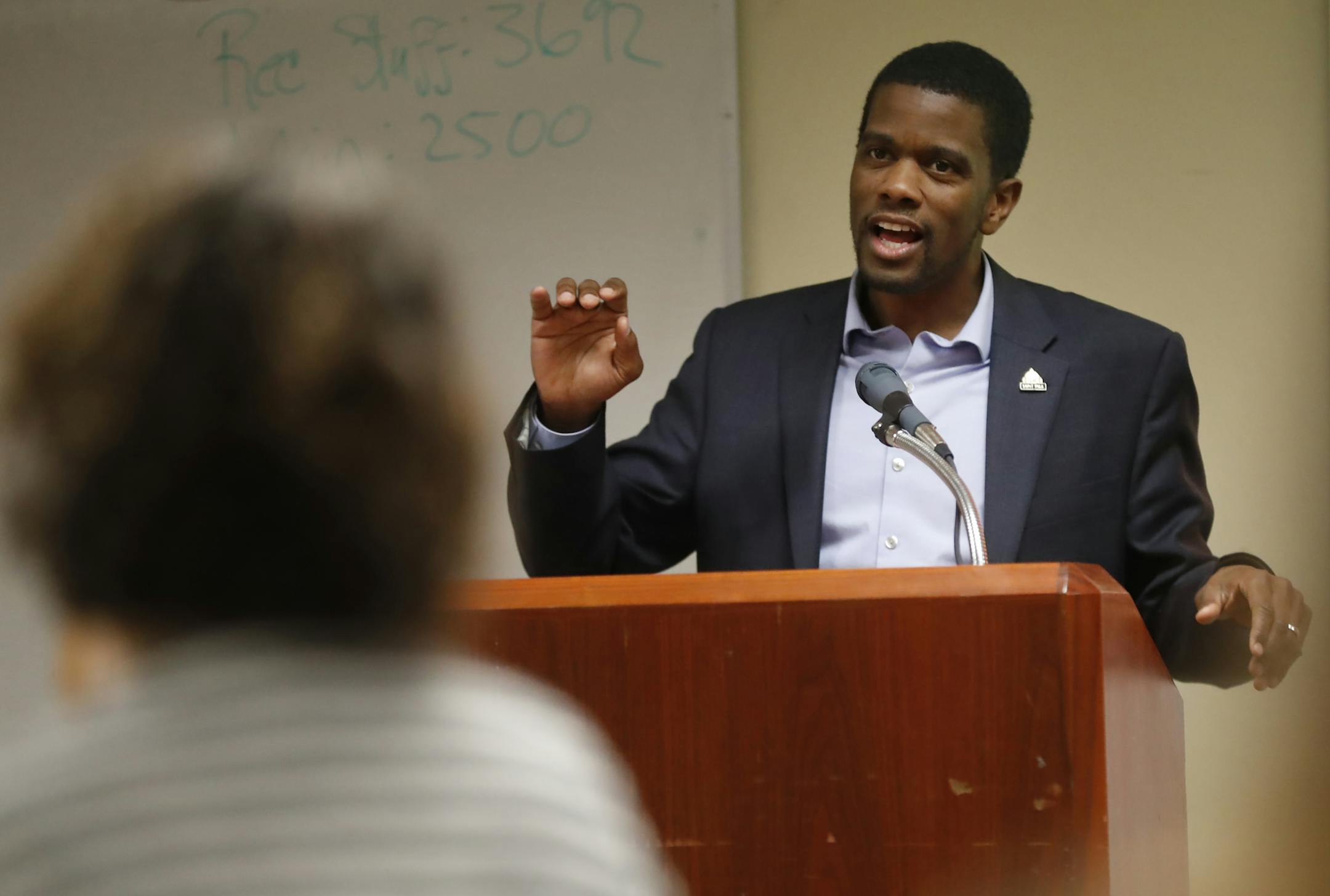
The top leaders of the civilian body that investigates St. Paul police misconduct resigned Tuesday, saying city officials — including Mayor Melvin Carter — did not support their work.
Police Civilian Internal Affairs Review Commission (PCIARC) Chairwoman Constance Tuck and Vice-Chairwoman Rachel Sullivan-Nightengale sent a joint resignation letter to city and police leaders Tuesday morning, according to Carter spokeswoman Liz Xiong.
"We have repeatedly seen evidence that the Mayor and the Mayor's appointees are not serious about supporting the work of the PCIARC," the letter said. "By failing to adequately support the PCIARC's mandate, the mayor and his appointees are denying St. Paul community members the opportunity to have meaningful participatory oversight of their police department."
The resignations are the latest chapter in what has been a rocky few years for the commission, which is charged with investigating police misconduct complaints.
It's also not the first time the mayor has been criticized for his handling of police accountability issues. A year into Carter's first term, his director of community-first public safety initiatives resigned, alarming advocates and community leaders who said they were still waiting for Carter's campaign promises on public safety to become a reality.
In their letter, Tuck and Sullivan-Nightengale said the mayor and his staff did not address "well-documented workplace concerns that impede the PCIARC's work" and "have failed to seek input from the PCIARC and refused to support funding necessary for the PCIARC to fulfill its mandate."
"The Mayor has never sought the PCIARC's input on community policing concerns observed in the course of the Commission's work," they wrote. "Similarly, the Mayor has consistently failed to use his platform to encourage community members to bring their policing concerns to the PCIARC, or to indicate his intent to support the PCIARC in its efforts."
"I'd like to thank our PCIARC Chair and Vice Chair for their service to our city. It will undoubtedly help inform our work moving forward," Carter said in a statement.


