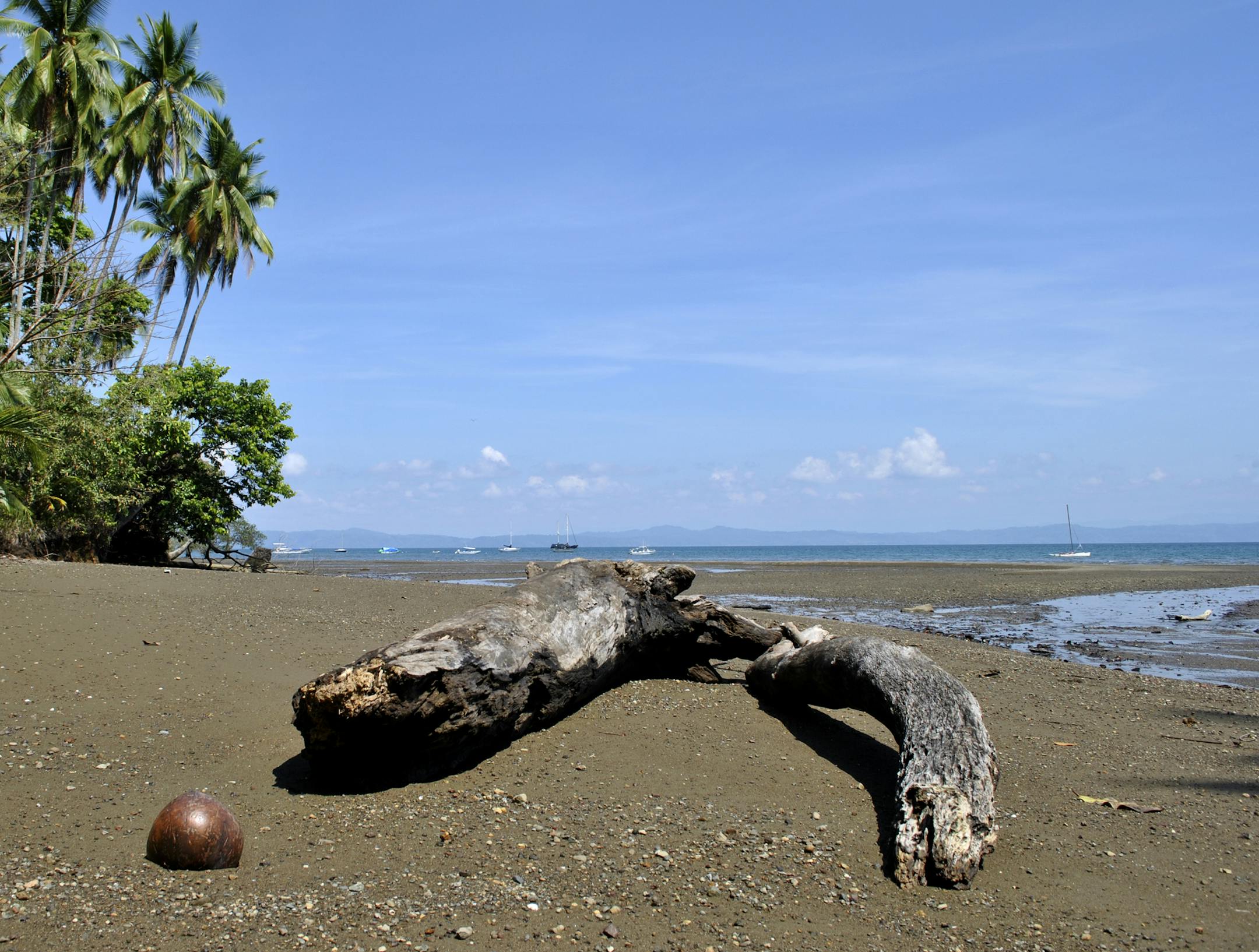
![Hike with baby in backpack: Gabriel Keller carried Zach, then age 2, on a sweltering beach hike to a lodge on the edge of Corcovado National Park. ] Itís still possible to get off-the-beaten-path on the Pacific Coast of Costa Rica, even as parts of the country have rapidly developed in recent years.](https://arc.stimg.co/startribunemedia/6RHX2267AV6UZ7OA2IPCPSYUTQ.jpg?&w=1080)
We could see muddy tire tracks on the dirt road in front of us where cars had previously driven into the river. But the water, which stretched at least 150 feet across the road, looked much deeper and wider than anything we had forged over the course of two family trips to Costa Rica's rugged Osa Peninsula.
With our 3-year-old son Zach in the back seat, my husband Gabe turned off the rental car. We had already driven for an hour over perilous gravel roads, starting on the peninsula's gulf side, and we had at least 45 minutes left to our destination on the Pacific. Turning back wasn't an appealing option.
Neither was flooding the engine. Besides stranding us in the middle of nowhere, rental insurance doesn't cover drowned cars. Soon, we struck on a reconnaissance plan. I would wade in and poke around to gauge the shallowest route.
But before I could get wet, a stroke of luck appeared in the form of a little gray car that zoomed around a bend on the other side of the river. Without hesitation, it took a diagonal path toward us and hooked a 45-degree turn midway through the river. The Costa Rican driver gave us a friendly wave as he passed by. Soon, we were back on our way across a place that remains blissfully — and sometimes strikingly — remote.
While much of Costa Rica has, in recent years, developed from a land of chill surf towns into Zipline Heaven, the wild still rules on the Osa, which juts into the Pacific like a hoof on the country's southern border. The peninsula harbors an estimated 2.5 percent of the biodiversity on Earth in a hunk of land that, at 700 square miles, is only slightly larger than Hennepin County.
I first visited Costa Rica as a college student in 1997 on a biology field study program that included a stint in Corcovado National Park, one of the Osa's chief attractions for adventurous travelers. Surrounded by enormous rodents, colorful birds and monkeys frolicking on the beach, I came to equate the Osa with paradise. Someday, I vowed, I would return.
The opportunity came nearly 15 years later, in 2011 — this time with my husband and our first son, then age 2. We left Minneapolis on a frigid February morning. Two days later, we emerged from a 12-passenger airplane into the searing heat of Puerto Jimenez, a dusty town on the protected coastline of the Golfo Dulce.
It quickly became clear that the Osa had managed to remain a remote oasis, even as the rest of Costa Rica has become a booming tourist destination. In 2016, more than 2.6 million visitors descended on the country, according to news reports. And while nature is a major draw, most follow well-worn routes to developed beaches and volcanoes.