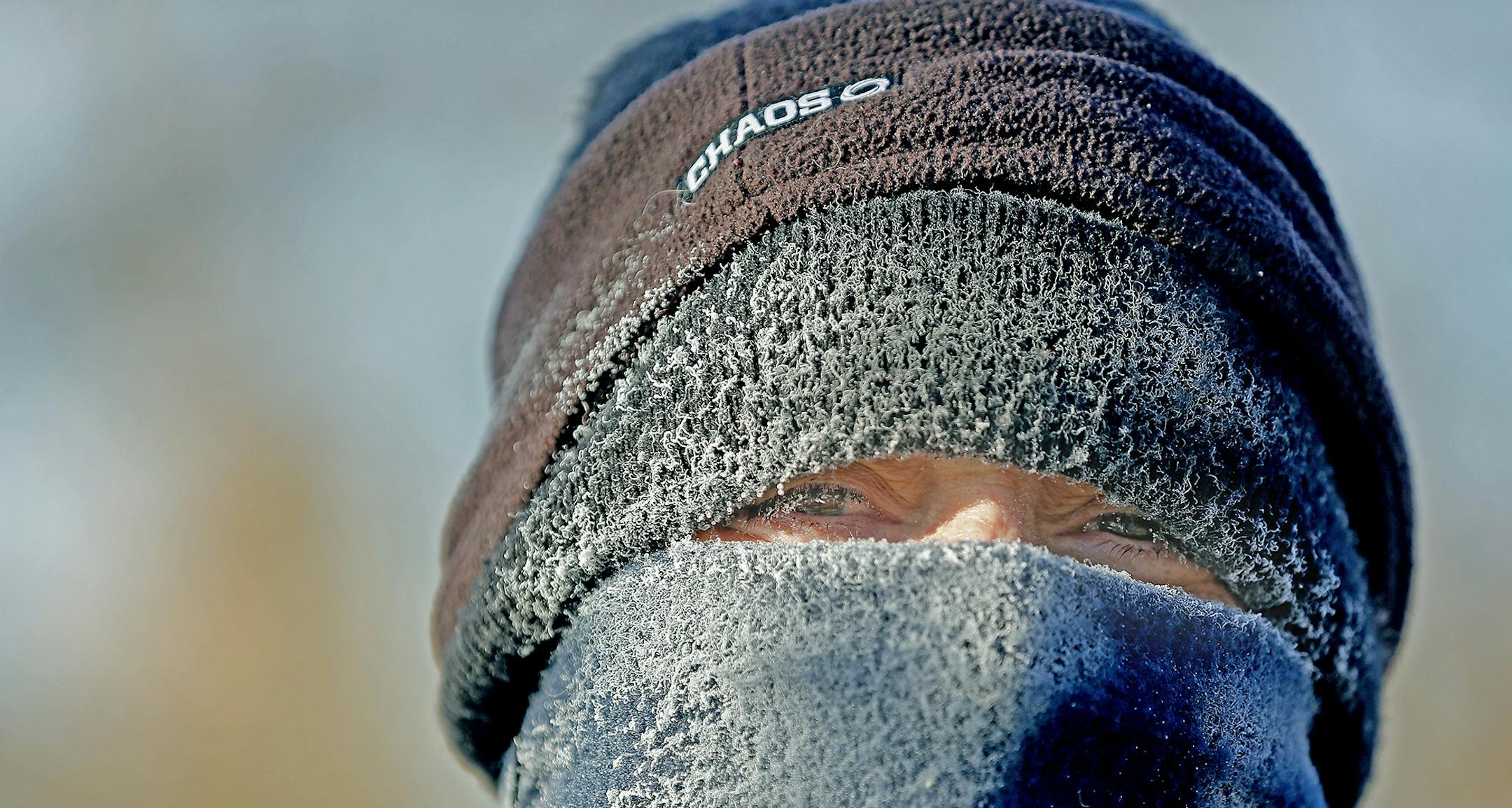
Layer up: Arctic air to hang around the rest of the week

Highs in the metro will struggle to get above zero on Thursday.

January 5, 2017 at 4:05AM

An arctic blast that roared into the state overnight Tuesday will keep temperatures below zero over a wide portion of Minnesota into Thursday, and dangerously low windchills will make it feel even colder. Things won't begin moderating until early next week, the National Weather Service said.

Wednesday most of the state woke to subzero temperatures with windchills that conspired to make it feel much colder.

Windchills of 20 to 40 below prompted the Weather Service to issue an advisory for the western and northern portions of the state until noon Wednesday. Another advisory is expected again Wednesday night into Thursday.

Early Wednesday, the lowest windchill was in Warroad in far northern Minnesota at 41 below, with 40 below reported at nearby Roseau. Windchills of 30 below or colder were reported in Bemidji, Thief River Falls, Detroit Lakes, International Falls, Grand Rapids and Duluth.

"Frostbite and hypothermia can occur if precautions are not taken," the Weather Service said, adding that can happen in 30 minutes or less. "Make sure you wear a hat and gloves."

The cold snap, not uncommon for January, will continue through Sunday. In the metro, even with ample sunshine, the high on Thursday is predicted to be 0 degrees. The low? Around 8 below with windchills in the 20 to 25 below zero range.

A slight thaw will begin Sunday when high temperatures in the metro will rise to 11 above zero and near 24 by Monday. With the warmup comes a chance for snow on Monday and Tuesday, possibly with significant accumulation.

Tim Harlow • 612-673-7768
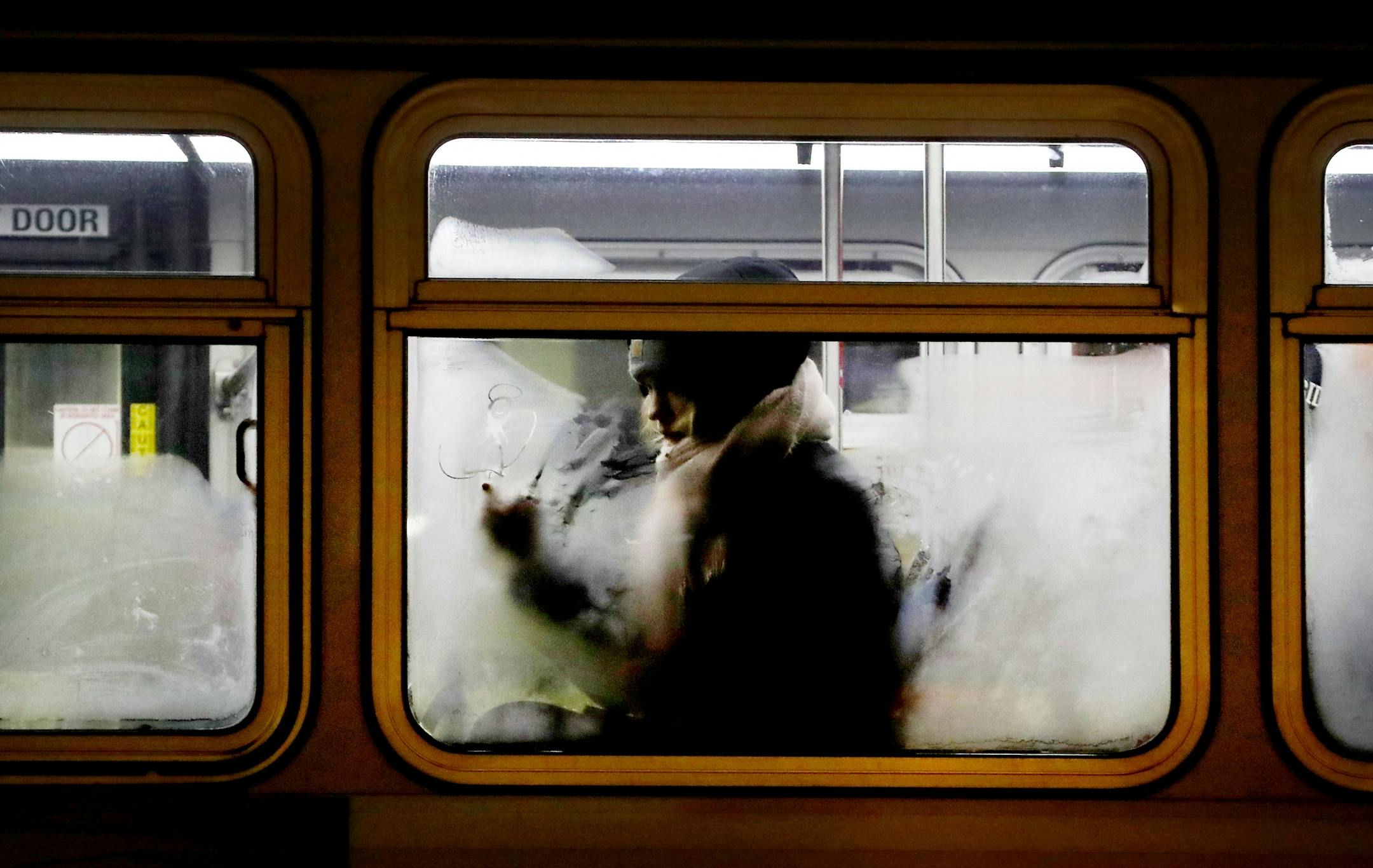
A commuter scratches an angel image into an icy window while sitting on a metro bus during frigid morning weather at the Chicago Lake Transit Center on Wednesday in Minneapolis.
A commuter scratches an angel image into an icy window while sitting on a metro bus during frigid morning weather at the Chicago Lake Transit Center on Wednesday in Minneapolis. (Star Tribune/The Minnesota Star Tribune)
Carla Bates, who has made the 2.5-mile walk to work for more than 20 years, braved the frigid temps along the river near the University on Wednesday in Minneapolis.
Carla Bates, who has made the 2.5-mile walk to work for more than 20 years, braved the frigid temps along the river near the University on Wednesday in Minneapolis. (Star Tribune/The Minnesota Star Tribune)
Seen from the Wabasha Street Bridge, most of the Mississippi River is frozen below as arctic air settles in Wednesday, Jan. 4, 2016, in St. Paul, MN.](DAVID JOLES STARTRIBUNE)djoles@startribune.com A commuter sits on a metro bus during frigid morning weather at the Chicago Lake Transit Center Wednesday, Jan. 4, 2016, in Minneapolis, MN.
Seen from the Wabasha Street Bridge in St. Paul, most of the Mississippi River was frozen below as arctic air settled in Wednesday. (The Minnesota Star Tribune)
about the writer

about the writer

Tim Harlow

Reporter

Tim Harlow covers traffic and transportation issues in the Minneapolis-St. Paul area, and likes to get out of the office, even during rush hour. He also covers the suburbs in northern Hennepin and all of Anoka counties, plus breaking news and weather.

See Moreicon

More from No Section

See More
FILE -- A rent deposit slot at an apartment complex in Tucker, Ga., on July 21, 2020. As an eviction crisis has seemed increasingly likely this summer, everyone in the housing market has made the same plea to Washington: Send money — lots of it — that would keep renters in their homes and landlords afloat. (Melissa Golden/The New York Times) ORG XMIT: XNYT58
Melissa Golden/The New York Times

It’s too soon to tell how much the immigration crackdown is to blame.