

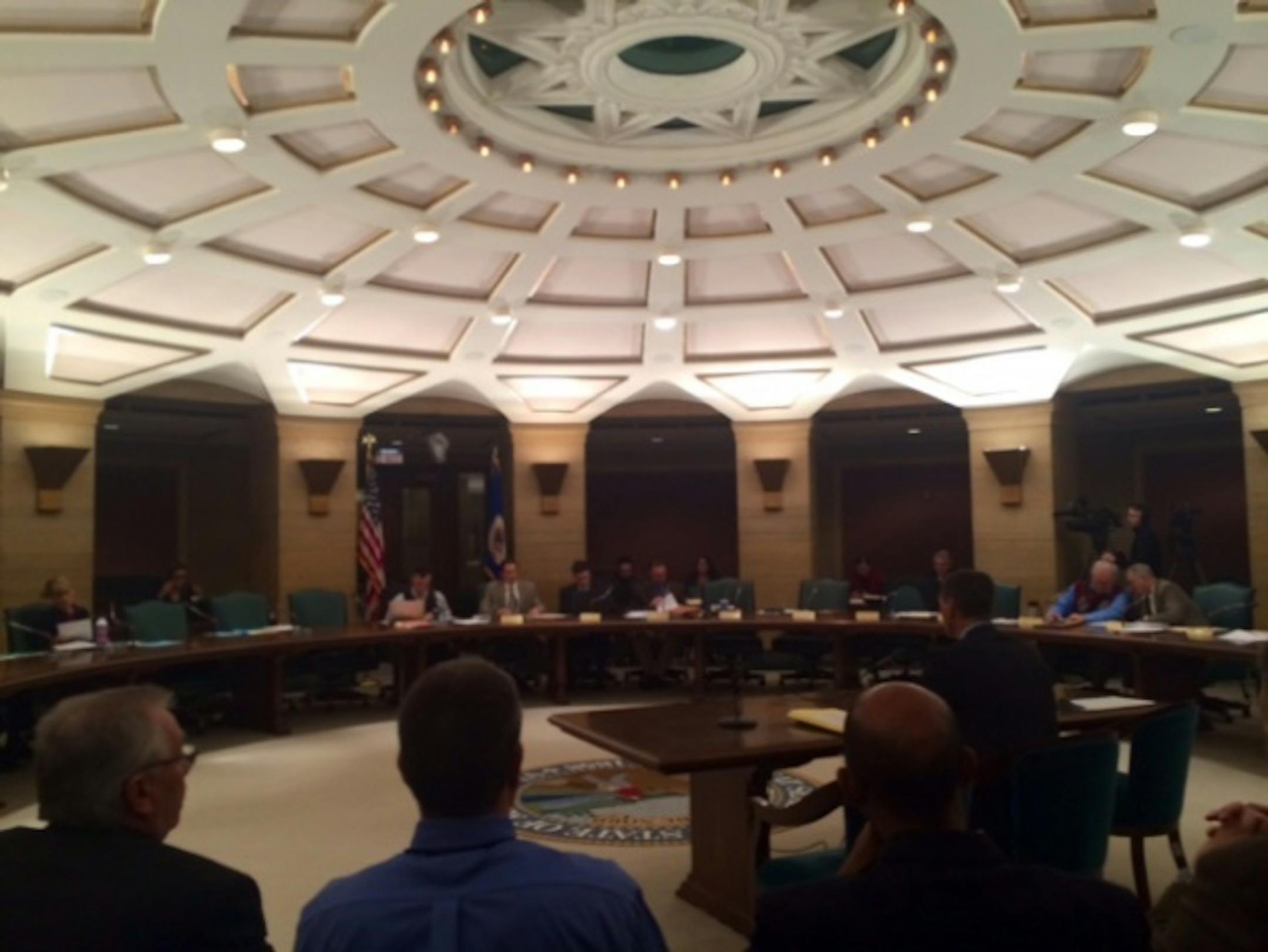
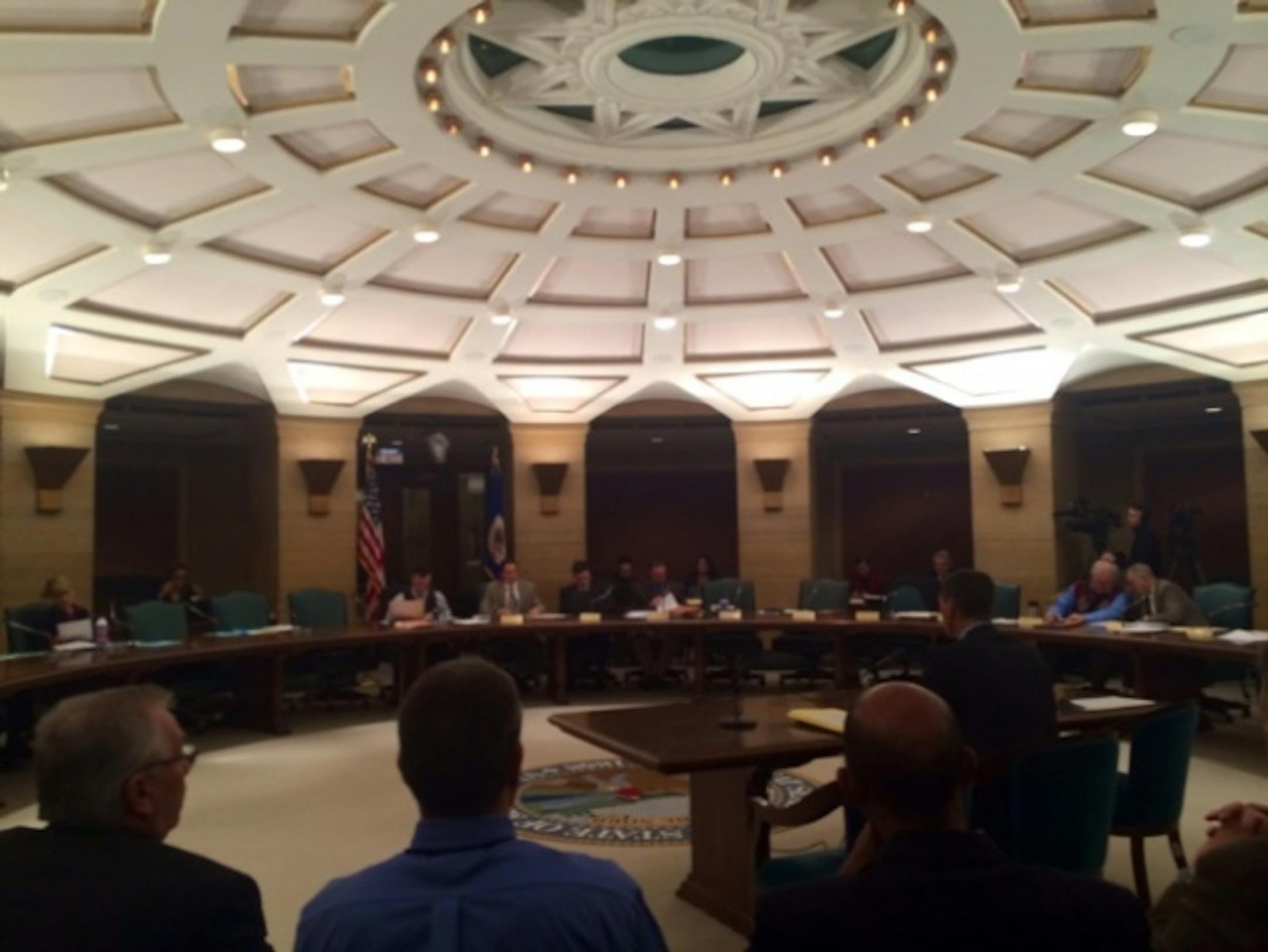
State lawmakers spent more than three hours Friday mulling the economic benefits and privacy pitfalls of unmanned aerial devices, more commonly known as drones, while contemplating how to regulate them, if at all.
From attorneys and civil rights advocates to law enforcement and college professors, witnesses explained to a joint committee of legislators in a fact-finding hearing to learn how the devices work, how they've been regulated in other states, and their risks and rewards. Lawmakers left the hearing acknowledging that the information is useful should bills be drafted for the 2015 legislative session as concerns grow about potential high-tech spying.
A pair of University of Minnesota professors testified that they received authorization from the Federal Aviation Administration to use drones on in research facilities across the state, while Le Sueur County Geographic Information Systems Manager Justin Lutterman said the county was among the first local governments in the nation to get FAA approval to use a drone to map drainage ditches. The device's high-tech cameras create 3-D mapping, completing in 15 minutes tasks that would ordinarily take a week, and at 16 to 20 times cheaper, he said, leading lawmakers to acknowledge distinct economic benefits to the technology.
Donald Chance Mark, Jr., an Eden Prairie Attorney whose firm specializes in aviation and has researched drone regulations, said the FAA receives 25 reports per month of drones in national airspace. Still, the agency has yet to establish a comprehensive set of laws surrounding drones, suggesting state legislatures take regulating them into their own hands. Twenty states across the country already have passed drone-related legislation.
Still, he said, "I'm not blaming the FAA for lagging behind," he said. "The proliferation of these is just amazing."
The FAA currently prohibits commercial use of drones without a specialized permit, yet realtors are using the devices to market or survey property, while drone companies are marketing their wares to farmers at trade shows.
Mark said potential legislation could involve registration of drones and licensing of their operators, pilot training or limiting the size and weight of the devices.
Jay Stanley, a senior policy analyst for the American Civil Liberties Union, said the organization's primary concern when it comes to drones is the potential that they could create constant surveillance.
"If we do nothing, there is a chance we could get there," Stanley said.


