

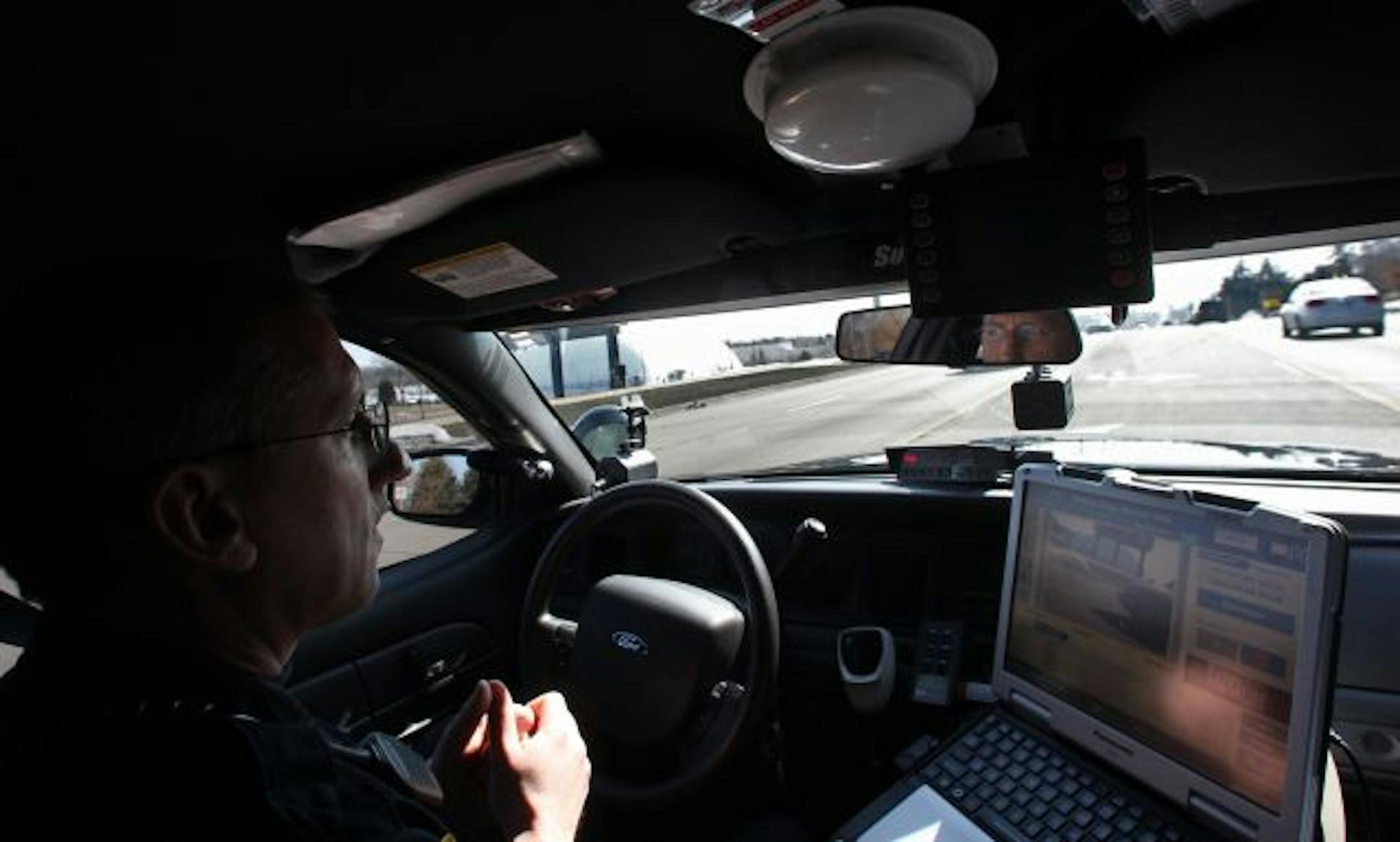
Lawmakers and law enforcement appear bound for yet another showdown over how long cops can hang on to information gathered by high-tech license plate readers.
The 2015 legislative session will mark the third consecutive year that lawmakers will attempt to regulate just how long cops can store data gathered by the license plate readers—small cameras mounted in squad cars or in fixed mounts that scan license plates, storing information on when and where a vehicle is located when the scan was taken.
On Monday, the bipartisan Legislative Commission proposed a "zero-retention" bill that prohibits storage of any data unless it indicated a "hit" for certain type of offenses or is active investigative data. All the rest would be discarded. Agencies that use the technology would also be subject to a biennial audit and would have to maintain a log of their use.
Police renewed their opposition to the bill, saying they were "disappointed."
"Today's recommendation sends a clear message that we have to work even harder to prove to lawmakers and the public just how valuable the technology is to solving crimes and convicting criminals," said Andy Skoogman, executive director of the Minnesota Chiefs of Police Association. "Like all technology, we believe LPR must be secured and safeguarded to ensure public accountability and transparency."
The two sides were unable to reach a compromise and no bill reached a final vote before the Legislature adjourned for the 2014 session.
Read the recommendations, and Police Chiefs statement below:


