

Tom Holker Jr. has had an interest in the law since his uncle, then a law student at Hamline University in St. Paul, took him to a Law Day celebration in the late 1970s. Watching reruns of Perry Mason TV shows didn't hurt, either.
Now a legal assistant at a law firm in Maple Grove, Holker decided to enjoy an afternoon last week and attend Anoka County's first Law Day event. Congress issued a resolution in 1958 making May 1 the official Law Day, which gives citizens a chance to interact with the various agencies that work with the judicial system and its role in preserving legal rights.
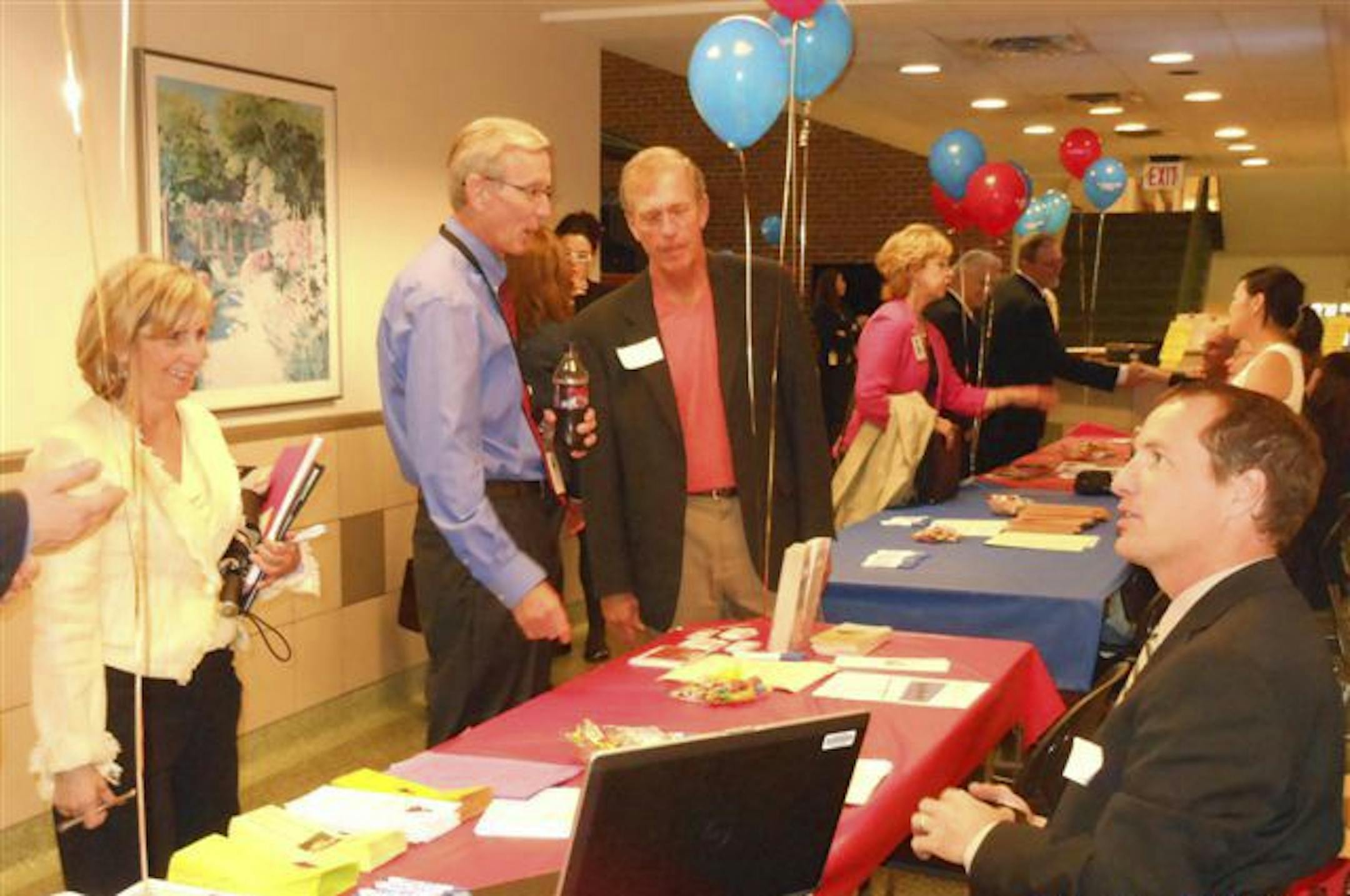
This year's Law Day theme was "No Courts, No Justice, No Freedom." Information tables with representatives from a multitude of legal corners -- including the county bar association, community corrections, the sheriff's department, prosecutors and public defenders -- were set up in the courthouse in Anoka. Visitors also had a chance to tour a courtroom and participate in a question-and-answer session with several district judges.
The event should draw larger crowds next year with more extensive publicity, but it was a good opportunity for the various entities to get together, said Jennifer Schlieper, the county's court administrator.
"We didn't know what to expect this year, but it was great to see all the people who came forward to be part of Law Day," she said.
Rick Sells, court services manager for community corrections, said that Law Day is a great concept and that he was happy that his department had a chance to show how "their piece of the pie fits into the justice system." Corrections handles such matters as probation and overseeing jail facilities.
Paul Ostrow, an assistant county attorney, said Law Day is a way to open the doors of the courthouse and make it more accessible to residents, who sometimes find it a foreign place. Various officials, including county commissioners and County Attorney Tony Palumbo, stopped by the event.
The Q-and-A sessions with judges gave them a chance to slip out of their judicial robes and put a face on the person behind the bench. The first session, which lasted about a half-hour, was sprinkled with questions about constitutional rights, a judge's duties and reflections on challenging cases.


