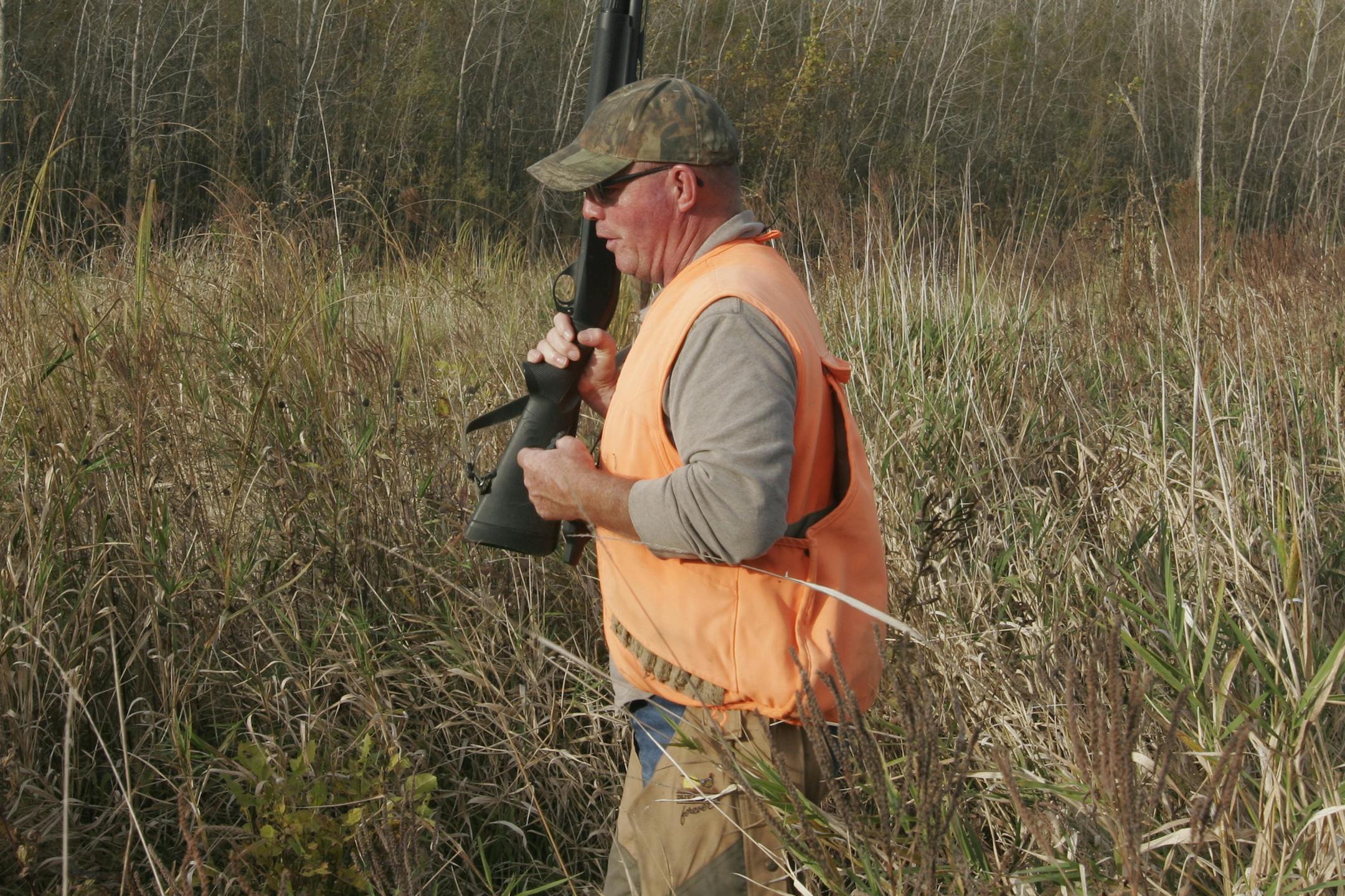
NICOLLET, MINN. — This was all corn and soybeans,'' said Mike Stevenson, pointing to a swath of prairie grass surrounded by cottonwood trees a stone's throw from the Minnesota River.
Now pheasants, deer, turkeys and other wildlife roam the land.
"It's not just pheasants, it's frogs and snakes and butterflies and all sorts of wildlife,'' Stevenson said the other day, toting a 12 gauge while his springer spaniel, Dietz, sought pheasant scent. The low land frequently floods, and when it was plowed and planted, valuable soil washed into the river.
"It should never have been row-cropped,'' said Stevenson, 62.
And it never will be again.
Fifteen years ago, Stevenson and his brother Alan, who co-own the 144-acre farm, enrolled about 50 acres in the Conservation Reserve Enhancement Program (CREP). That federal-state partnership paid landowners near and along the Minnesota River to remove marginal lands from production and restore naive prairie grasses or wetlands. It also paid them for perpetual conservation easements, meaning the restored land could never be plowed and planted again.
The Stevensons were among the first to sign up. Eventually, 100,000 acres were enrolled — creating wildlife habitat where virtually none existed and helping to reduce erosion and runoff into the river. The program still gets rave reviews.
"It worked out fantastic,'' said Stevenson.