

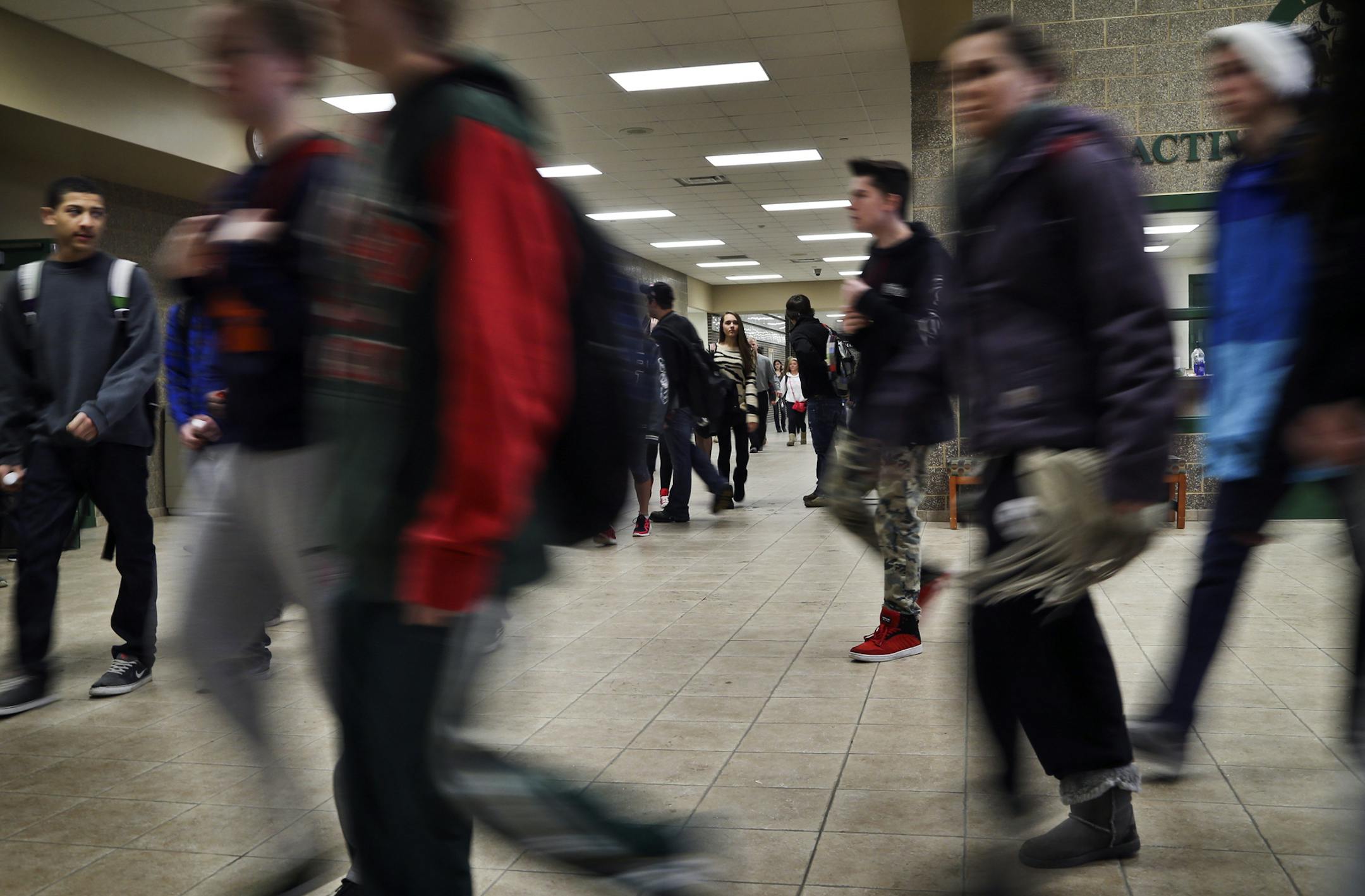
It's 8:35 a.m., the start of first period at Park High School in Cottage Grove, and despite an overnight snowfall that slowed traffic, the scene is serene. No mad rush, no elbows flying in the hallways, just three late students stepping through the front entrance on their way to class — and only one of them running.
Five years ago, when the school day started an hour earlier, many students here would be just emerging from the fog of first hour. They would hope to be past the yawns and rubbing of eyes from the lack of sleep, and finally on track for the rest of their day.
Since that time, the South Washington County School District has joined other districts locally and nationally in moving to align school start times with teenage body rhythms. A before-and-after review of the district's three high schools showed tardiness on the decline, and more important, academic performance on the rise.
Those results — part of the findings of a University of Minnesota study released last week — have caught the attention of parents and school leaders in the St. Paul public school district, which now is giving a closer look to possible start-time changes in one of the state's largest school districts.
"I really like the start of our high schools," South Washington County Superintendent Keith Jacobus said Wednesday. "It's relaxed. It's calm. Kids can really take control of their study time. They can socialize. When it comes to that first hour, they're primed to learn."
In 2009, South Washington County followed the lead of a growing number of school systems in deciding to delay high school start times in the belief that students perform better if they sleep longer. Given the timing of the district's action, it came as little surprise that among students interviewed Wednesday at Park, no one could speak to what life was like with a 7:35 a.m. start.
But they did point to the perks of starting the day later — the ability to work later hours at part-time jobs or to study deep into the evening.
Brandon Trisko, a senior, has a retail job with a shift that lasts until 10 or 11 p.m. several nights a week. That would not be possible with an earlier start time because the late hours would cut into his sleep, he said.

 djoles@startribune.com The South Washington County School District made the move five years ago to push back high school start times in the belief that students who get at least eight hours of sleep are better prepared to learn.](https://arc.stimg.co/startribunemedia/7QGPZUL6UE2D4ADOIZG3FIGXQQ.jpg?&w=1080)


