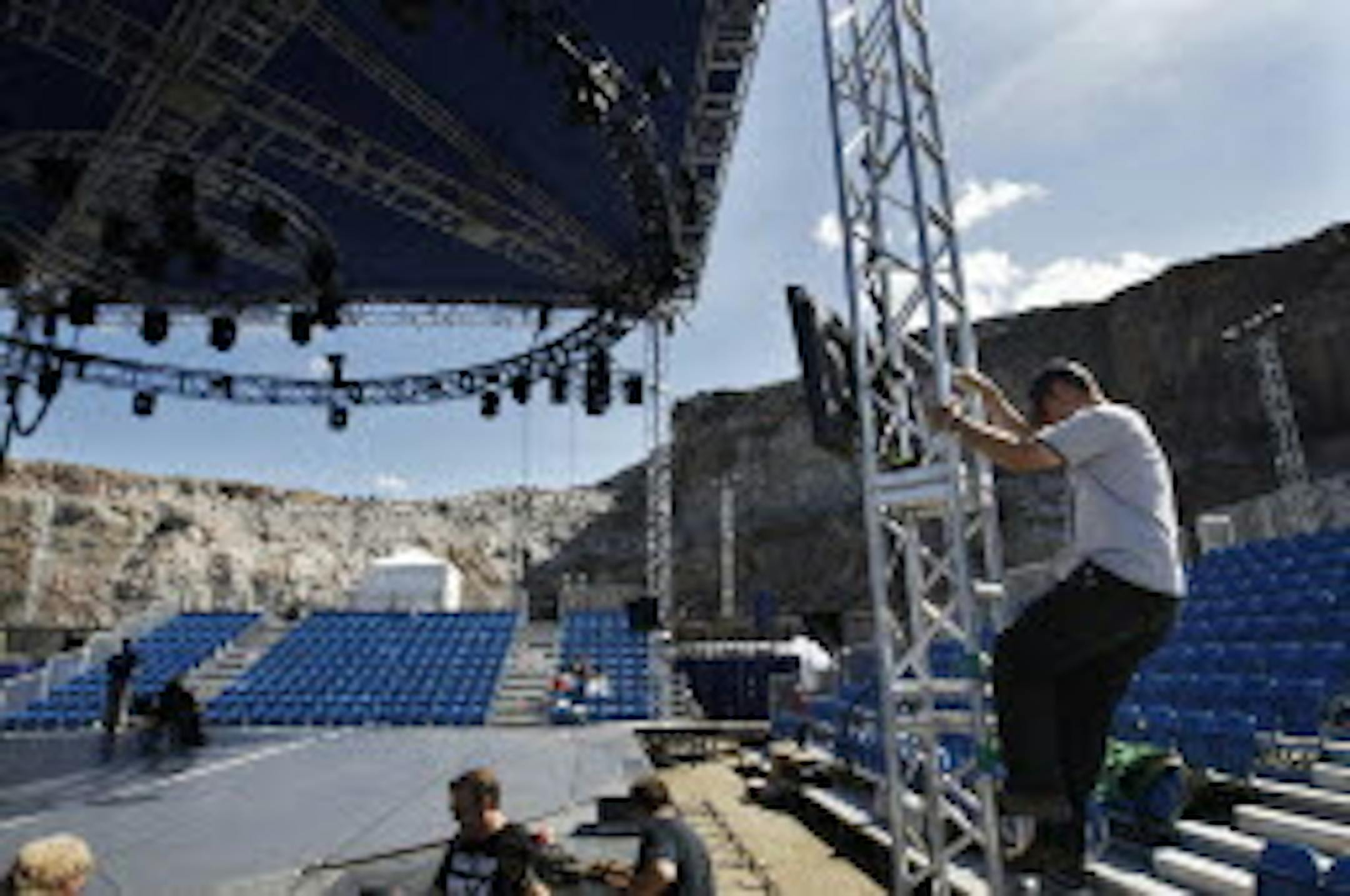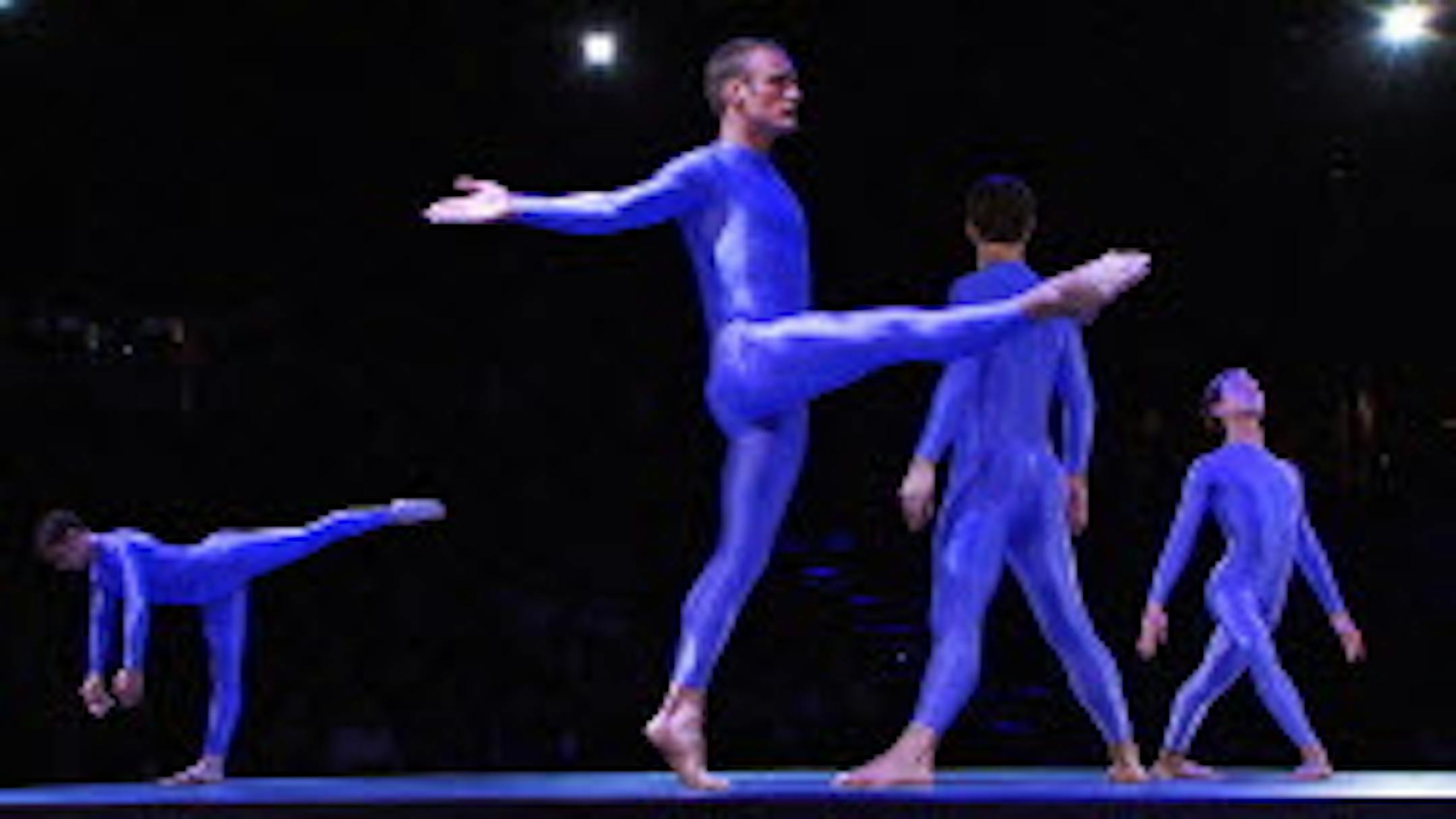
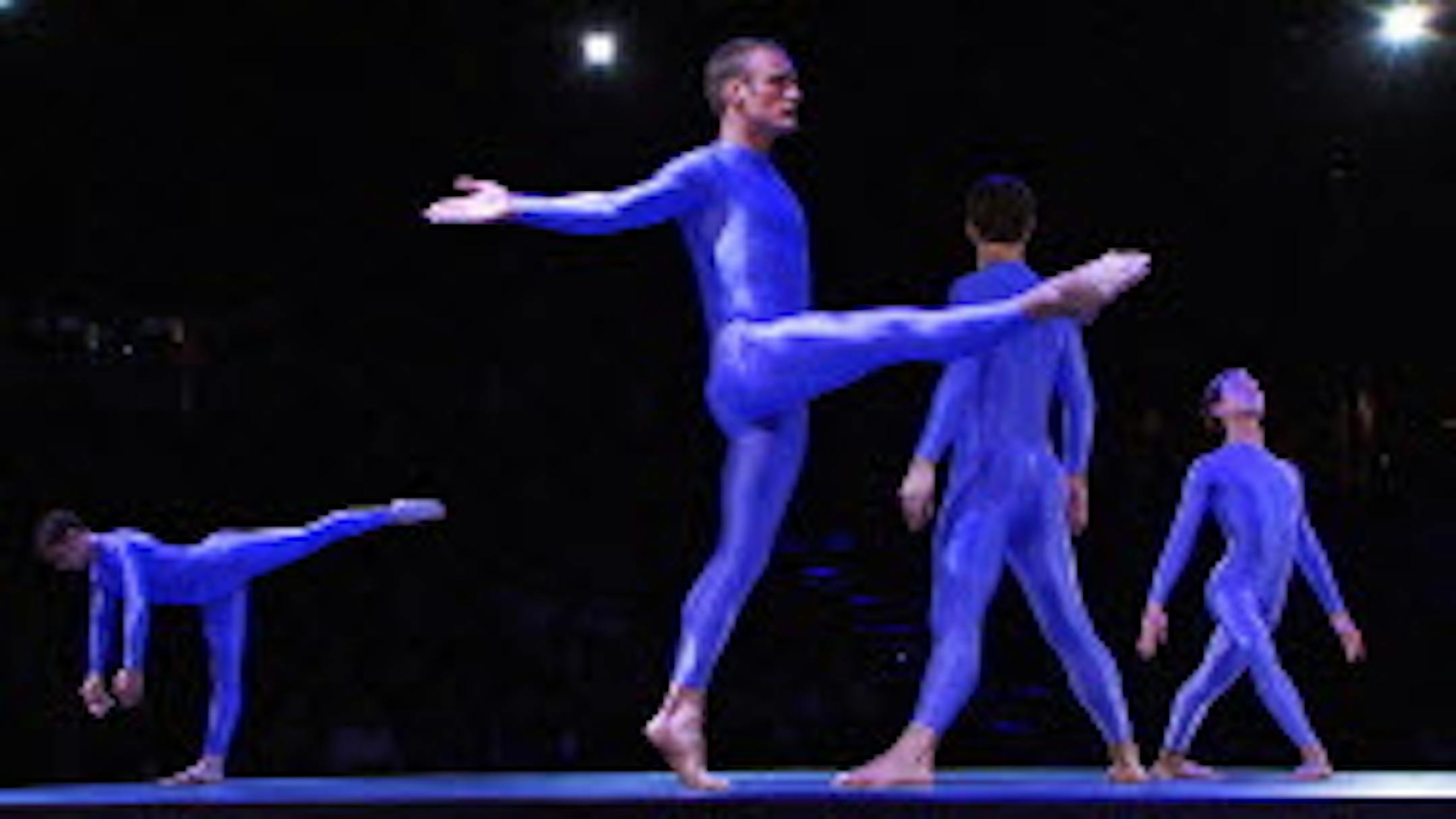
"Ocean" / Star Tribune photo by Richard Tsong-Taatarii
Reviewed by freelance writer Caroline Palmer
Two years ago New York's Merce Cunningham Dance Company ventured one hundred feet down into the "rainbow" granite quarry owned by Martin Marietta Materials in Waite Park, Minnesota. While unitards and heavy machinery are rarely seen in the same place, for a few days art and commerce acted in harmony to produce a dance concert in the round accompanied by the 150-member St. Cloud Symphony Orchestra. "Ocean" was among the final projects undertaken by the modern dance pioneer Cunningham, who passed away in 2009 at age 90, and his longtime collaborator, filmmaker Charles Atlas, captured the event through his camera lens.
Last night marked the world premiere of the film "Ocean" at Walker Art Center and in his remarks Senior Performing Arts Curator Philip Bither spoke fondly, in retrospect, of the "rain, cold weather, mind-boggling logistical and transportation challenges" that added up to one of the most "ambitious and audacious projects in the history" of the Walker (which partnered with the Benedicta Arts Center of the College of Saint Benedict and Northrop Dance at the University of Minnesota). Bither noted that he was "truly moved when [Cunningham] said it was one of the highlights of his life."
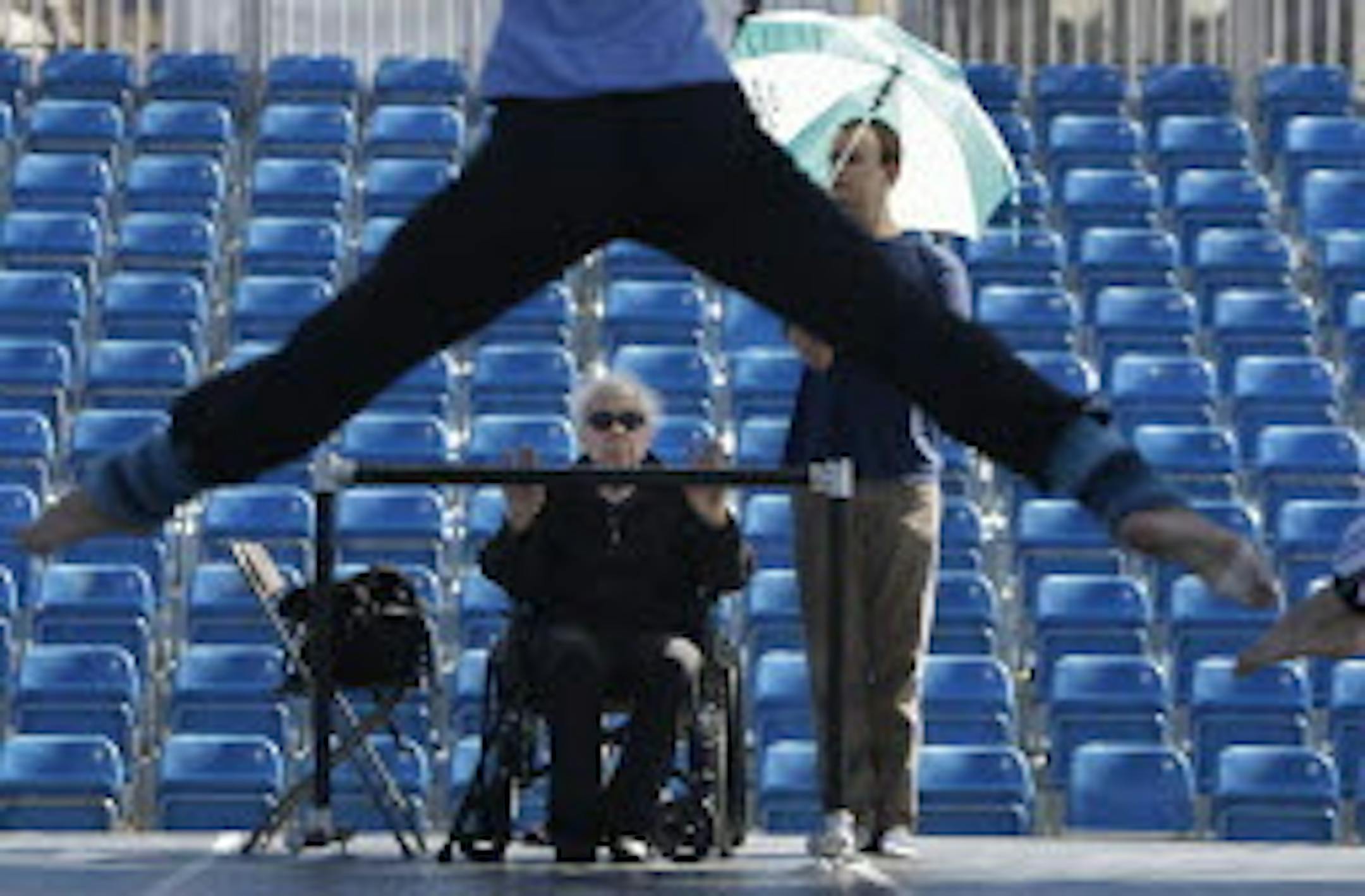
Merce Cunningham in Minnesota in 2009 / Star Tribune photo by Richard Tsong-Taatarii
Atlas introduced the 100-minute film and discussed the challenges and rewards the project presented to him, especially since "he had never shot anything in the round." Still, Atlas spent 40 years working with Cunningham, and the director's deep understanding of the dance maker's intent -- and how it translates into cinematography -- is evident throughout the film.
The dance work "Ocean" was originally created in the early 1990s by Cunningham and his longtime creative and life partner, the late composer John Cage. It was Cage who conceived of the audience surrounding the dancers and the musicians surrounding the audience. "Ocean" was only seen in New York and San Francisco, so the 2008 Minnesota remount marked a midwest premiere -- and the most spectacular location for the work.
Atlas opens the film by setting the stage -- close-ups of quarry rocks, the late summer clouds, the crews at work transforming the site. The first few minutes are mostly in silence -- people going about their jobs, following directions, creating their own choreographed rhythm. The remainder of the film is dedicated to the performance of "Ocean," a 90-minute piece whose energy ebbs and flows organically like the immense body of water for which its named, churning to music from Andrew Culver (based on Cage's direction) and an electronic score by David Tudor that integrates underwater sounds, many of which sound like the calls of whales or other sea creatures.