

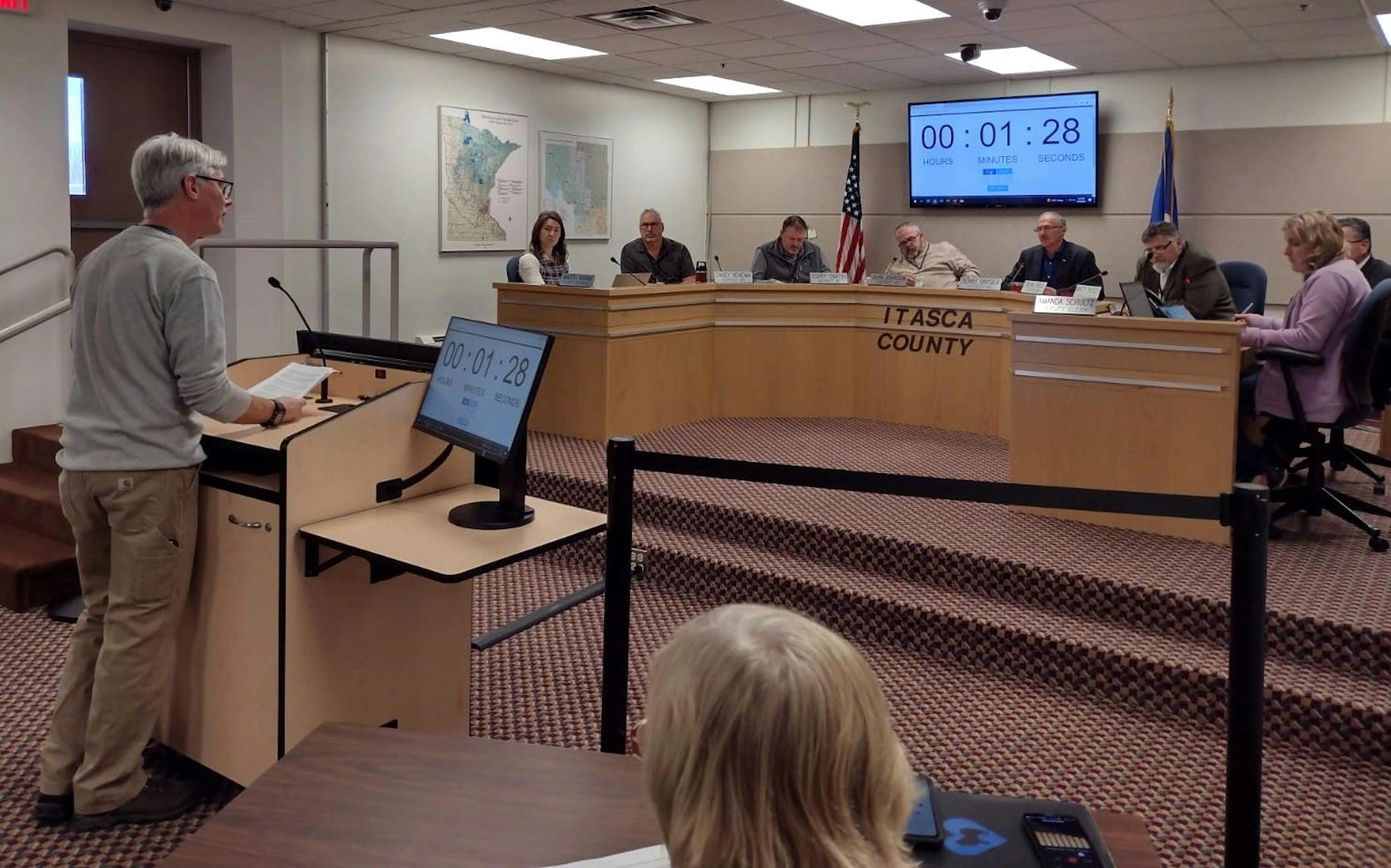
DULUTH – Northeastern Minnesota's Itasca County Board approved a gun-rights resolution at a packed Feb. 21 meeting, where more than 20 people — including the county sheriff — spoke in support of the controversial county measure.
The resolution, which states official opposition to any new laws that would infringe on the Second Amendment rights of the county's citizens, was an addition to the agenda a couple of hours before the meeting began, a legal but unusual move for a lightning-rod topic. Still — and county officials aren't answering how — supporters found out and filled the board room.
A week later the room was packed again, this time with constituents angry about the decision and the opaque way it unfolded — without advance notice to the public. All five county commissioners approved the resolution, which officials say is purely symbolic.
"You knew that was a controversial issue," Grand Rapids resident Michael Albers told the board last week. "Many of the people who talked last week said they were sick and tired of state and federal government shoving stuff down citizens' of Itasca County's throats. You guys chose to do the same thing."
With the DFL in control of state government and eyeing some gun-safety laws, Itasca County is now among 20% of Minnesota counties that have adopted resolutions or laws to impede enforcement of gun-control measures that pro-gun activists deem contrary to the Second Amendment. Some call themselves sanctuaries and pledge to fight new laws in court, while others, like Itasca County's, are symbolic gestures.
Across the country there are hundreds of sanctuary counties and more than a dozen states.
The question is, who gets to create rules about guns? Oregon's state Appeals Court recently ruled that local governments can't declare themselves Second Amendment sanctuaries and stop the enforcement of certain gun laws.
In Minnesota bills are in play to require criminal background checks on all gun sales, to create a red-flag law to temporarily remove access to guns from people in crisis, and one that would require firearms and ammunition to be secured safely in separate places.


