

British Prime Minister David Cameron recalled Parliament on Friday to vote whether to join the growing coalition fighting the Islamic State in Iraq and the Levant (ISIL). The United Kingdom cannot "walk on by" the threat, Cameron said.
Congress may not walk on by either, but it chose the campaign trail instead of Capitol Hill. Voting on the most profound question of governance — war — will likely have to wait until after the midterms.
Once Congress does debate re-entering Iraq, it would be wise to also consider an exit strategy. And not just for U.S. forces — there should also be an acknowledgment of America's responsibility to protect Iraqi and Syrian soldiers, "moderate" rebels, and citizens who help U.S. forces.
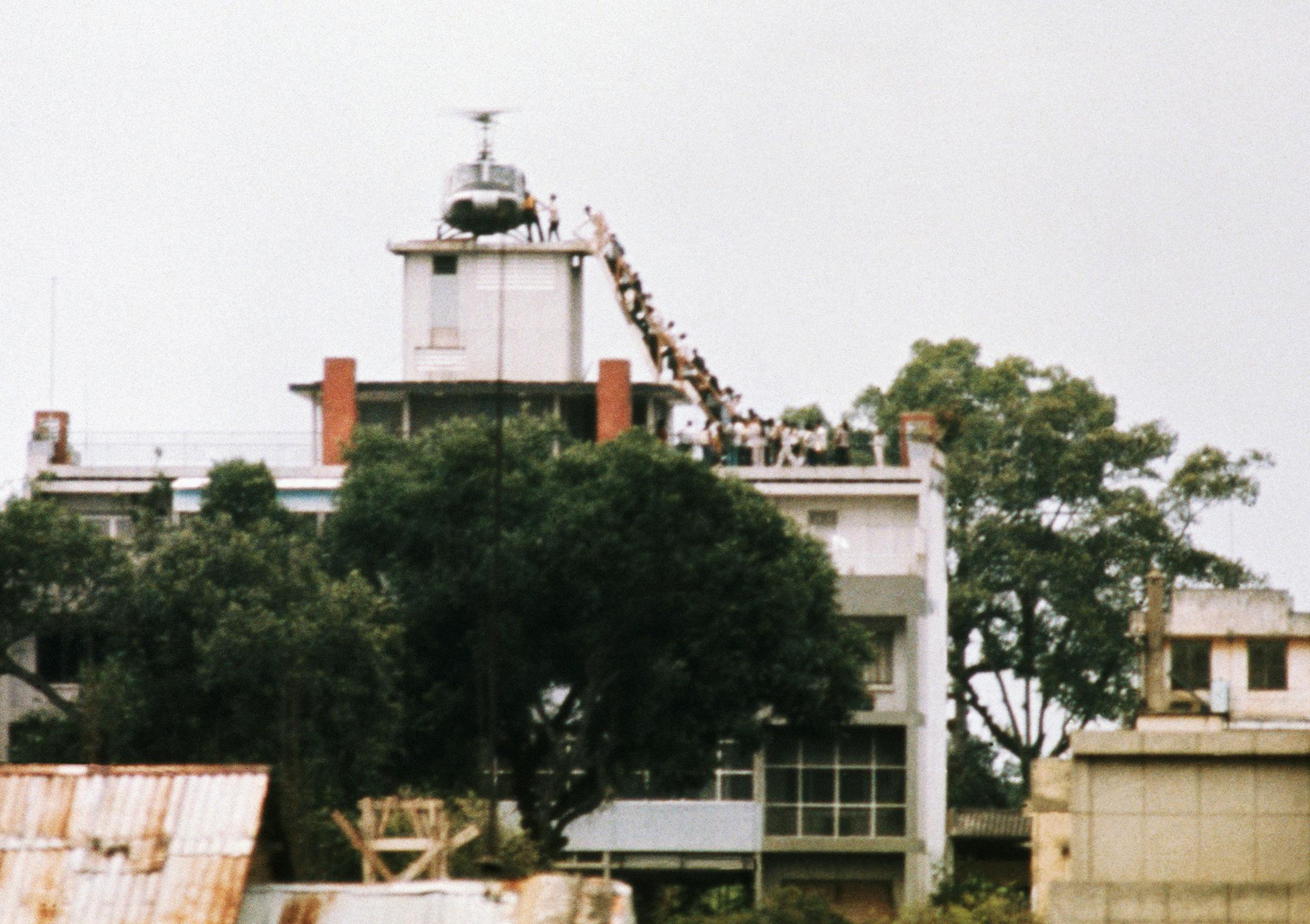
To remind them of the stakes, Congress and President Obama should watch "Last Days in Vietnam." The riveting film, which will debut Oct. 3 at the Uptown Theater, chronicles the chaos, and courage, when Saigon fell in April 1975. Using news reports and never seen footage, interspersed with interviews of Vietnamese and American military and diplomatic personnel, the documentary depicts a split between Americans in Washington and Saigon on how to ensure the safety of South Vietnamese allies.
Back in the Beltway, Congress, wary of wading back into the quagmire it exited two years earlier, indifferently denies President Gerald Ford's request for $722 million in emergency military assistance. Ford, conversely, comes across as compassionate, and even passionate, about the people as well as the policy implications of abandoning allies.
But the real heroes were individuals who bucked institutions as powerful as the Pentagon, State Department and White House to save as many South Vietnamese as possible from the conquering Communist army. At great risk, using makeshift methods including "black operations," U.S. troops and diplomats took extraordinary steps that saved thousands of South Vietnamese from bleak fates under Communist rule.
"I think the film is a reminder of the human cost of war, which at times is easy to lose sight of when it feels remote for us," Rory Kennedy, producer and director of "Last Days in Vietnam," said in an interview. "We can forget about our responsibilities to the people on the ground, who when we leave are left behind."
Reflecting on that abandonment, Kennedy said that, "For many of us, Vietnam represents a very dark moment in our nation's history. Yet there are these stories of Americans and South Vietnamese who arguably risked their lives, and certainly their jobs, to rescue South Vietnamese."


