

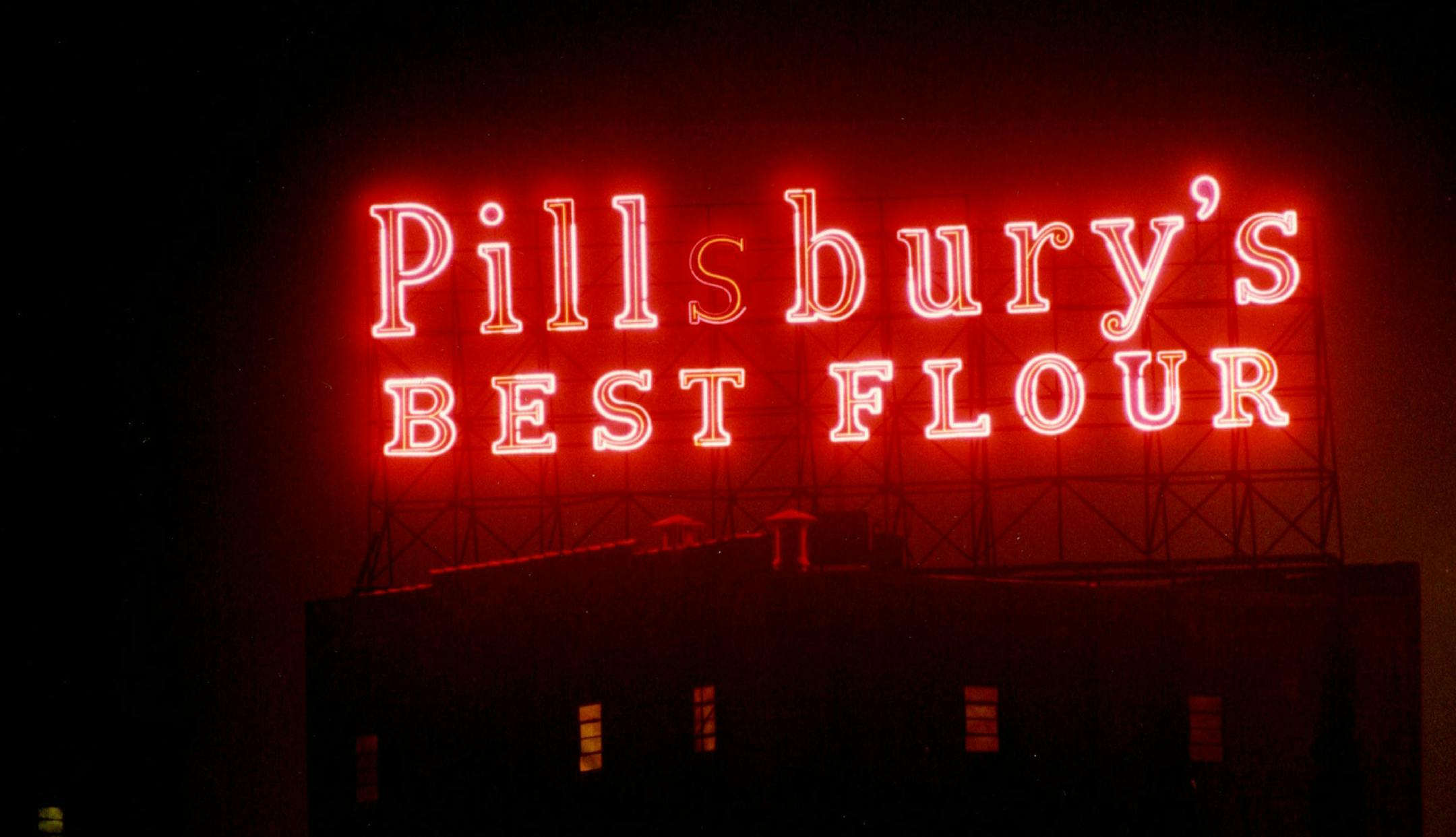
The Twin Cities skyline is about to get a little bit brighter, and a whole lot more interesting.
Efforts have been quietly underway to literally flip the switch on history by relighting several of the cities' most-recognized neon signs, using recent state-of-the-art LED lighting technology that makes it cheaper to restore and maintain them.
"These signs are iconic, and really help to tell the story of this place," said Laura Salveson, director of Mill City Museum, which is housed in the ruins of old stone mills along the Mississippi River. "These signs, and what they represent, live in people's memories."
When the museum was established in 2003, pains were taken to preserve the nearby "Gold Medal Flour" signs that sit atop historic concrete grain silos overlooking the river. The effort wasn't cheap. At the time, LED lighting wasn't advanced enough to replicate the look of neon, so the neon tubes had to be restored and the structure rebuilt and stabilized.
In 2000, the project cost about $250,000. General Mills contributed $130,000, and the city of Minneapolis and the Minnesota Historical Society, which owns and operates the museum, paid the rest. General Mills committed $150,000 to maintain the signs for a decade, but that money has lasted longer than expected, with annual operating costs of between $3,500 and $7,300, Salveson said.
Just a block upriver, at the North Star Lofts building near the foot of the Stone Arch Bridge, crews will soon remove a pair of rusting sheet metal stars and corroded red letters that spell "North Star Blankets," marking the location of a once-famous blanket factory, now condos.
Those signs, one that faces the city and another that looks toward the river, are perched atop a tall brick tower that once greeted trains, and now pedestrians, making their way across the Stone Arch Bridge.
"This sign is greatly appreciated by citizens and tourists alike," said Roger Hale, a longtime resident and president of the North Star Lofts condominium association. "This is where the city grew up."
![Grain Belt sign Minneapolis, Minnesota. ] CARLOS GONZALEZ cgonzalez@startribune.com, January 15, 2015, Minneapolis, Minn., Recent movement on the old-neon-sign front is welcome news to lovers of old signs, from North Star Blanket to Grain Belt and Schmidt Brewery. Story updates status of signs (Schmidt Beer is re-lit in St. Paul; North Star Blanket is slated for restoration; Pillsbury A Mill is down but there are hopes for its revival; Grain Belt on Nicollet Island is not lit but is slated for r](https://arc.stimg.co/startribunemedia/X6WJH4QYLKVWQA55EB5MDQOSQY.jpg?&w=1080)
![TOM WALLACE • twallace@startribune.com Assign# 00007011A slug_dumps0326 Date: March 10 2009 Photos for Bill Ward’s essay on why we love 'Dive' places, This is a round-up of some favorites. Al’s - breakfast spot, Uptown theater, Nyes Polonaise - the polka bar side, Reds Savoy Pizza - 7th st, East St Paul, Midway used books, The Wienery. Ranham Bowl---] Nye’s Bar is the home of the Ruth Adams and the World's Most Dangerous](https://arc.stimg.co/startribunemedia/ZGMBU24QGC3EEUCXR6WCW3ZV6E.jpg?&w=1080)


