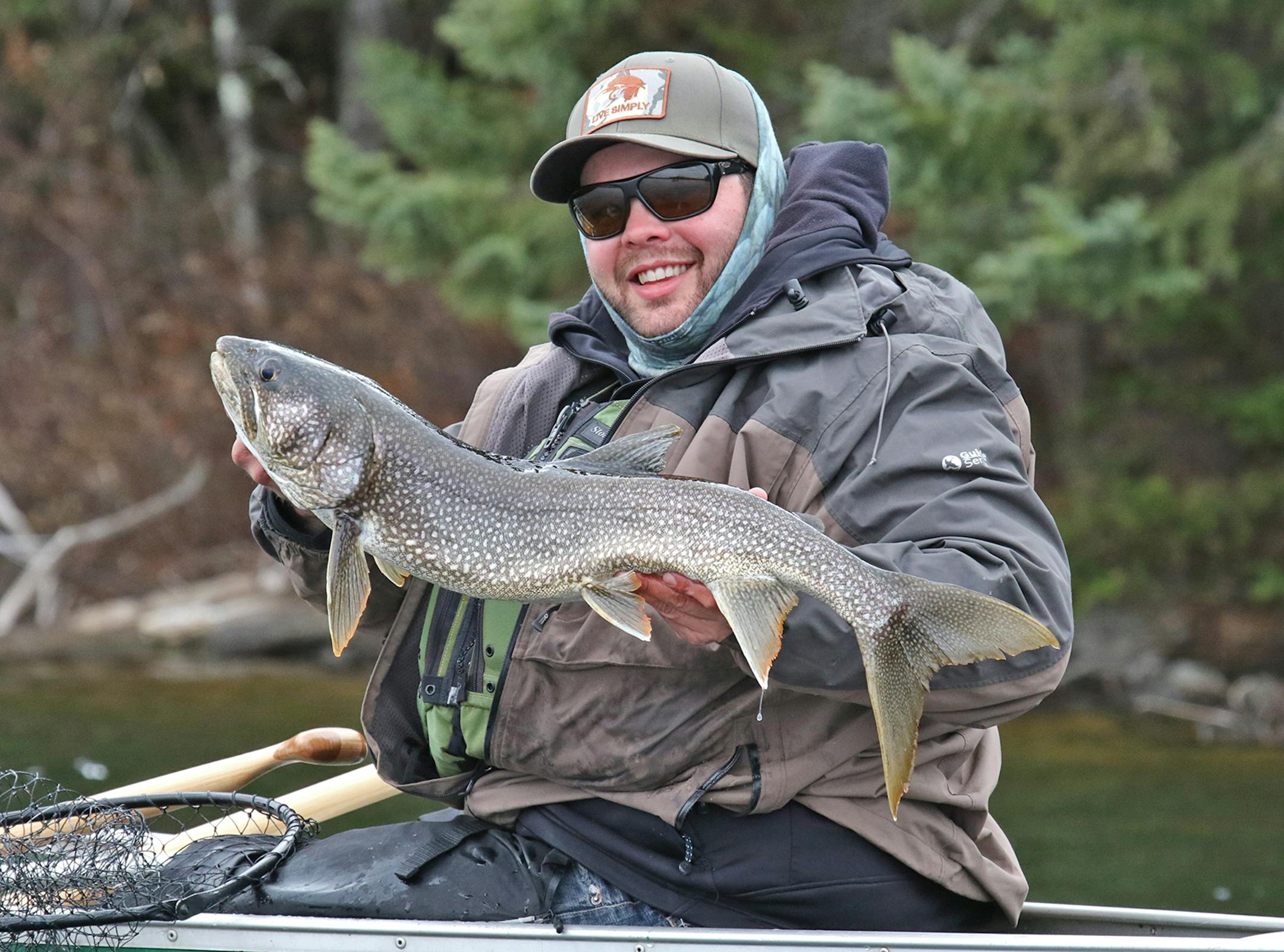
QUETICO PROVINCIAL PARK, ONTARIO – A big-shouldered lake trout hooked by Carson Spohn pulled so hard, at such an angle, that the bow of his canoe swung swiftly toward the deep end of the lake.
Reeled back toward the boat, the fish appeared to be finished. An instant later, it splashed and plunged straight down, looping part of his pursuer's fishing rod into the water.
"Best fishing I've ever had in my life,'' said Aaron Youngblom, 26, who experienced many similar battles on the same trip.
It was late April in the Canadian wilderness, barely north of the Minnesota border, and the shallows of a just-thawed lake were brimming with a class of fish that ordinarily dwells in the coldest, deepest parts of the coldest, deepest lakes.
During the short period when these "lakers'' chase bait fish near the surface, our group of four experienced anglers — two in their mid-20s and two in their mid-50s — wanted to get at them despite the dangers of paddling heavily loaded canoes upstream on a rising river, in icy water.
The potential unpleasantries of strong winds, muddy portages, freezing overnight temps, snow or rain would be canceled out, we hoped, by peerless fishing, afternoon warmth, bug-free camping, rare wildlife sightings and the conquest of being the first paddlers to enter Quetico Provincial Park this year from the northwest side of Lac La Croix, a popular gateway.
"You're definitely first,'' said Campbell Handberg, a Lac La Croix resort owner who towed us with a motorboat to the edge of the back country. But his parting advice to us was to camp nearby and not mess with the swollen Maligne River, the path to many of the park's most beautiful lakes.
Not taking Maligne lightly
The Maligne spills angrily over Twin Falls at Quetico's entrance and the falls were roaring from early spring water volumes. Just above the falls is where the paddling begins and we had talked and worried incessantly about paddling upriver so early in the spring with the falls directly at our backs.