

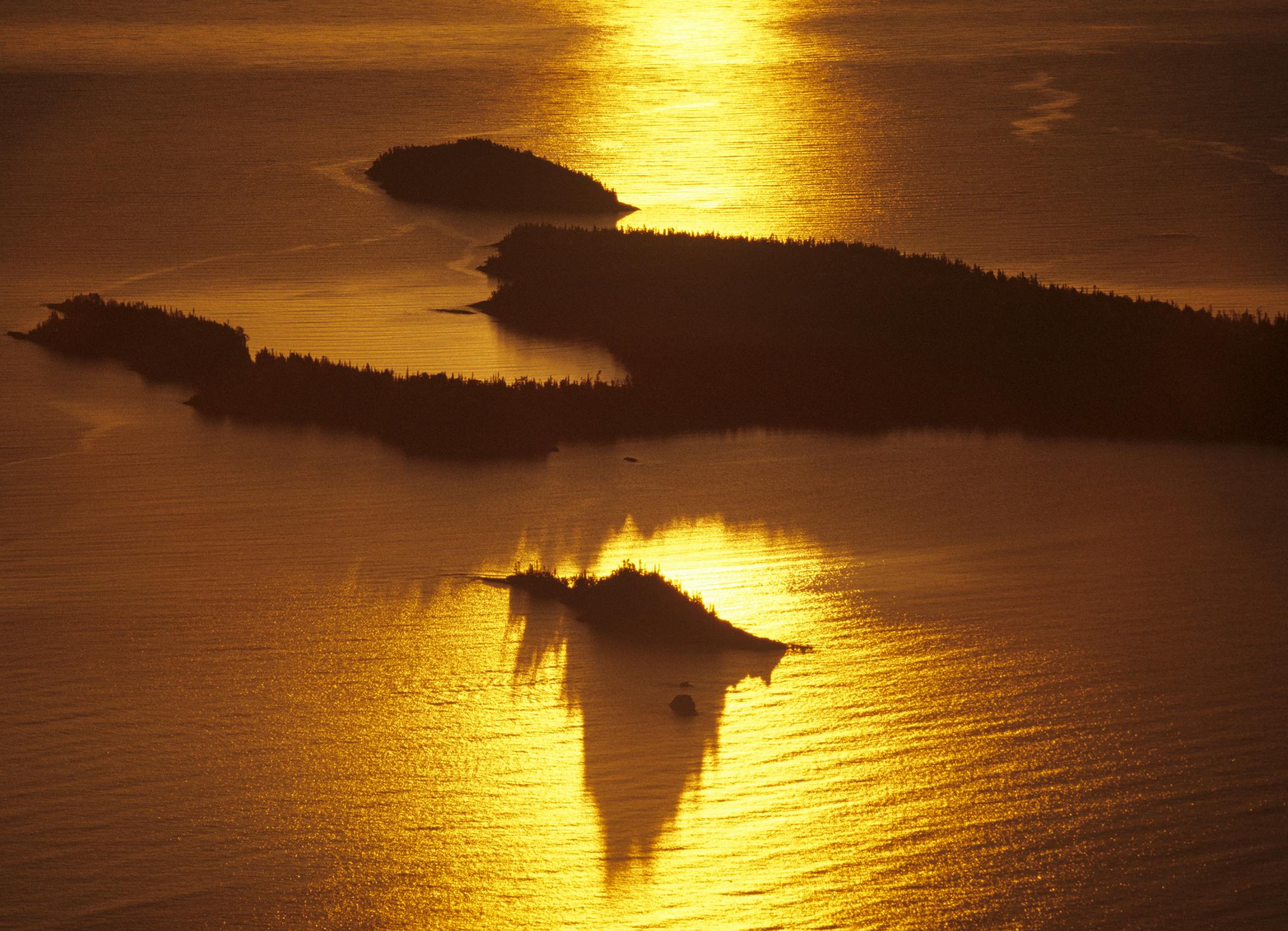
The 13 small Lake Superior islands off the northeast tip of Minnesota aren't even on most maps, let alone most Minnesotans' radar.
But the Susie Islands archipelago, less than a quarter-mile off the North Shore, has deep roots in the history of the Grand Portage Band of Lake Superior Chippewa. So band leaders were happy recently to officially welcome the largest of the islands back into their fold.
The band and the nonprofit Nature Conservancy announced that, with approval from the U.S. Bureau of Indian Affairs, the big island, Susie Island, has been returned to the tribe.
The Nature Conservancy had most recently acquired the 142-acre island from various landowners in several parcels between 1973 and 1991. The conservancy raised money to protect the island's unusual native plants and wildlife and keep it free of development.
"It was at risk. … There were some plans to either develop the site or use it for commercial boat excursions," said Peggy Ladner, director of the Nature Conservancy in Minnesota. "We wanted to protect it in its entirety."
Evidence of the island's history of mining, logging and commercial fishing isn't easily visible now.
The archipelago is located entirely within the boundaries of the Grand Portage Indian Reservation. When the reservation was established in 1854, a whole portion of the northeastern point, including the islands, was left out, said April McCormick, the band's roads and realty manager. But the islands and surrounding area were reincorporated into the reservation boundaries in the early 1980s, though a few parcels were still under private ownership.
The band made a long-term goal to reacquire the islands where ancestors had gathered blueberries and fished. It succeeded in getting most of them, but the large island was among the last to be returned.


