

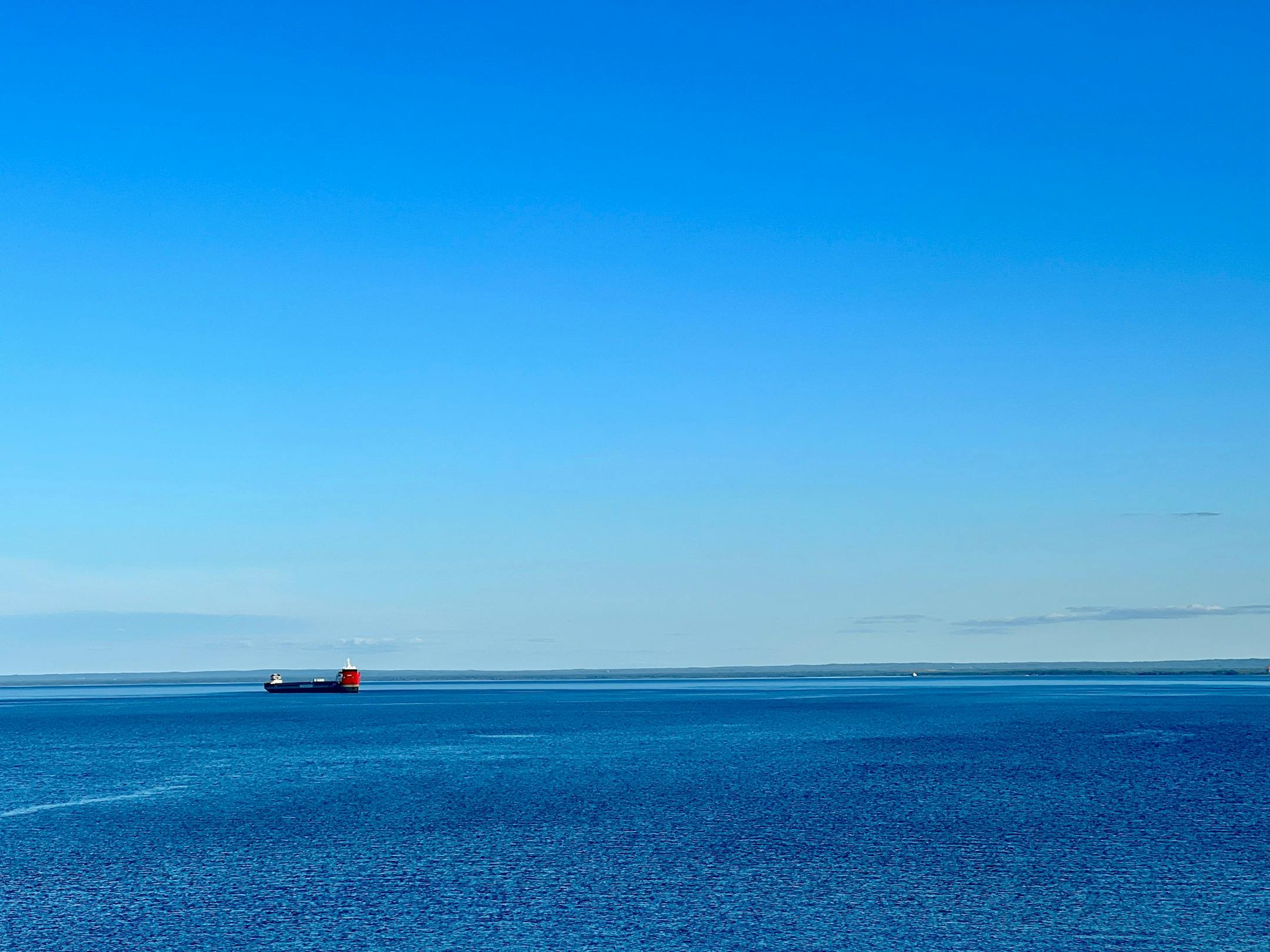
DULUTH — University of Minnesota Duluth large lakes researcher Jay Austin told the students he was bringing out to work on Lake Superior this week to pack some winter gear: Despite the August heat, it was going to be chilly 50 miles off Grand Marais.
"It's been a remarkably cold year," he said of the lake, and scientists aren't entirely sure why. His group is working on UMD's Blue Heron research vessel, collecting equipment in 600 feet of water that's been monitoring temperatures and currents for a year. He expects to find answers to the unusual cold in that data.
One metric that illustrates the unusual temperatures is the point in summer that a layer of the lake reaches 39 degrees. That's when the lake is able to form a warmer layer at the surface. The open waters of Lake Superior typically reach that temperature in late June or early July. As of early this week, that still hadn't happened in the deep central and eastern parts of the lake, Austin said, putting conditions on par with the extremely cold years of 2014 and 1996. Although this past winter was a frigid one, it wasn't as severe as either of those years, he said.
Currently, on average, the lake hits that warming milestone two weeks earlier than it did four decades ago, reaching its peak temperatures by mid-August. But the open waters of Lake Superior aren't likely to warm up this year, said Austin, a physics and astronomy professor who is part of UMD's Large Lakes Observatory.
According to NASA, Lake Superior was abnormally cold in late July, running 7 degrees below average for this time of year. It's the only Great Lake seeing such a phenomenon.
And the lake's icy feel in recent days isn't limited to open water. Despite 80-degree days, swimmers off the North Shore and Park Point also have experienced wild swings in water temperatures, the Duluth National Weather Service's Twitter account pointed out.
Ketzel Levens, a forecaster with the service, noticed a rapid drop from a nearly 70 degree surface temperature to the 40s last week. A phenomenon called upwelling is pulling water from deeper parts of the lake closer to shore. Southwest winds that blew parallel to the North Shore for days pushed warmer surface water east, away from the coast, allowing water to rise from the depths.
Levens took a water thermometer with her in a kayak off Park Point, and measured 48 degrees. Water on the bay side of the point, coming from the St. Louis and Nemadji rivers, measured 75 degrees the same day.


