
Lake Minnewashta is the latest Twin Cities lake to use copper to try to kill off zebra mussels

Minnewashta is the third west metro lake to use the copper product, EarthTecQZ, to kill mussels and the largest open water treatment in Minnesota.

September 14, 2016 at 2:21AM
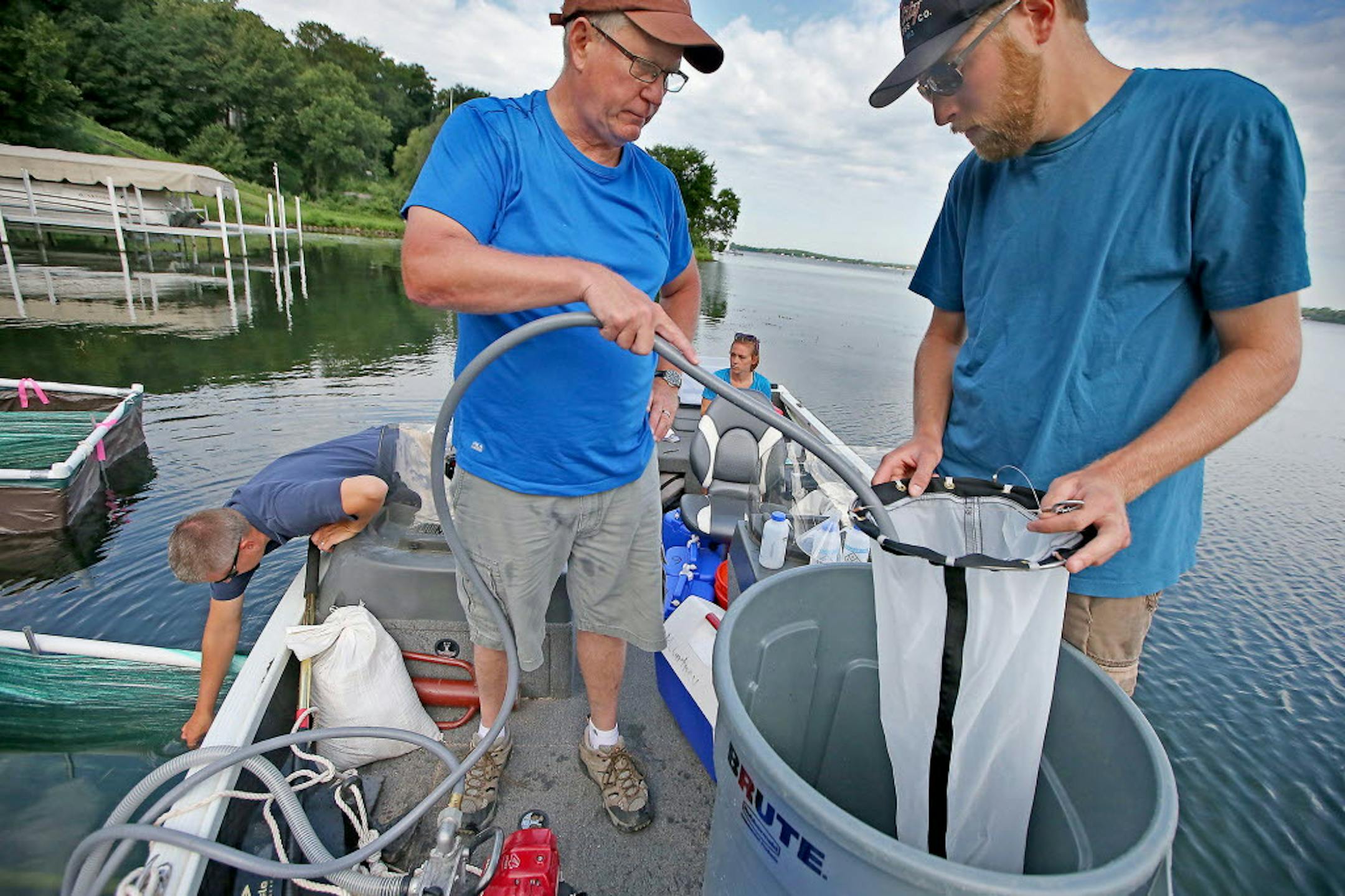
Minnehaha Creek Watershed District AIS Program Manager Eric Fieldseth, far left, University of Minnesota AIS Research Center's Dr. Michael McCartney, center, and Max Kleinhans, tested a project targeting tiny zebra mussels with low doses of a copper-based pesticide in Robinson Bay on Lake Minnetonka in July 20, 2016. Now the product is being used on Lake Minnewashta in September 2016.
Minnehaha Creek Watershed District AIS Program Manager Eric Fieldseth, far left, University of Minnesota AIS Research Center's Dr. Michael McCartney, center, and Max Kleinhans, tested a project targeting tiny zebra mussels with low doses of a copper-based pesticide in Robinson Bay on Lake Minnetonka in July 20, 2016. Now the product is being used on Lake Minnewashta in September 2016. (The Minnesota Star Tribune)

Crews began using a copper-based pesticide Tuesday in Lake Minnewashta to halt the spread of zebra mussels, following the discovery of 14 mussels last month at a boat launch on the suburban Twin Cities lake.

Minnewashta is the third west-metro lake to use the copper product, EarthTec QZ, to kill mussels. This is also the largest open-water treatment in Minnesota; the Department of Natural Resources has approved the product's use on 29 acres.

The fingernail-sized pest clings to boat hulls and docks, alters ecosystems, and poses a hazard for swimmers.

The Minnehaha Creek Watershed District, the Lake Minnewashta Preservation Association and Carver County are partners on the $40,000 project and will keep applying the copper this week.

The Watershed District has gone on the offensive with the spread of the invasive species.

"This is our best opportunity yet to test the feasibility of in-lake treatments for zebra mussels," said Eric Fieldseth, the district's aquatic invasive species program manager.

In the first study of its kind, researchers are testing low doses of the copper-based pesticide on zebra mussel larvae, called "veligers," on Lake Minnetonka. The copper product, along with two other chemicals, successfully killed mussels on nearby Christmas Lake, but more were later found outside the treated area.

Minnewashta's treatment area is about three times bigger than Christmas Lake's.
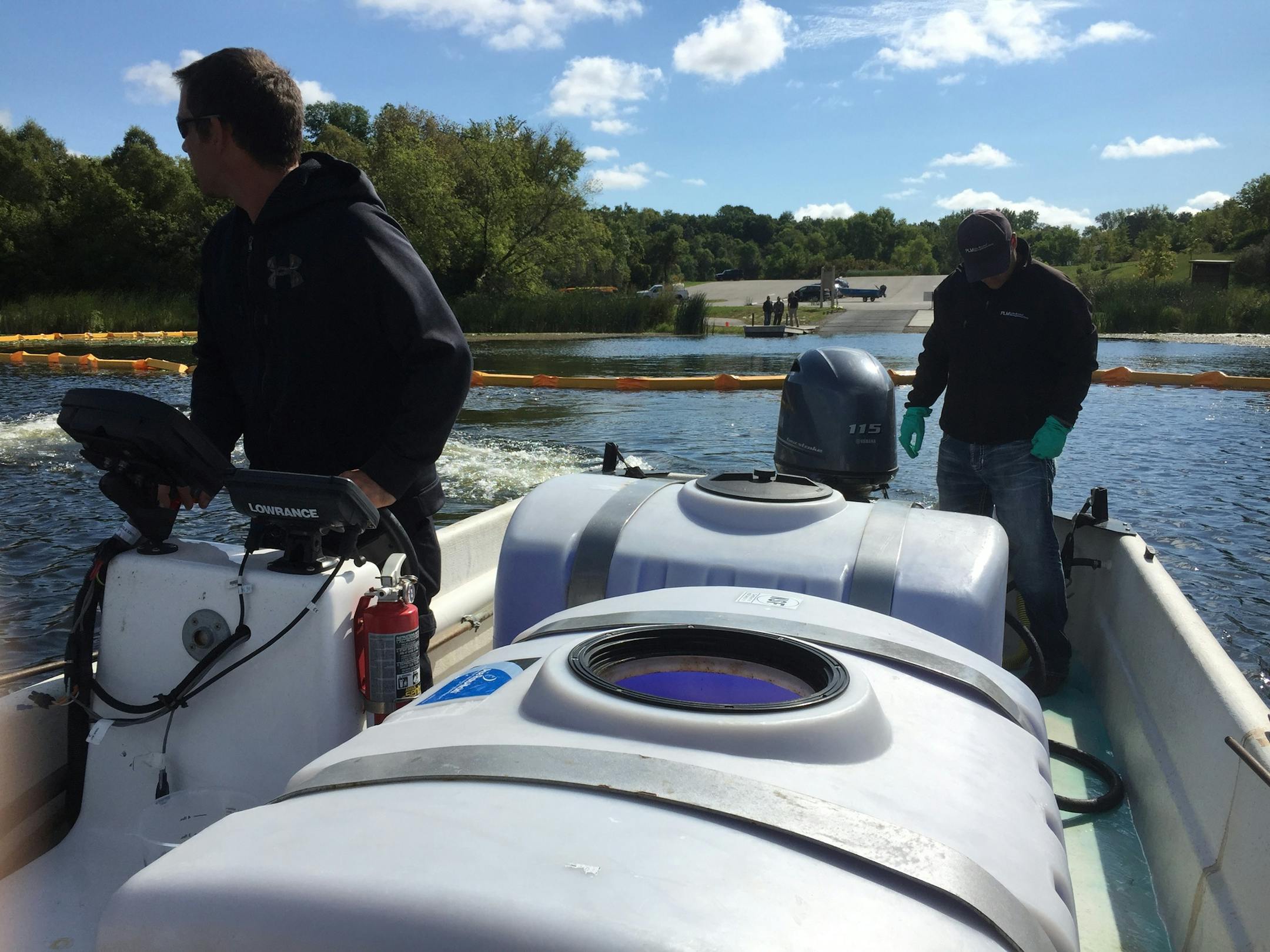
Crews from PLM Lake and Land Management use a copper product on Lake Minnewashta on Tuesday to kill off zebra mussels discovered near its boat launch last month. Photo courtesy of the Minnehaha Creek Watershed District.
Crews from PLM Lake and Land Management used a copper product on Lake Minnewashta on Tuesday in an effort to kill off zebra mussels. (The Minnesota Star Tribune)
about the writer

about the writer

Kelly Smith

News team leader

Kelly Smith is a news editor, supervising a team of reporters covering Minnesota social services, transportation issues and higher education. She previously worked as a news reporter for 16 years.

See Moreicon