

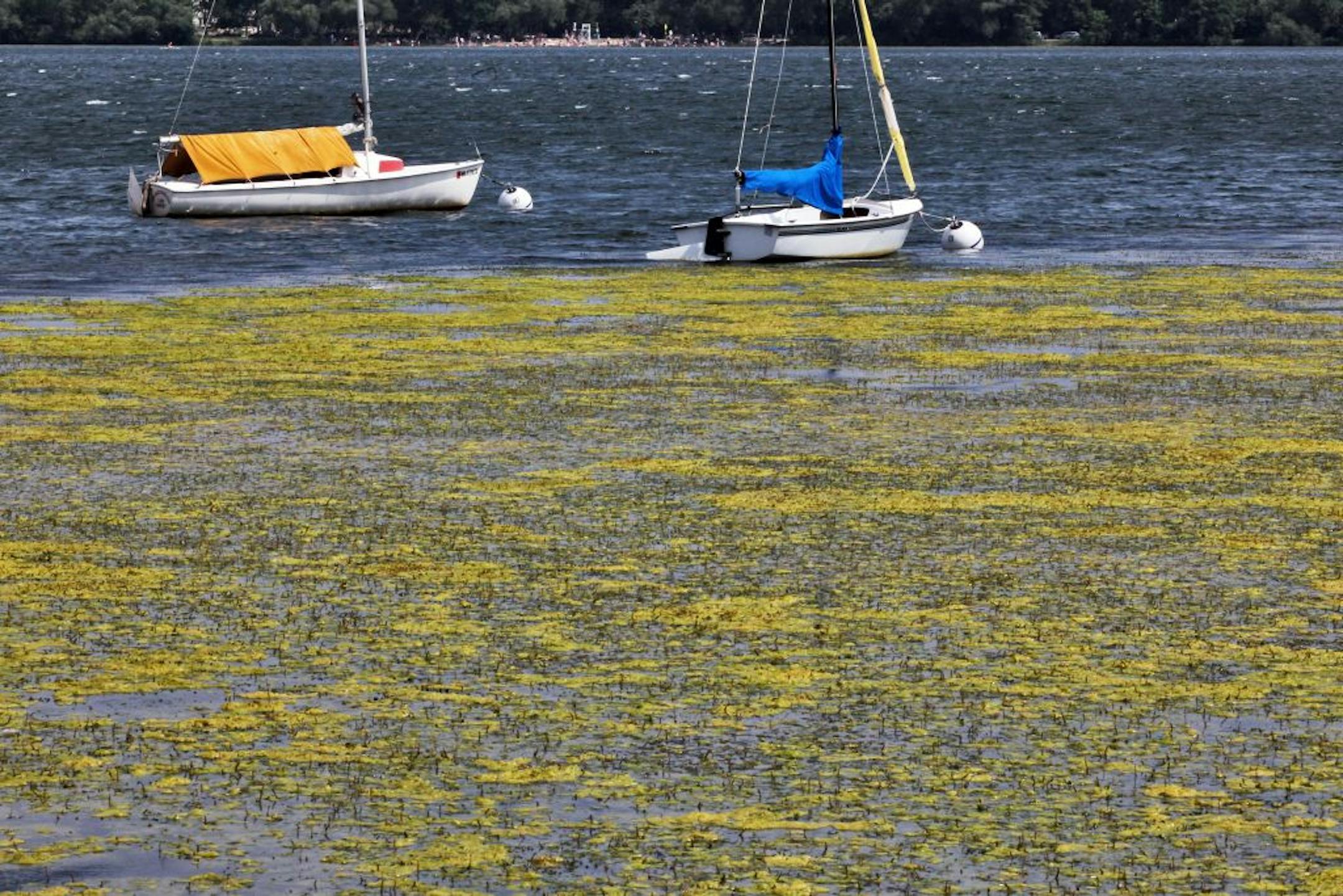
The Lake Minnetonka Conservation District has forged a two-pronged approach to fight Eurasian milfoil and other pesky weeds: mechanical cutting in some areas, and herbicides in certain bays.
A district subcommittee recommended the strategy after studying the drawbacks and effectiveness of both methods, and is holding a meeting Wednesday night to get public feedback.
The main troublemaker, Eurasian water milfoil, began invading the lake in 1987. It can form huge mats that clog channels and boat motors, ruin water sports such as waterskiing and sailing, out-compete native water plants, and wash up along shores to create a cleanup nuisance.
Milfoil will never be eradicated, nor will curly-leaf pondweed, another non-native plant that bedevils Minnetonka and many other lakes.
The district makes decisions about the lake and spends tax money levied from the 14 communities that surround it and are represented on its board.
To keep the weeds under control, the district spends about $95,000 annually -- one third of it from a Minnesota Department of Natural Resources grant -- on "mechanical harvesting." Three floating paddlewheel harvesters roam the lake from mid-June to mid-August, zeroing in on the worst areas to chop and collect boatloads of soggy milfoil and pondweed.
Under the subcommittee plan, the harvests would continue. "It would be the main way to manage milfoil on the lake," said district Executive Director Greg Nybeck.
Another tool


