

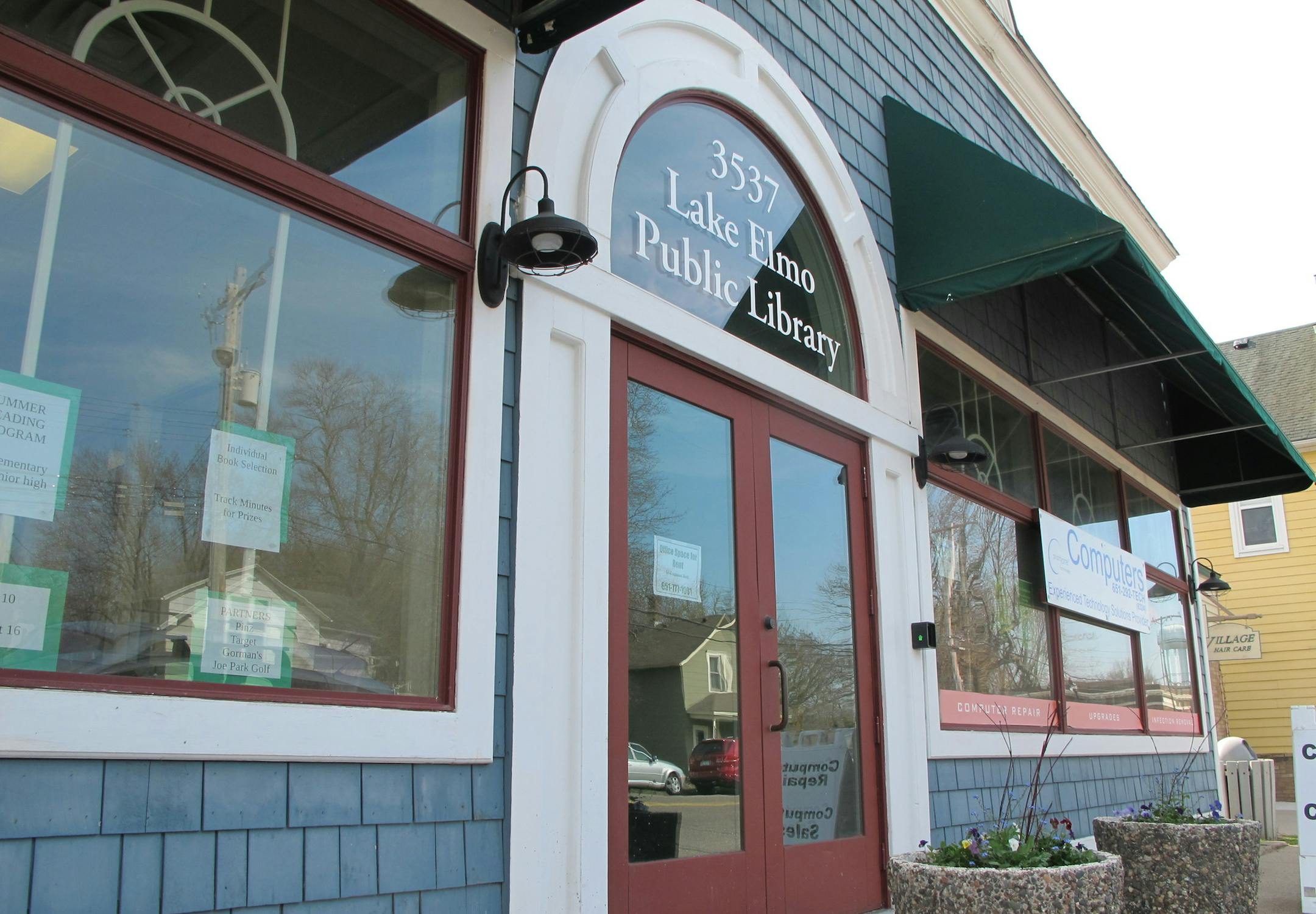
Having paid off the debt owed on a building housing its new city library, Lake Elmo has proposed mending relations with Washington County and restoring e-book access for about 500 subscribers to the county library.
Mayor Mike Pearson, in a letter to the county, said Lake Elmo's library successfully started programs for literacy, writing, art appreciation and children's summer reading — all guidelines to meet professional standards. The library also provided an author series, he wrote.
Lake Elmo left the county library system in 2011 after a dispute over reduced hours and resources. The city defied naysayers who predicted its fledging library would fail and, with the help of more than 80 volunteers, established a library with $256,000 a year that previously had been levied for the county branch library. The city also hired a librarian.
"While there has been much regrettable angst over this issue, the silver lining is that use of the Lake Elmo library has exceeded expectations," Pearson wrote.
The timing of Lake Elmo's proposal fits well with a Washington County initiative to consider a new direction for its libraries. In a recent County Board workshop, commissioners discussed changing demographics and reader habits in a wide-ranging conversation about libraries of the future, including what should happen in Hugo, Newport and Marine on St. Croix.
"Things are really evolving if we're looking at the demise of paper books over time," Commissioner Lisa Weik said.
More than half of library users in Washington County no longer borrow books but want virtual resources, said Patricia Conley, who oversees county-owned libraries. Public access computers logged 83,668 hours in 2013, an increase of 7 percent over 2012. Preferences for e-books have spiraled since 2010 and will exceed preferences for print books after 2020, Conley said.
The issue of e-books helped bring Lake Elmo back into the county library scene. Last fall, the county library announced that paid subscribers in Lake Elmo and elsewhere no longer would have access to e-books as part of their $60 subscriptions. The county said that escalating use of tablet readers had led to vendor cost increases through the Metropolitan Library Service Agency, known as MELSA.

