

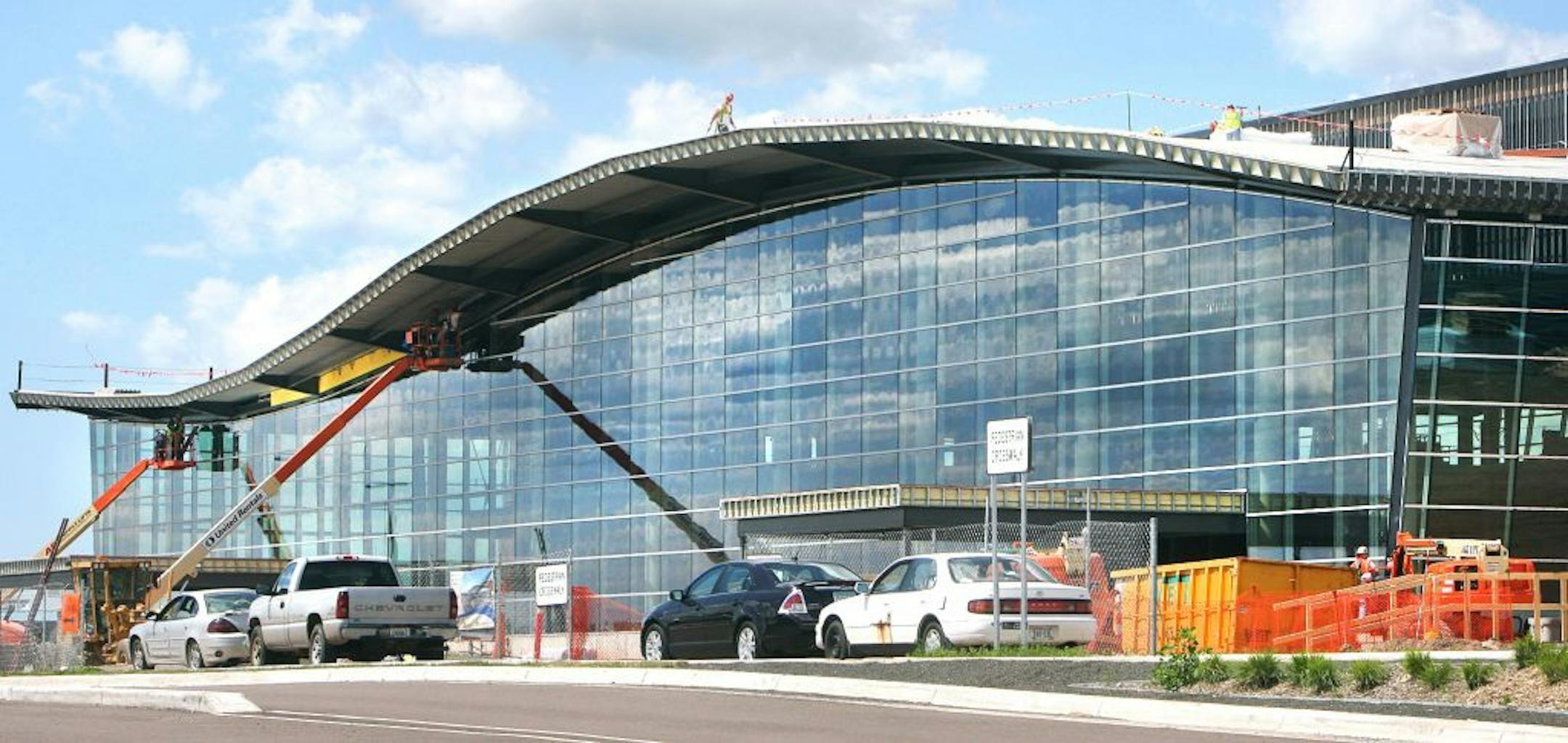
WASHINGTON – Minnesota Lt. Gov. Yvonne Prettner Solon and a handful of northern state business leaders and Air National Guard officials flew to the nation's capital this week — some at taxpayer expense — to beg bureaucrats and members of Congress for $11 million to extend a second airport runway in Duluth.
Gone are the days when someone like Democratic Rep. Rick Nolan, who supports the runway expansion and who even accompanied Prettner Solon to the Federal Aviation Agency for a meeting, could trade a favor with a member of the appropriations committee, who would then toss the cash to his district in exchange for a vote on something else.
Now state and local officials across the country are trapped in a much more opaque race against one another to secure billions of dollars idling in federal agencies. Many of the funding decisions now are made not by members of Congress but by Washington bureaucrats.
When Republicans took control of the U.S. House of Representatives in 2011, one of the first things leaders extinguished was the practice of earmarks, or directed federal funds for specific projects.
Five people traveled on this week's trip, which included visits to the Pentagon and Capitol Hill to see Democratic Sens. Al Franken and Amy Klobuchar as well as Nolan, who represents Duluth. The effort illustrates the pressure state and local governments are under to gain an edge in a post-earmark America.
Trips' significance
"It's not rocket science," said Nolan, who says he regularly tries to help Minnesota with federal dollars, despite the earmark ban. "You go to the agency and you tell them it's important and it's important to you as a member of Congress."
The significance of the trip depends on who is asked. Though construction on Duluth's primary runway won't start for almost a decade, Prettner Solon maintains there is value in getting in front of federal officials early to learn how to be competitive. An FAA official says state officials should prioritize by filing an official funding request before traveling to Washington.
Duluth International Airport has one 10,152-foot runway that was built in the 1940s. A second runway is just a little longer than a mile, 5,700 feet. In about a decade the longer runway, primarily used by bigger planes in the 148th Fighter Wing of the Air National Guard and a couple of commercial carriers, will have to be rebuilt.


