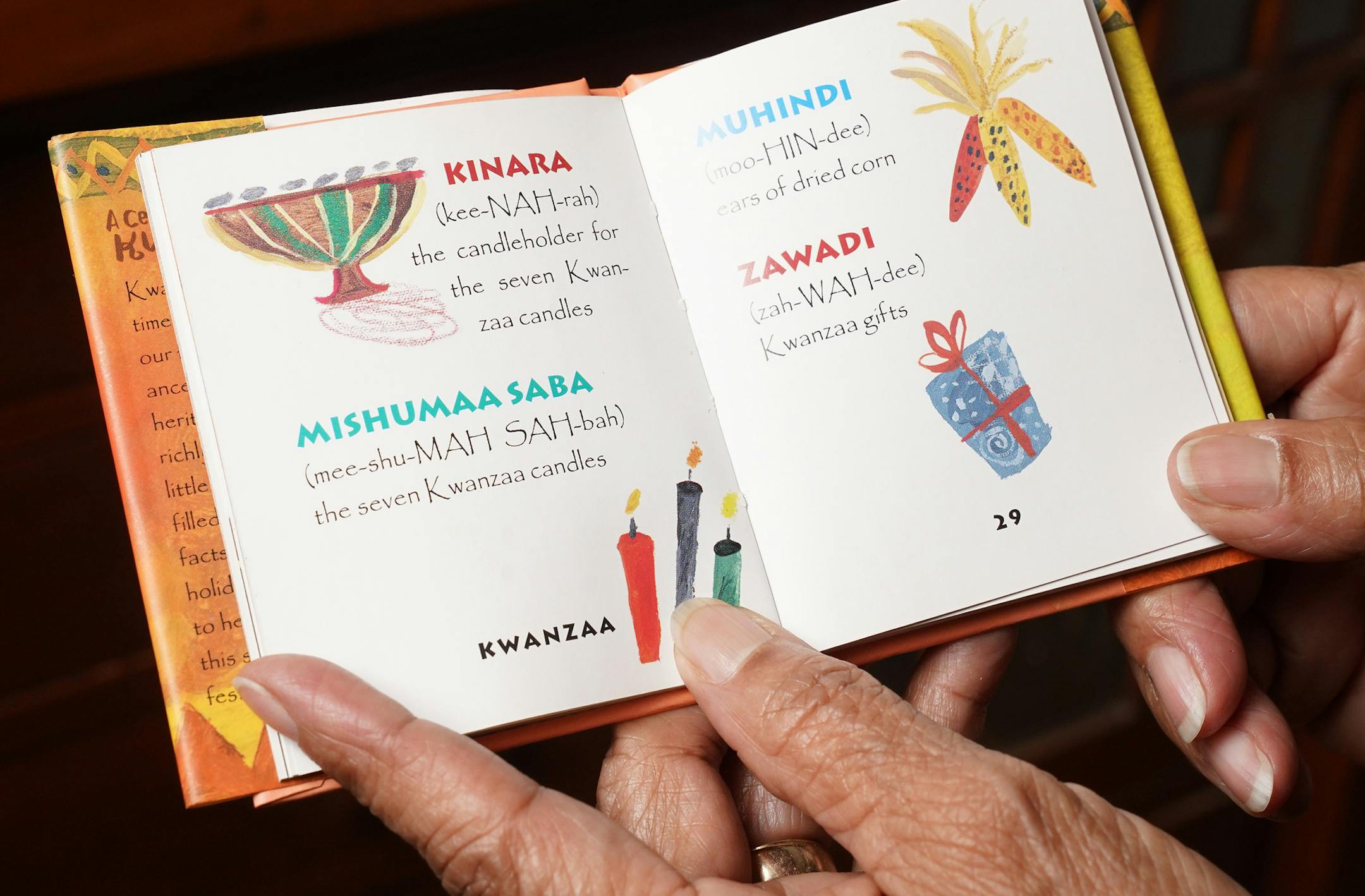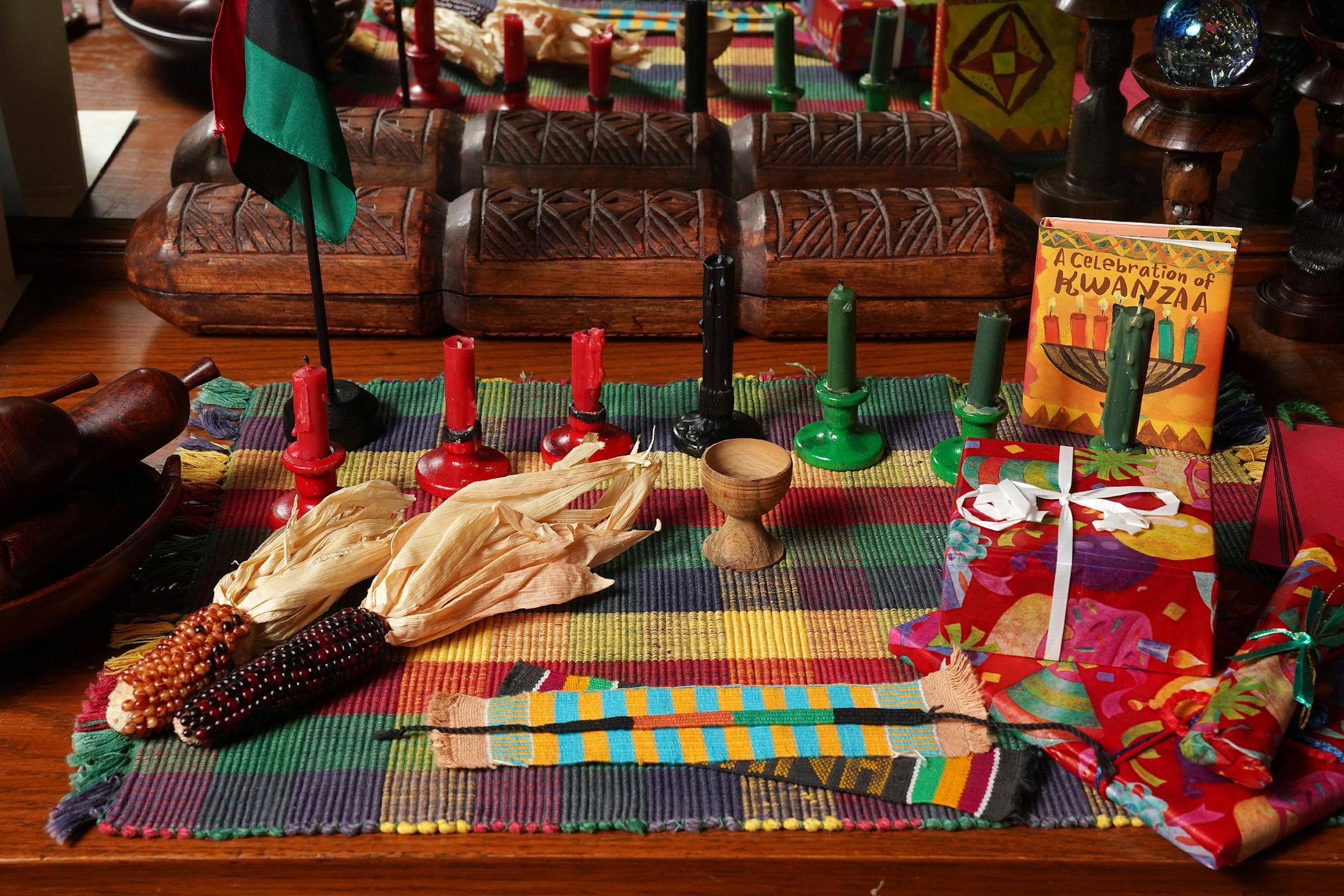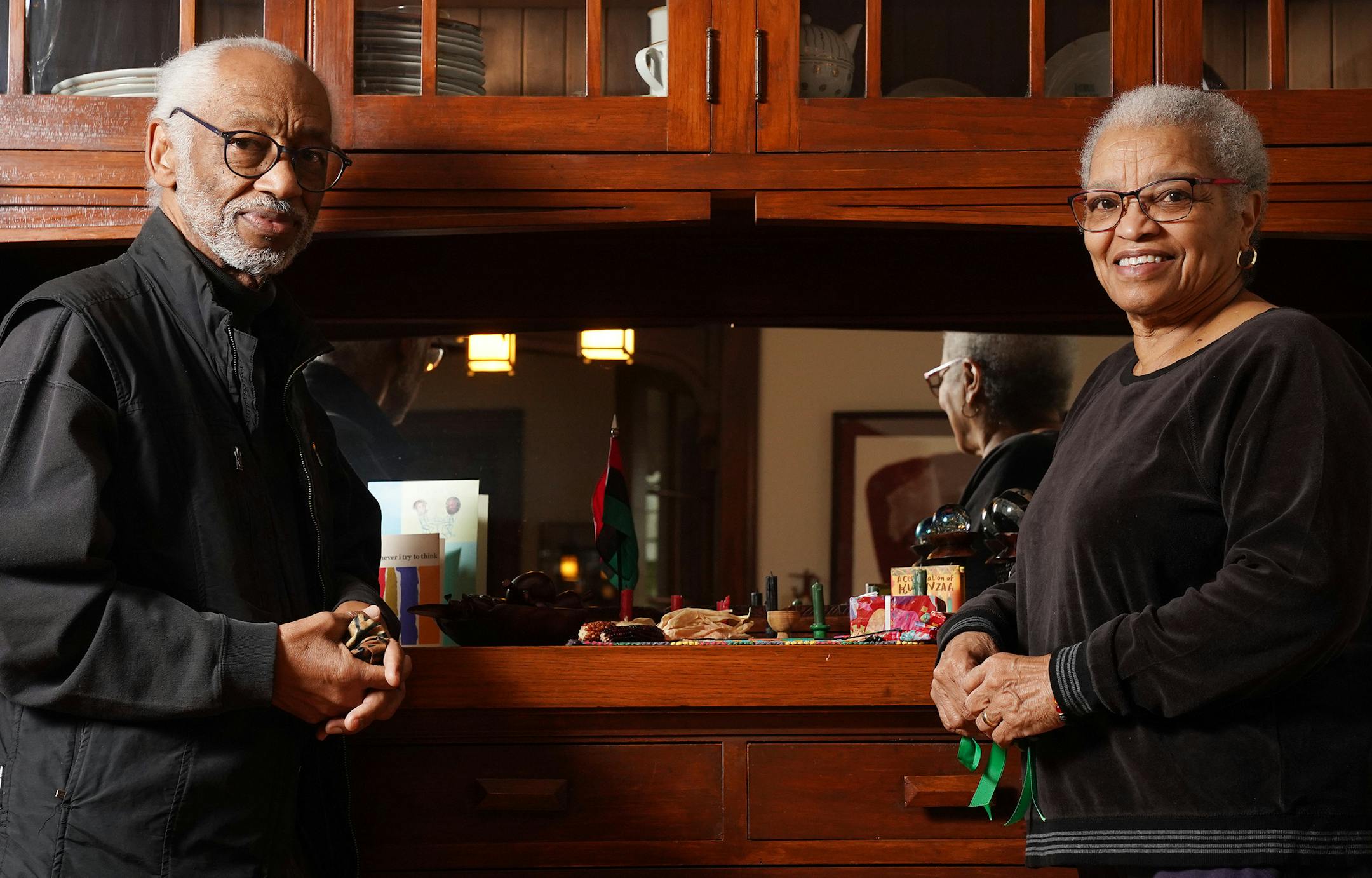
Some people keep decorative lights up well beyond the holidays, trying to extend the twinkling magic of the season. Art teacher and child advocate Gwendolyn Ellis goes one step further. The Maplewood mother of five adult children never puts away her kinara, the candelabra that's central to any observance of Kwanzaa.
In fact, Ellis' mantel displays all the symbols of this African American celebration that begins Dec. 26 and runs through New Year's Day. She wants to see them every day.
"Kwanzaa is not just a seven-day event that you then put away," she said. "The principles like self-determination, creativity and cooperative economics are things we should practice year-round."
Prof. Maulana Karenga of the University of California, Long Beach, founded Kwanzaa in 1966, a year after the Watts neighborhood of Los Angeles erupted in flames for six nights following a violent traffic stop involving a white policeman and a Black driver.
Now a global phenomenon observed in the Americas as well as in Africa and elsewhere, Kwanzaa is taking on sharper meaning in the Twin Cities this year in the wake of the police killing of George Floyd and the Black Lives Matter movement. To be sure, because of the raging pandemic, observances will not culminate in the customary large-scale New Year's Day feast with spoken-word artists, singers, drummers and explosive dancers.
But it will be marked nonetheless.
"The principles of Kwanzaa help with dealing with the trauma, craziness and meanness that's going on," said storyteller and retired teacher Beverly Cottman, who, with husband, Bill Cottman, will be lighting candles daily in their Minneapolis home. "I like the principle of self-determination. We will be who we are even though there are external forces causing us to think differently or putting obstacles in our way."
International inspiration
Inspired by Pan-African harvest festivals and other sources, Karenga named the syncretic celebration for the Swahili expression for "first fruits." Kwanzaa is organized around seven principles (the Nguzo Saba), each with its own day of observance.