

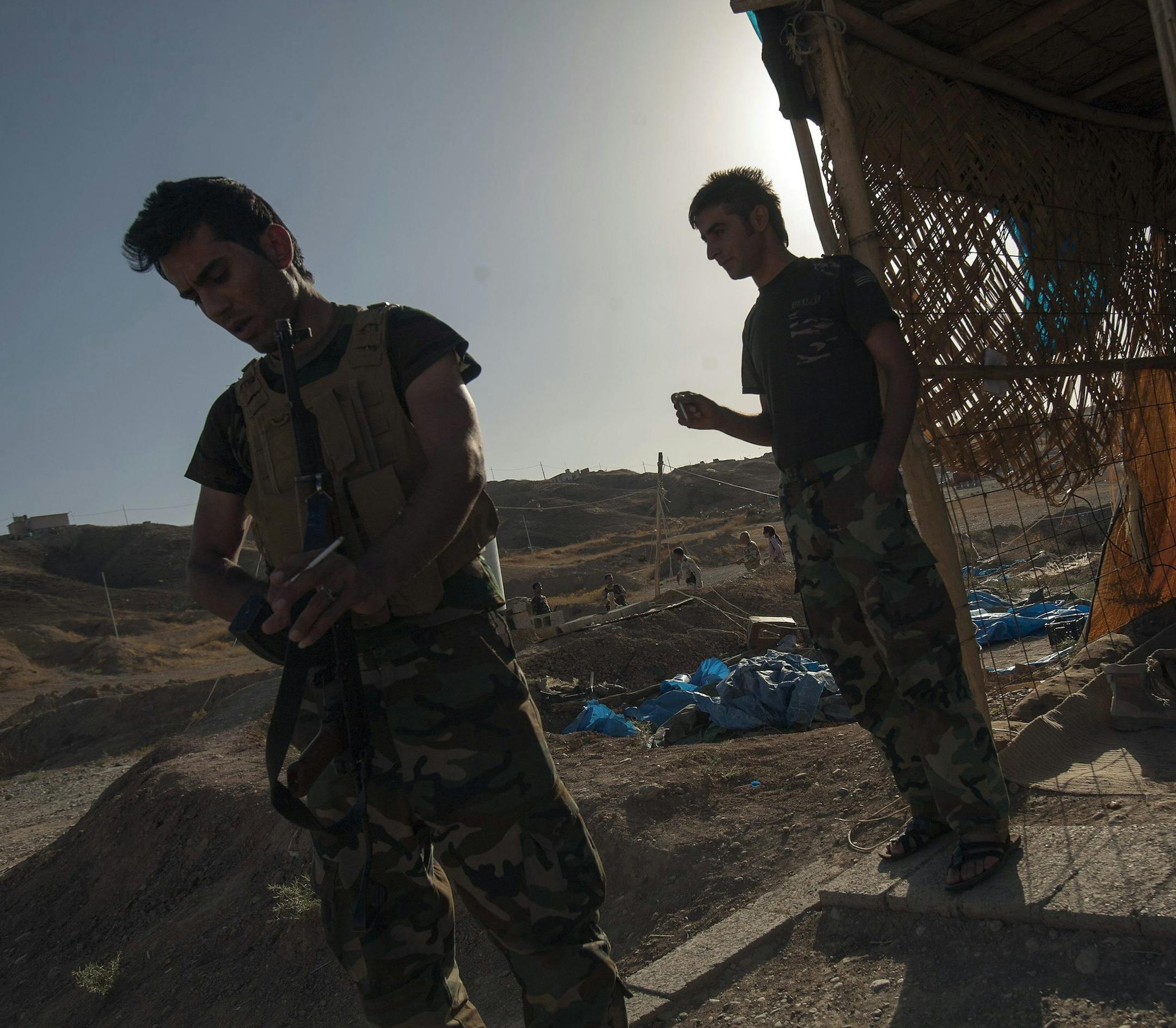
KIRKUK, Iraq – Piling into a pickup truck with their AK-47 assault rifles, the Kurdish militia fighters were eager to show off the checkpoints they had set up to guard the approaches to the oil-rich city of Kirkuk.
The Kurds had long coveted Kirkuk for historical and economic reasons, and suddenly earlier this month it fell under their control when the Iraqi army collapsed and fled in the face of a surprise offensive by the Islamic State of Iraq and the Levant (ISIL).
Now, with ISIL gunmen roaming unchecked just miles from city, the Kurdish militia has established a string of checkpoints and fortified positions intended to defend not only newly acquired Kirkuk, but also the approaches to the main Kurdish cities of Irbil and Sulimaniya, which have remained more or less untouched by the violence that has roiled the rest of Iraq for much of the past 11 years.
Gen. Ayoub Sa'id, the militia commander in Kirkuk, who directs his forces from a former U.S. military base at the Kirkuk airport, is proud of his forces' array. He even encouraged visiting journalists to drive south toward the ISIL front lines to inspect his militia's defenses.
But after five minutes of high-speed driving down the nearly deserted highway to visit these last lines of defense, the pickup screeched to a sudden stop and made an abrupt U-turn.
There was no sign of the militia, who despite their reputation as some of the best and most disciplined fighters in Iraq, had left their positions.
The only thing standing between Kirkuk and the ISIL fighters was the pickup with its load of lightly armed fighters.
Confusion still reigns along the nebulous front line between the two sides. So far, ISIL and its tribal allies appear content to control Sunni Arab villages and towns and have yet to challenge the Kurds, whose mostly peaceful region backs up against the border with Iran and now spans from Iraq's far north to Kirkuk. ISIL appears more focused on pushing toward Baghdad.


